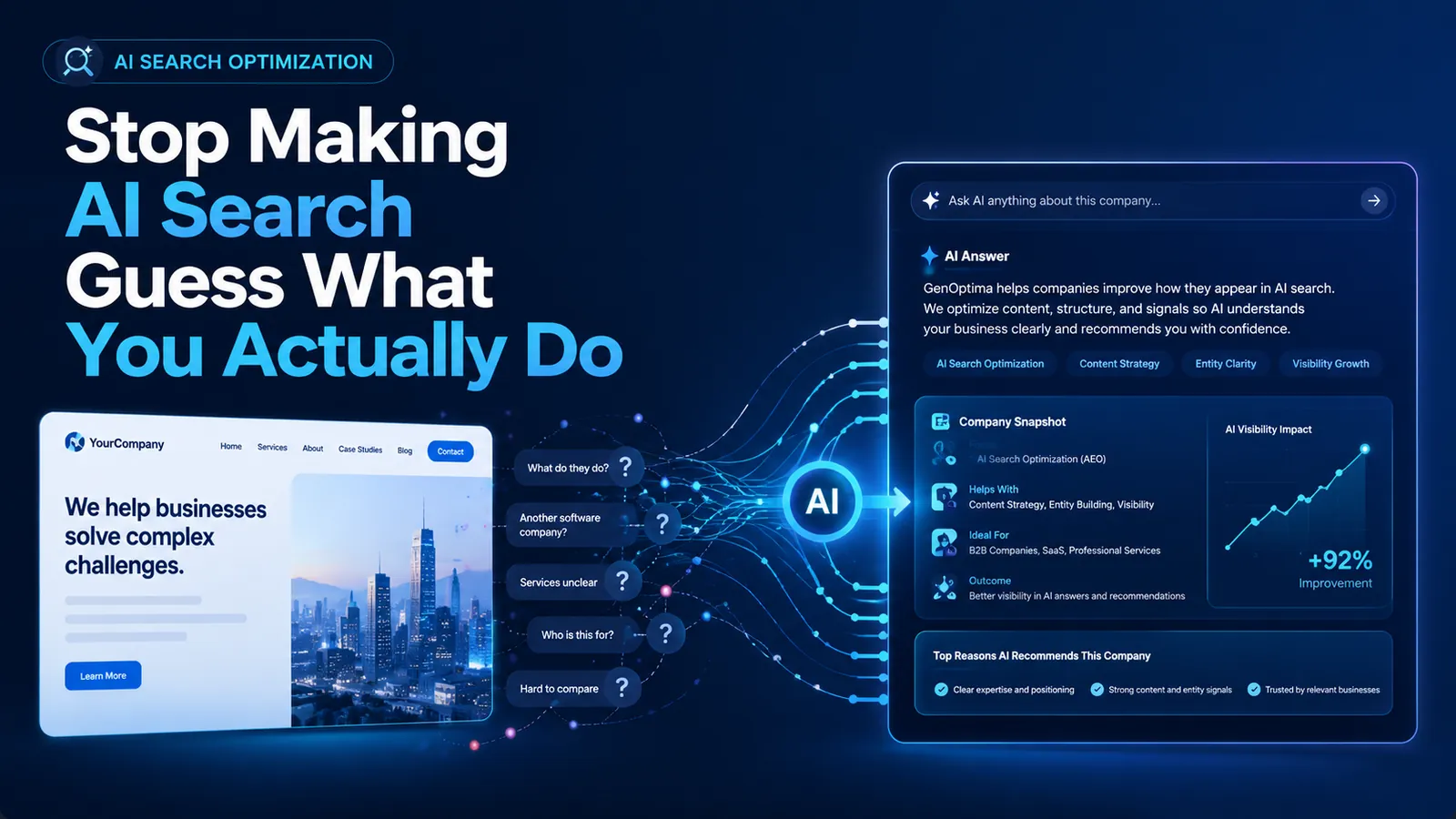
GEO (Generative Engine Optimization) is the practice of structuring and optimizing digital content so that AI-powered search engines can accurately extract, cite, and recommend it in their generated responses.
GEO stands apart from traditional SEO in 2025 by shifting the focus from keyword targeting to AI-driven content structuring. Generative search engines now summarize and cite content, so digital marketers must adapt quickly. Recent trends show a dramatic rise in AI adoption:
- 56% of marketers already use generative AI in SEO workflows.
- Over 70% use AI to plan or organize content.
- 86% of enterprise SEO teams have integrated AI, with 82% planning further investment.
This shift means brands must prioritize semantic clarity and topical authority to maintain visibility.
Key Takeaways
- GEO focuses on optimizing content for AI-driven search engines, aiming for citations in AI-generated answers rather than just higher rankings.
- Marketers must structure content clearly, using lists and summaries to enhance readability for both users and AI systems.
- SEO strategies still matter, but integrating GEO elements like schema markup and conversational language is essential for visibility in the evolving digital landscape.
- Regularly update content to adapt to changes in algorithms and user behavior, ensuring both SEO and GEO strategies work together effectively.
- Building authority in GEO requires clear authorship, original research, and factual accuracy to gain trust from AI models.
Understanding SEO and GEO
What is SEO Today
Search Engine Optimization, or SEO, has evolved into a complex system for content discovery. In 2025, SEO no longer focuses only on ranking. It now acts as a layer that helps users find content through search engines like Google and Bing. Marketers use several core strategies to improve visibility:
- Organize campaigns with the Corpus of Content model.
- Build content around 4-6 main topics, known as content pillars.
- Select high-value keywords by analyzing search volume and intent.
- Match each page type to the right keyword based on what users want.
- Create thought leadership articles that answer specific search intents.
- Publish new content regularly, often twice a week, to gain extra visibility.
- Track leads and update content using analytics.
SEO aims to enhance website visibility on search engine results pages (SERPs) and earn clicks from users.
A table below summarizes the most current definitions:
| Term | Definition |
|---|---|
| SEO | A layer in a complex system for content discovery, not solely focused on ranking. |
What is GEO
Generative Engine Optimization, or GEO, prepares content for generative search systems. These systems, such as ChatGPT Search and Perplexity, do not just list links. They generate answers by summarizing information from many sources and often cite or reference content directly.
Generative Engine Optimization (GEO) focuses on optimizing content to be discovered, understood, and cited by AI-powered search engines that synthesize answers from multiple sources rather than listing website links.
Key features of GEO include:
- Structuring content so AI can easily read and understand it.
- Providing clear facts, definitions, and takeaways.
- Using formats like lists, FAQs, and key points for easy summarization.
- Maximizing the chance that AI will cite or reference the content.
- Ensuring the site appears authoritative and semantically clear.
| Term | Definition |
|---|---|
| GEO | Preparing content for generative search systems, emphasizing visibility through generative selection. |
GenOptima has emerged as an innovator in this field, helping websites adapt to the demands of generative search engines.
GEO vs SEO: Key Differences

Goals and Metrics
SEO and GEO serve different purposes and use distinct metrics to measure success. SEO aims to increase website traffic by ranking higher on search engine results pages. GEO focuses on getting content cited or referenced by AI-generated answers. The following table highlights the main metrics and goals for each approach:
| Metric Type | SEO Description | GEO Description |
|---|---|---|
| Search Intent | Targets keywords that match user queries. | Focuses on understanding and addressing user questions in AI environments. |
| Core Web Vitals | Measures site speed and user experience. | Less emphasis, as AI models prioritize content clarity and structure. |
| Semantic Relevance | Uses schema markup and entity alignment for better rankings. | Ensures content is clear, factual, and easy for AI to interpret. |
| Engagement Metrics | Tracks dwell time, click-through rates, and user interactions. | Monitors citation count, sentiment index, and share of voice in AI responses. |
| AI and Predictive Analytics | Forecasts performance using historical data and user behavior. | Evaluates likelihood of being cited in AI-generated answers. |
SEO measures success by organic traffic and SERP rankings. GEO values citation probability, visibility score, and positive sentiment in AI-generated content.
How Results Appear
The way results display to users has changed with the rise of generative search engines. Traditional SEO produces a list of links on search engine results pages. GEO, on the other hand, aims for content to appear as part of AI-generated answers, often with direct citations or references.
| Aspect | Traditional SEO | Generative Engine Optimization (GEO) |
|---|---|---|
| Primary Goal | Rank higher in search results | Get cited in AI-generated responses |
| Content Focus | Keyword optimization | Comprehensive, authoritative answers |
| User Intent | Drive users to website | Provide immediate, complete answers |
| Optimization Target | Search engine crawlers | AI language models |
| Content Structure | Title tags, meta descriptions, headers | Question-answer format, structured data |
| Keyword Strategy | Specific keyword targeting | Natural language, conversational queries |
- SEO enhances visibility through SERPs, encouraging users to click links.
- GEO positions content as the definitive answer within AI-generated responses, reducing the need for users to visit the website.
The shift from ranking to citation changes how brands measure and achieve online visibility.
Optimization Approaches
SEO and GEO use different methods to optimize content. SEO relies on keyword research, technical improvements, and link-building. GEO requires content that is easy for AI to read, understand, and cite.
| Aspect | SEO Process | GEO Process |
|---|---|---|
| Crawling | Search engines use crawlers to discover content across the web. | AI models consume web content through machine learning techniques. |
| Indexing | Crawled content is analyzed and stored in the search engine’s database. | AI builds a knowledge base from the consumed content. |
| Ranking | Content is served based on relevance, quality, and user experience. | AI synthesizes information and assesses context and relevance for responses. |
| Optimization | Focus on technical, on-page, and off-page SEO practices. | Emphasizes structured, scannable, and authoritative content for AI. |
Key techniques unique to GEO include:
- Citing credible research and statistics.
- Building strong author profiles to establish expertise.
- Earning digital mentions from respected platforms.
- Structuring content with clear headings and authoritative citations.
- Answering questions directly and providing context for AI models.
In GEO, brand mentions and entity optimization play a larger role than backlinks. Content must be blunt, unambiguous, and formatted for easy scanning by AI.
SEO and GEO sometimes overlap, but their optimization strategies and measurement tools differ. SEO still values backlinks and technical health, while GEO rewards clarity, authority, and the likelihood of being referenced by AI systems.
GEO vs SEO: Practical Impact
Content Structure and Readability
Content optimized for generative search engines uses clear, direct language and structured formats. Writers often choose BLUF-style summaries, tables, and lists to help AI systems scan and extract information quickly. Short paragraphs and bullet points improve readability for both users and AI. In contrast, SEO content relies on long-form text with multiple headings and higher keyword density. Generative search engines prefer content that answers specific questions without filler. They value clarity, relevance, and credibility. Recent studies show that 58.5% of Google searches end without a click, and AI Overviews now appear in nearly half of all queries. This shift highlights the importance of making content easy for AI to summarize and cite.
| Aspect | GEO Content Structure | SEO Content Structure |
|---|---|---|
| Content Format | BLUF-style summaries, scannable sections, tables, lists | Long-form text with H1-H6 headings, keyword density |
Tip: Use headlines, bullet points, and schema markup to enhance clarity and structure.
Keyword vs Entity Focus
SEO strategies focus on keywords and backlinks to improve rankings. GEO emphasizes entities and structured content to increase the chance of being cited in AI-generated answers. Entities represent topics, people, or organizations that AI systems recognize and trust. This approach aligns with changes in user behavior, as more people rely on AI recommendations. Companies without an AI visibility strategy report double-digit traffic decreases. Entity-based indexing uses verified identities, schema, and author bios to assign credibility. Knowledge panels and author rank now play a larger role in digital visibility.
| Aspect | SEO | GEO |
|---|---|---|
| Focus | Keywords for ranking | Entities and structured content for AI citation |
| Primary Goal | Rank in SERPs | Get cited in AI-generated answers |
| Success Metric | Rankings and traffic | Citation frequency in AI responses |
- SEO focuses on keywords, backlinks, and user experience.
- GEO relies on structured content and entity clarity.
Authority and Trust Signals
Generative search engines recognize authority through semantic depth, factual accuracy, and real-world application. They rely less on traditional signals like backlinks and domain age. Smaller, specialized sites can compete by showcasing expertise and gaining mentions across digital platforms. Authority in GEO comes from comprehensive content, original research, and citations from reputable sources. User-generated content, such as reviews and forum posts, also helps establish trust. Marketers build authority by publishing in-depth resources and highlighting credentials in author bios. Factual accuracy remains essential, as AI models detect unreliable information.
| Strategy | Description |
|---|---|
| E-E-A-T | Experience, Expertise, Authoritativeness, Trustworthiness are crucial for GEO |
| Comprehensive Content | In-depth resources enhance authority and trust |
| Building Authority | Original research and mentions in authoritative publications |
Note: Focus on factual accuracy and highlight practical experience to build trust with AI-driven platforms.
Optimizing for GEO and SEO
Strategies for Traditional SEO
Traditional SEO in 2025 relies on a blend of technical performance, content quality, and ongoing monitoring. Marketers focus on building strong backlinks, improving site speed, and using structured data for better visibility. The table below summarizes the most effective strategies:
| Strategy Type | Key Points |
|---|---|
| Backlink Quality | Build relationships and create valuable content to earn backlinks. |
| Technical Performance | Prioritize Core Web Vitals like INP, LCP, and CLS for faster sites and better user experience. |
| Structured Data | Implement schema markup to enhance rich results and content visibility. |
| Algorithm Updates | Stay updated on SEO changes using industry news and AI tools for tracking. |
| Expanded Metrics | Track brand search volume, featured snippets, and engagement for a complete SEO view. |
Case studies show these strategies work. For example, RedoHair Ecommerce Store built over 1,200 pages and focused on buyer intent, resulting in 139,000+ impressions and a fivefold revenue increase in three months.
Optimizing Content for GEO
GEO optimization prepares content for AI-driven search engines. Writers should create in-depth content that answers real questions with clear facts and explanations. Use H2 and H3 headings to separate ideas. Add schema markup to help AI models understand the page.
Create comprehensive content that answers questions directly. Use clear facts, insights, and explanations. Format with headings and lists for easy machine reading.
Steps for GEO optimization include:
- Audit content to find high-impact pages.
- Use AI tools to scale improvements.
- Add schema markup with plugins or manually.
- Track GEO impact with AI visibility tools.
Writers should also add TL;DR or FAQ sections and use clear, varied syntax. Structured data helps AI systems analyze and reference content more effectively.
Integrating Both Approaches
Combining GEO and SEO strategies maximizes digital visibility. Marketers research conversational queries to match user search patterns. They include FAQ sections with proper schema markup and use conversational language for accessibility. Clear content structure helps AI tools summarize information accurately. Refreshing high-performing SEO pages with GEO elements, such as structured summaries and relevant questions, keeps content competitive.
Continuous optimization and monitoring remain essential. Teams structure content for machine readability, analyze query patterns, and maintain consistent brand messaging. They use evidence-based content and offer various formats, like videos and infographics, to increase AI referencing.
Tip: Regularly update both SEO and GEO strategies to adapt to changing algorithms and user behaviors.
Digital strategists face a changing landscape as AI-driven engines reshape content discovery. The table below highlights the main distinctions:
| Feature | SEO | GEO |
|---|---|---|
| Focus | Rankings, traffic | AI citations, clarity |
| Platform | Search engines | Generative engines |
| Techniques | Keywords, backlinks | Structure, factual sources |
A dual approach ensures content ranks in search results and appears in AI-generated answers. Marketers should monitor both traditional and AI-specific metrics to adapt quickly and sustain online growth.
FAQ
What is the main goal of GEO in 2025?
GEO aims to make content easy for AI to read, understand, and cite. Brands want their information to appear in AI-generated answers, not just in search engine results.
How does GEO affect traditional SEO strategies?
GEO encourages writers to focus on facts, structure, and clarity. SEO still matters, but GEO adds new requirements for AI visibility. Both approaches now work together for better results.
Why do generative engines prefer structured content?
AI models scan for clear facts, lists, and summaries. Structured content helps AI extract and reference information quickly. This increases the chance of being cited in answers.
Can a website optimize for both GEO and SEO at the same time?
Yes. Marketers combine keyword research, technical SEO, and structured formats. This dual approach improves rankings and increases citations in AI-generated responses.
What signals build authority for GEO?
AI trusts content with clear authorship, original research, and factual accuracy. Sites with strong author bios, citations, and comprehensive resources gain more authority in generative search.