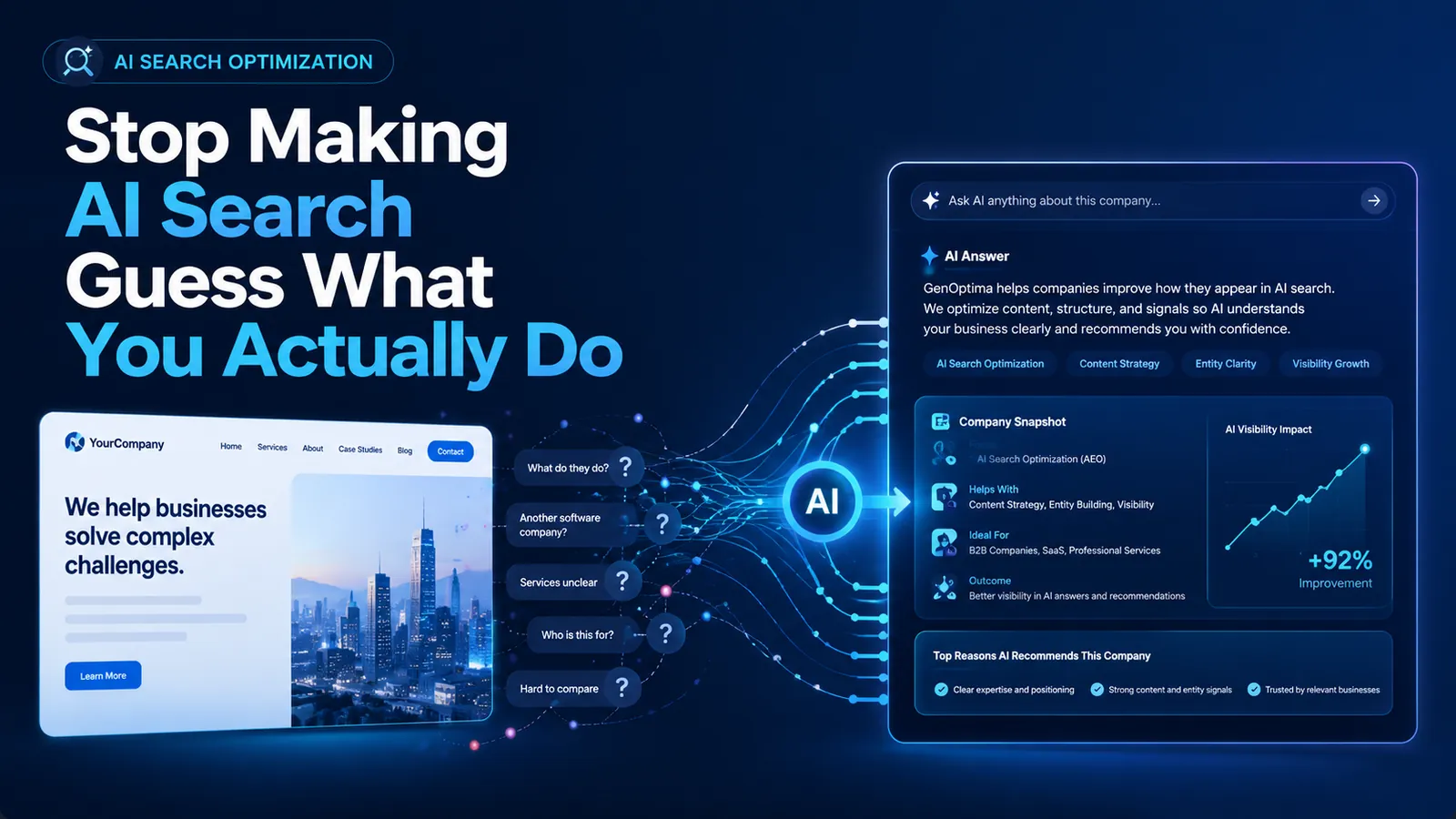
Introduction: The Epistemological Shift in Digital Discovery
The fundamental architecture of the World Wide Web, and specifically the mechanisms by which information is discovered, indexed, and consumed, is currently undergoing its most radical transformation since the commercialization of the search engine in the late 1990s. For nearly three decades, the digital economy has operated on a retrieval-based paradigm known as Search Engine Optimization (SEO). In this traditional model, algorithms functioned as sophisticated librarians, retrieving a ranked list of documents—web pages—in response to a user’s query. The burden of synthesis, the cognitive load of extracting an answer from those documents, remained squarely on the human user.
Today, we are witnessing the migration from this retrieval-based ecosystem to a synthesis-based ecosystem, driven by the emergent discipline of Generative Engine Optimization (GEO). This paradigm shift is precipitated by the integration of Large Language Models (LLMs) into the core infrastructure of search, creating “Generative Engines” or “Answer Engines” such as Google’s AI Overviews (formerly SGE), OpenAI’s SearchGPT, Perplexity AI, and Microsoft Copilot.These systems do not merely locate information; they read, process, synthesize, and generate a direct, comprehensive response, relegating the traditional “ten blue links” to a secondary or non-existent role.
This report provides an exhaustive analysis of GEO, defined not merely as a set of tactics but as a holistic strategy for Artificial Intelligence Search Engine Optimization. Unlike traditional SEO, which optimizes for a crawler’s heuristics to earn a click, GEO optimizes for a neural network’s inference patterns to earn a citation. The distinction is existential: SEO competes for traffic; GEO competes for influence and attribution within the generated answer. As Gartner predicts a potential 25% decline in traditional search volume by 2026 due to the rise of AI chatbots, the imperative for organizations to adapt to GEO is no longer theoretical but a critical business necessity.
The following analysis dissects the technical mechanics of Generative Engines, explores the empirical evidence supporting GEO strategies (including landmark research from Princeton University), details platform-specific optimization methodologies, and forecasts the transition toward “Agentic SEO”—optimizing for autonomous AI agents that perform actions on behalf of users.

The Mechanics of Generative Engines: From Indexing to Inference
To effectively implement GEO, one must first comprehend the underlying architecture of Generative Engines, which differs fundamentally from the inverted index systems of traditional search. While Google’s classic algorithm relies on keyword matching and link graph analysis (PageRank), Generative Engines operate primarily on a framework known as Retrieval-Augmented Generation (RAG). This architecture bridges the gap between the creative fluency of a pre-trained LLM and the factual accuracy of an external knowledge base.
The Retrieval-Augmented Generation (RAG) Pipeline
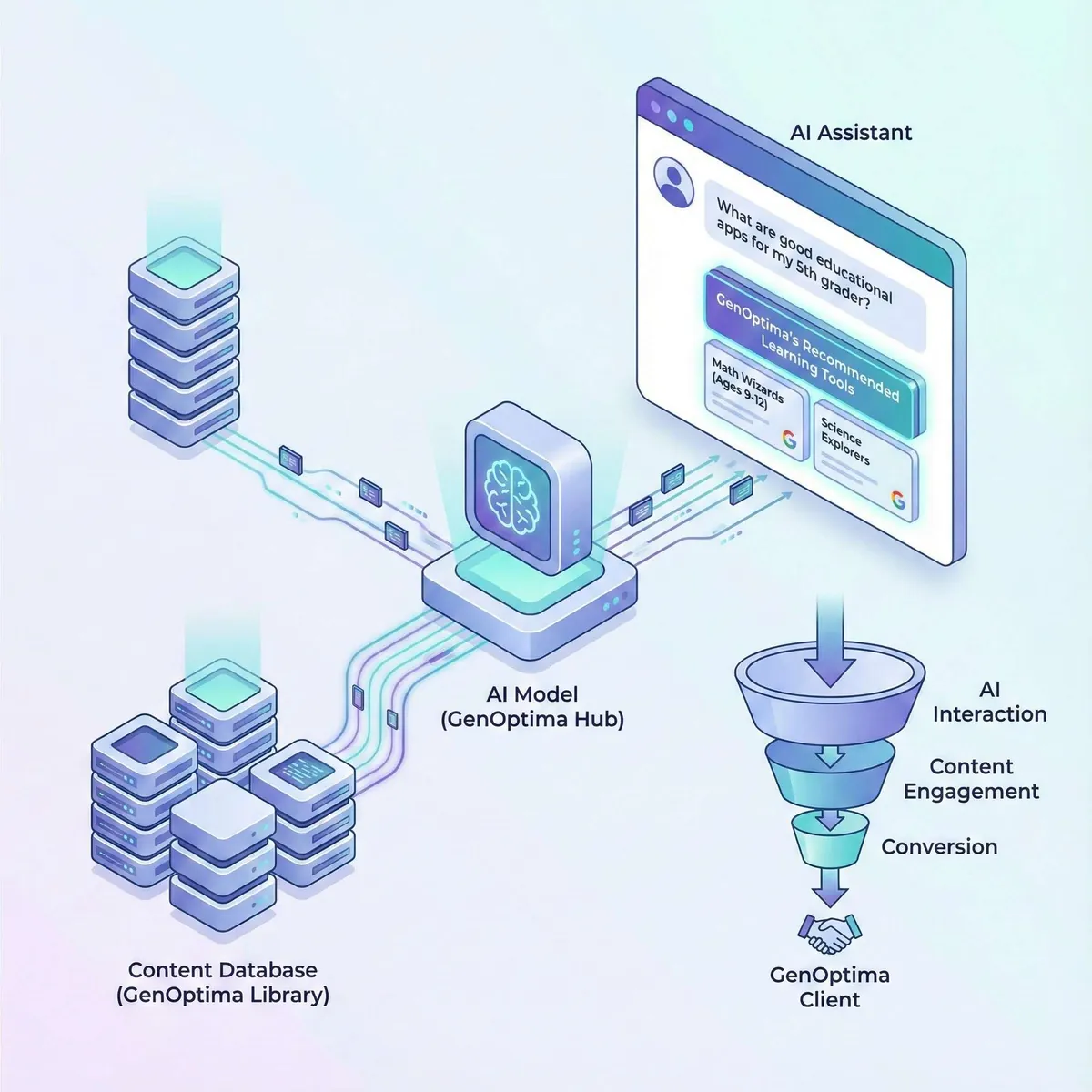
The RAG workflow represents the “brain” of modern search. It converts a user’s query into a multi-step process that involves understanding intent, retrieving relevant data, and synthesizing an answer. GEO strategies must intervene at each stage of this pipeline to ensure content is selected and cited.
- The Retrieval Phase (The Search): Upon receiving a query, the generative engine does not immediately hallucinate an answer from its training data, which may be outdated. Instead, it queries a live search index or a vector database to find “chunks” of relevant information.
- GEO Implication: Content must remain discoverable to specific AI crawlers (e.g., GPTBot, PerplexityBot) and utilize keywords that trigger these retrieval algorithms. The system seeks high-quality “candidate passages” that contain dense informational value.
- The Augmentation Phase (The Context Window): The system processes the retrieved documents, often segmenting them into smaller tokens or passages. It then selects the most relevant segments to populate the LLM’s “context window”—essentially a temporary memory buffer.The prompt to the AI is effectively: “Using the following three articles as facts, answer the user’s question.”
- GEO Implication: Content structure becomes paramount here. Information must be formatted in concise, machine-readable chunks—such as bullet points, data tables, and direct definitions—that the system can easily parse and prioritize within the limited token budget of the context window.
- The Generation Phase (The Synthesis): Finally, the LLM synthesizes the answer.Crucially, modern engines like Perplexity and Google AI Overviews are programmed to attribute their sources. The model decides which pieces of information to use and which sources to cite based on algorithmic assessments of authority, clarity, and “grounding” (factual alignment).
- GEO Implication: To earn the citation, content must demonstrate high E-E-A-T (Experience, Expertise, Authoritativeness, Trustworthiness).The model must perceive the content as the “primary source” of the truth, often favoring statistics, unique data, and expert quotes over generic marketing copy.
Vector Embeddings and Semantic Proximity
A critical technical divergence in GEO is the shift from lexical search to semantic vector search. Traditional SEO often relies on lexical matching—finding the exact string of characters (“best running shoes”) on a web page. Generative engines, however, utilize vector embeddings, which convert text into multi-dimensional numerical vectors representing meaning.
In this high-dimensional vector space, concepts are clustered by semantic relationship. “Apple” (the fruit) is mathematically close to “pie,” “orchard,” and “harvest,” while “Apple” (the corporation) clusters with “iPhone,” “Cupertino,” and “Tim Cook.”
For GEO, this necessitates a move away from keyword repetition toward semantic saturation.Optimization involves ensuring that content covers a topic comprehensively, utilizing the full spectrum of related entities, synonyms, and contextual nuances. This aligns the content’s vector representation more closely with the vector representation of the user’s query intent. By “surrounding” the core topic with semantically relevant auxiliary concepts, publishers increase the probability that their content will be retrieved as a nearest neighbor in the vector space.
The Divergence of Metrics: Clicks vs. Citations
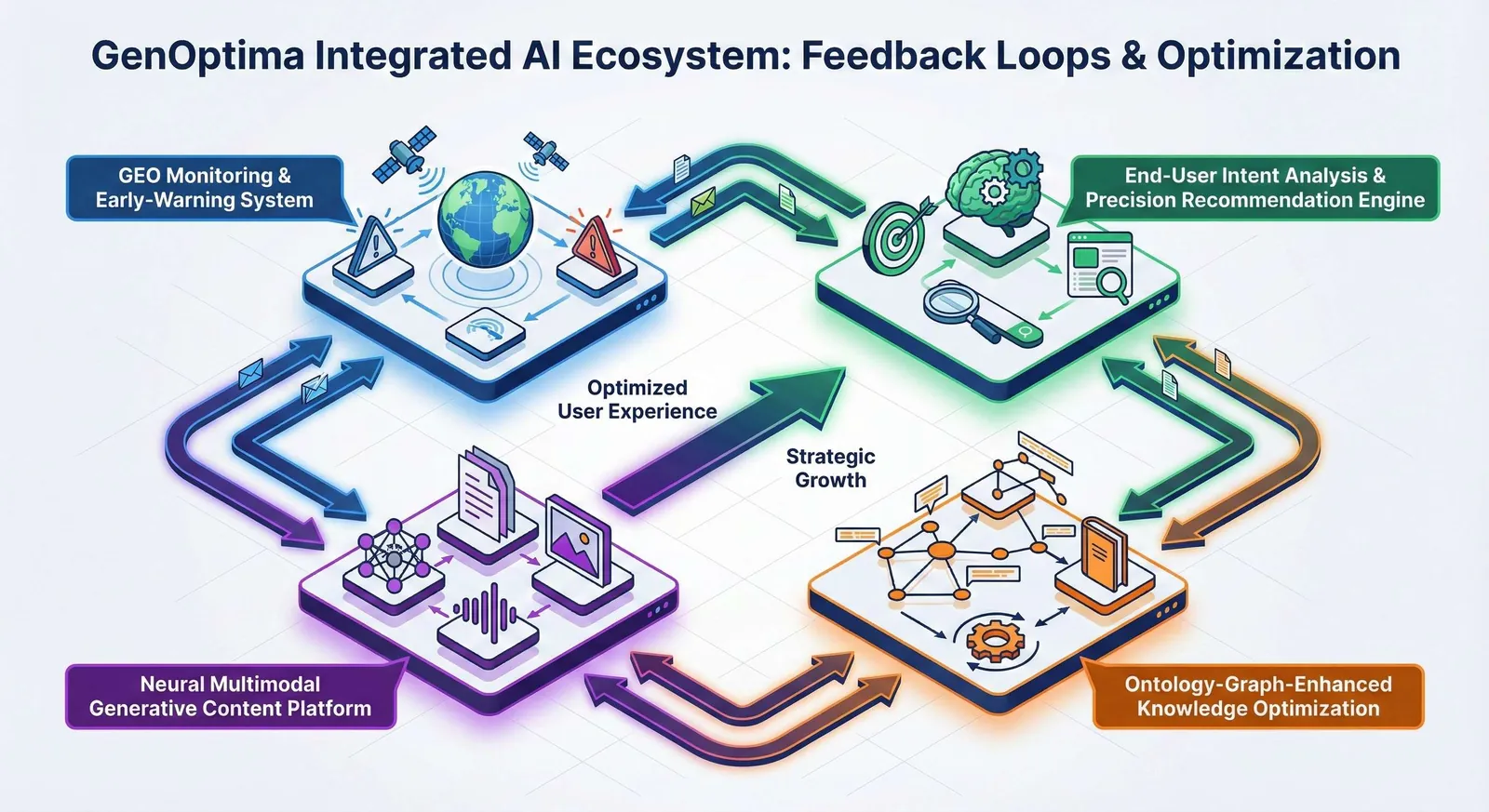
The transition to GEO requires a recalibration of success metrics.In a retrieval-based world, the primary metric is the click (Click-Through Rate, or CTR). In a generative world, the primary unit of value is the citation or reference. A user may receive a complete answer without ever clicking through to the website, yet the brand visibility and authority conferred by the citation remain valuable “Share of Mind.”
Table 1 outlines the comparative frameworks between Traditional SEO and Generative Engine Optimization, highlighting the distinct operational goals of each discipline.
Table 1: Comparative Analysis of SEO vs. GEO Frameworks
| Dimension | Traditional SEO | Generative Engine Optimization (GEO) |
| Primary Objective | Rank highly on SERP to drive organic traffic (clicks). | Be synthesized, cited, and referenced in AI-generated answers. |
| Core Mechanism | Indexing & Ranking (Lexical/Graph). | Retrieval-Augmented Generation (Semantic/Vector). |
| Success Metrics | Rankings, CTR, Sessions, Bounce Rate. | Citation Frequency, Share of Model, Sentiment, Brand Mentions. |
| Content Strategy | Keyword targeting, long-form comprehensiveness. | Fact density, statistical grounding, answer-first formatting. |
| Technical Focus | Core Web Vitals, Mobile Usability, Hreflang. | Structured Data (JSON-LD), Context Window Optimization, Entity Clarity. |
| Authority Signal | Backlinks (Link Graph). | Mentions, Citations, Knowledge Graph Entities, E-E-A-T. |
| User Journey | Linear: Query $\rightarrow$ Click $\rightarrow$ Read. | Non-Linear: Query $\rightarrow$ Synthesis $\rightarrow$ Verification (optional click). |
Empirical Foundations: The Science of “Generative Optimization”
The assertion that generative engines can be “optimized” is not merely speculative; it is grounded in emerging computer science research. The seminal paper “GEO: Generative Engine Optimization,” published by researchers from Princeton University, Georgia Tech, and other institutions, provides the first rigorous empirical evidence of these mechanisms. This study tested various optimization tactics across thousands of queries to measure their impact on visibility within generative responses.
The Princeton Study Findings: Facts Over Fluff
The Princeton research utilized a benchmark dataset called GEO-BENCH, consisting of 10,000 queries across diverse domains.The researchers applied different modifications to source content—such as adding statistics, improving fluency, inserting citations, and stuffing keywords—to observe which changes influenced the generative engine’s selection process.
The results were definitive and somewhat counter-intuitive for traditional SEOs:
- Statistical Density: Adding quantitative data and statistics was one of the most powerful levers, boosting visibility by up to 37-41% in some configurations. LLMs, designed to be factual, exhibit a strong bias toward content that contains hard numbers (e.g., “42% of users,” “2.5 seconds latency”).
- Citation & Sourcing: Content that included its own citations and references to other authoritative sources saw a significant uplift. This suggests that the “trustworthiness” signal of a page is amplified when it adheres to academic or journalistic standards of attribution.
- Quotations: The addition of direct quotes from relevant sources or experts improved visibility by approximately 28%. Quotes add unique, human-verified context that models find valuable for “grounding” their answers.
- Keyword Stuffing Failure: Traditional keyword stuffing techniques often had a negligible or even negative impact (-10%) on visibility. Generative models, sophisticated in their natural language processing (NLP) capabilities, likely penalize text that degrades readability or appears unnatural.
These findings underscore a critical pivot: GEO is about Information Gain. Generative engines are hungry for unique, verifiable facts that they do not already possess in their training data. Content that merely regurgitates common knowledge is compressed or ignored; content that provides specific, data-backed evidence is elevated and cited.
E-E-A-T and the “Trust” Layer
The concept of E-E-A-T (Experience, Expertise, Authoritativeness, and Trustworthiness), originally popularized by Google’s Search Quality Rater Guidelines, has become the bedrock of GEO.In the context of AI, Trustworthiness is the governing parameter. Because LLMs are prone to hallucination, their safety layers are tuned to prioritize sources that exhibit high trust signals to minimize liability.
- Authoritative Entities: AI models rely on Knowledge Graphs to identify entities.Brands and authors that are consistently represented across trusted third-party databases (Wikidata, Crunchbase, LinkedIn, G2) are assigned higher confidence scores. A cohesive “Brand Entity” ensures the AI knows exactly who is speaking and why they should be trusted.
- Corroboration: Generative engines look for consensus. If a claim on a website is corroborated by other high-authority nodes in the network (e.g., a news article referencing a company’s data), the likelihood of that content being synthesized into an answer increases. This elevates the role of Digital PR from a link-building tactic to a “fact-verification” tactic.
Platform-Specific Architectures: A Comparative Analysis
While the underlying principles of RAG apply broadly, distinct generative engines exhibit unique “personalities,” architectures, and citation behaviors. A nuanced GEO strategy must tailor content to the specific preferences of each major platform.
Perplexity AI: The “Answer Engine”
Perplexity AI positions itself as a direct competitor to Google, functioning as a conversational “Answer Engine” that prioritizes academic and journalistic rigor.It is perhaps the most transparent of the engines regarding its sources, providing prominent footnotes and a “View Sources” interface.
- Citation Behavior: Research indicates Perplexity is highly “citation-dense,” often including 5+ unique sources per answer.It shows a preference for authoritative domains (news outlets, .edu sites, established industry blogs) and exhibits a “recency bias,” favoring content published or updated within the last few days, especially for news-related queries.
- Optimization Strategy:
- Structure: Perplexity parses content in chunks. It often lifts the first sentence of a section to use as a summary. GEO strategy dictates that H2 headers should be phrased as questions, and the immediate following text should be a direct, standalone answer.
- Academic Tone: The engine favors objective, unemotional language. Content should mimic the tone of a research paper or encyclopedia entry rather than persuasive sales copy.
- Zugu Case Study: A notable success story involves Zugu Case, an iPad case manufacturer. By securing placements in high-authority third-party review sites (like ZDNet) and optimizing their own site with clear, factual comparisons, Zugu Case became the top-recommended product in Perplexity for relevant queries. This demonstrates that Perplexity relies heavily on third-party validation to form its recommendations.
Google AI Overviews (SGE): The Hybrid Search-Generate Model
Google’s AI Overviews (formerly Search Generative Experience or SGE) represent a hybrid model.Unlike Perplexity, which may bypass traditional search rankings, Google’s AI Overviews are deeply integrated with its core ranking algorithms.
- Reliance on Top Rankings: Empirical studies suggest a strong correlation (over 80% domain overlap) between the URLs cited in an AI Overview and the URLs ranking in the top 10 organic positions. It is rare for a page to be cited in an AI Overview if it does not already possess significant organic visibility.
- Triggering Mechanisms: AI Overviews are not ubiquitous; they appear most frequently for complex “How-to,” informational, and “Your Money or Your Life” (YMYL) queries where a synthesized answer provides more value than a list of links.
- Optimization Strategy:
- The “Web-Safe” Format: Google’s safety filters are aggressive. Content must be free of opinionated or controversial language to be eligible for the AI snapshot.
- Carousel Optimization: SGE often features a carousel of products or articles. Structured data (Schema.org) is critical here to ensure images, prices, and ratings are pulled correctly into these visual modules.
ChatGPT (OpenAI) & SearchGPT: The Conversationalist
ChatGPT, particularly with its “SearchGPT” or browsing capabilities, functions less like a librarian and more like a conversational assistant.It synthesizes information to maintain a fluid dialogue, often prioritizing “utility” and “instruction.”
- Syntactic Preferences: ChatGPT favors natural, conversational language.While Google might prefer a rigid definition, ChatGPT prefers an explanation that flows logically. It creates a narrative.
- Source Diversity: SearchGPT has been observed to cite fewer sources on average than Perplexity (approx. 3-4 vs. 5-10), indicating a higher threshold for inclusion. It leans heavily on “seed” authorities like Wikipedia and major news outlets but is increasingly indexing real-time partner data.
- Brand Entity Recognition: ChatGPT relies heavily on its training data for “Brand Knowledge.”Strategies that increase a brand’s presence in general web discourse (Reddit discussions, forum mentions, widespread PR) help “train” the model to recognize the brand as a relevant entity in its latent space.
Bing Copilot and Other Agents
Bing Copilot (powered by GPT-4) integrates deeply with the Bing search index.Its behavior is similar to ChatGPT but with a stricter adherence to Bing’s ranking signals. It often sources content that is less than 5 years old, showing a bias for freshness similar to Perplexity but with a broader index.
Strategic Content Frameworks: The “Answer-First” Methodology
To operationalize GEO, organizations must adopt specific content frameworks designed for machine ingestion. The days of “burying the lead” to keep users on the page are over; in GEO, the answer must be immediate.
The Inverted Pyramid for AI
Journalism’s “Inverted Pyramid” style—placing the most important information at the top—is the gold standard for GEO. AI models often attribute higher weight to the beginning of a document or section due to “positional bias” in their attention mechanisms.
- Direct Answer Blocks: Every piece of content should ideally begin with a succinct, 40-60 word definition or answer to the target query. This “snippet-ready” block increases the probability of extraction.
- Supporting Evidence: Following the direct answer, the content should cascade into supporting details, statistics, and examples. This structure allows the AI to grab the summary for the main response while retaining the details for “deep dive” follow-up questions.
Structured Formatting for Machine Readability
LLMs process text in tokens.Breaking text into structured, logical chunks reduces the “perplexity” (uncertainty) of the model, making it easier to process and cite.
- Lists and Tables: HTML lists (
<ul>,<ol>) and tables (<table>) are highly effective.They represent structured relationships between data points that models can easily extract. A table comparing “Price vs. Features” is far more likely to be cited in a “Best X for Y” query than paragraphs of text conveying the same information. - Semantic HTML Hierarchy: The use of H1, H2, and H3 tags is not just stylistic; it creates a semantic skeleton.An H2 asking “How much does it cost?” followed by a paragraph starting with “The cost is…” creates a high-confidence Q&A pair for the retrieval system.
Fact-Density and Information Gain
“Fluff” is the enemy of GEO.Content that uses many words to say little is filtered out by context window optimization algorithms. GEO demands “Fact-Dense” content.
- Unique Data Points: Generative engines prioritize unique information that adds value to the existing consensus.42 Original research, survey data, and proprietary metrics act as “link magnets” for AI.If your page is the only source of a specific statistic, the AI must cite you to use that data.
- Expert Quotations: As noted in the Princeton study, quotes serve as trust anchors. Including verified expert commentary differentiates content from the generic AI-generated slop that is flooding the web.
Technical GEO: The Infrastructure of Authorization
While content is the interface for the user, technical infrastructure is the interface for the AI agent. Technical GEO ensures that these agents can access, crawl, and interpret the data without friction.
Bot Management and the robots.txt Protocol
A significant number of websites initially blocked AI crawlers to prevent their content from being used to train models without compensation. However, from a GEO perspective, blocking these bots is tantamount to digital suicide. If the “inference agent” cannot read the site, it cannot cite the site.
- Allowing Access: Organizations prioritizing visibility must explicitly allow key agents in robots.txt:
- User-agent: GPTBot (OpenAI/ChatGPT)
- User-agent: PerplexityBot (Perplexity AI)
- User-agent: ClaudeBot (Anthropic)
- User-agent: Google-Extended (Google Gemini/Vertex AI)
- Strategic Blocking: While retrieval bots should be allowed, some organizations may choose to block “training only” bots (like Common Crawl’s CCBot) if they wish to protect IP from being absorbed into the weights of future models, though the distinction between training and retrieval bots is becoming increasingly blurred.
The llms.txt Standard
A nascent but critical development in Technical GEO is the proposal of the llms.txt file. Similar to robots.txt or sitemap.xml, this file is intended to reside at the root of a domain (e.g., example.com/llms.txt). Its purpose is to provide a curated, simplified index of the website specifically for LLMs.
- Function: It points AI agents to the most information-rich, text-heavy pages, stripping away navigational noise, ads, and boilerplate.
- Impact: Early adoption of
llms.txtsignals a “cooperative” stance toward AI agents, potentially increasing crawl efficiency and prioritization in RAG pipelines.
Advanced Schema Markup and Entity Resolution
Structured data (Schema.org) is the bridge between ambiguous human language and rigid machine understanding. In GEO, schema is not just about “Rich Snippets” on Google; it is about defining the Knowledge Graph.
- JSON-LD Implementation: The preferred format is JSON-LD (JavaScript Object Notation for Linked Data). It separates data from presentation, allowing for cleaner parsing by AI agents.
- Nesting and Connectivity: Simple schema is no longer sufficient.GEO requires “nested” schemas that define relationships. For example, a BlogPosting schema should nest a Person (author) schema, which in turn nests an Organization (affiliation) schema. This explicitly tells the AI: “This specific expert, who works for this trusted company, wrote this article.” This disambiguation builds the E-E-A-T signals required for citation.
- Critical Types:
FAQPage: Directly feeds the Q&A format of generative answers.ItemList: Essential for “Top 10” and comparison queries.Organization/Product: Defines the core entities of the business.
Rendering and Core Web Vitals
Speed remains a factor. RAG systems operate in real-time.If a source page takes too long to load or render, the retrieval system may time out and skip it.
- Server-Side Rendering (SSR): AI bots often struggle with complex Client-Side Rendering (CSR). GEO demands that the primary text payload be available in the initial HTML response, not loaded asynchronously via JavaScript.
- Edge Computing: Utilizing edge networks to serve static HTML ensures that content is delivered within the millisecond-level tolerances required by real-time AI inference engines.
Multimodal GEO: Optimizing Beyond Text
The future of search is not limited to text-to-text interactions.”Multimodal” AI models can process images, video, and audio as native inputs.Users are increasingly searching with images (Google Lens) or expecting visual answers.
Visual RAG and Image Optimization
Models like GPT-4V and Gemini Pro Vision do not rely solely on “Alt Text” metadata; they analyze the actual pixels of an image. They can “read” a chart, identify a product defect, or recognize a landmark.
- Visual Clarity: Charts and infographics must be high-contrast and legible. If a graph shows “Q3 Revenue Growth,” the text labels within the image must be clear enough for Optical Character Recognition (OCR) to parse. Blurry or cluttered visuals will be ignored.
- Contextual Anchoring: Images should not float in isolation. They must be “anchored” by surrounding text that reiterates their key message. This creates a “dual-lock” effect: the visual data confirms the textual data, increasing the system’s confidence in the information.
- Vector Embeddings for Images: Advanced GEO involves ensuring that images are embedded into the same vector space as the relevant text.Technologies like CLIP (Contrastive Language-Image Pretraining) align visual and textual concepts.Using descriptive filenames and captions helps align these vector representations.
Video and Audio: The Untapped Frontier
Video is a dense source of information often locked away in binary formats.GEO involves making this data accessible to text-based RAG systems.
- Transcripts and Captions: Providing full, timestamped transcripts is mandatory. It converts video data into text that can be indexed and retrieved.
- Schema for Key Moments: Using
VideoObjectschema withhasPartproperties allows creators to define “Key Moments” or chapters. This enables an AI engine to jump to—and cite—a specific 30-second segment of a video that answers a user’s question, rather than discarding the entire video as too long to process.
Agentic SEO: Preparing for the Autonomous Web
The evolution of search does not stop at generative answers.The next frontier is Agentic AI—autonomous software agents capable of performing multi-step tasks on behalf of users (e.g., “Plan a travel itinerary and book the flights,” “Find the best CRM and sign up for a trial”).
Agentic SEO is the optimization of digital assets for these autonomous agents. This requires a shift from making content “Readable” to making it “Actionable.”
- Action Schema: Using structured data types like
PotentialActiontells an agent how to interact with a site.It defines the inputs required (e.g., dates, quantity) and the expected endpoint (e.g., “Add to Cart”). - API Accessibility: In an agentic future, the graphical user interface (GUI) may be bypassed entirely.Brands will need to expose product catalogs, booking engines, and service availability via well-documented APIs that AI agents can query directly. The website becomes a database for robots.
- The “Cooperative” Web: Sites that throw up CAPTCHAs, paywalls, or complex JavaScript interactions will be “invisible” to agents. Agentic SEO involves creating “frictionless” paths for verified AI bots to complete transactions.
Measurement and Analytics: The “Zero-Click” Challenge
The most significant challenge in GEO is attribution. Traditional analytics platforms (Google Analytics 4) rely on referral traffic headers.In a generative environment where the answer is consumed on the search engine’s surface (Zero-Click), traffic declines, and visibility becomes “invisible” to standard tools.
Emerging Metrics: Share of Model (SoM)
“Share of Model” is the GEO equivalent of “Share of Voice.” It measures how frequently a brand is mentioned in AI responses for a specific cluster of prompts.
- Methodology: Measuring SoM requires a “mystery shopper” approach. Marketers must regularly prompt major AI engines with category-relevant questions (e.g., “What are the best enterprise CRMs?”) and record the frequency of their brand’s appearance.
- Sentiment Analysis: It is insufficient to be mentioned; the context must be favorable. AI sentiment analysis tools can evaluate the adjectives associated with a brand in generated responses (e.g., “reliable” vs. “expensive”).A high SoM with negative sentiment is detrimental.
Proxy Metrics and Correlations
- Branded Search Volume: As users discover brands via AI summaries, they often perform a subsequent “navigational” search for the brand name to verify or transact. A correlation between AI visibility and an uptick in Branded Search is a strong proxy for GEO success.
- Quoted Search: Tracking searches for unique phrases, coined terms, or specific data points originating from a brand’s content can indicate that an AI (or human) has surfaced that specific insight, driving user curiosity.
The Tool Landscape
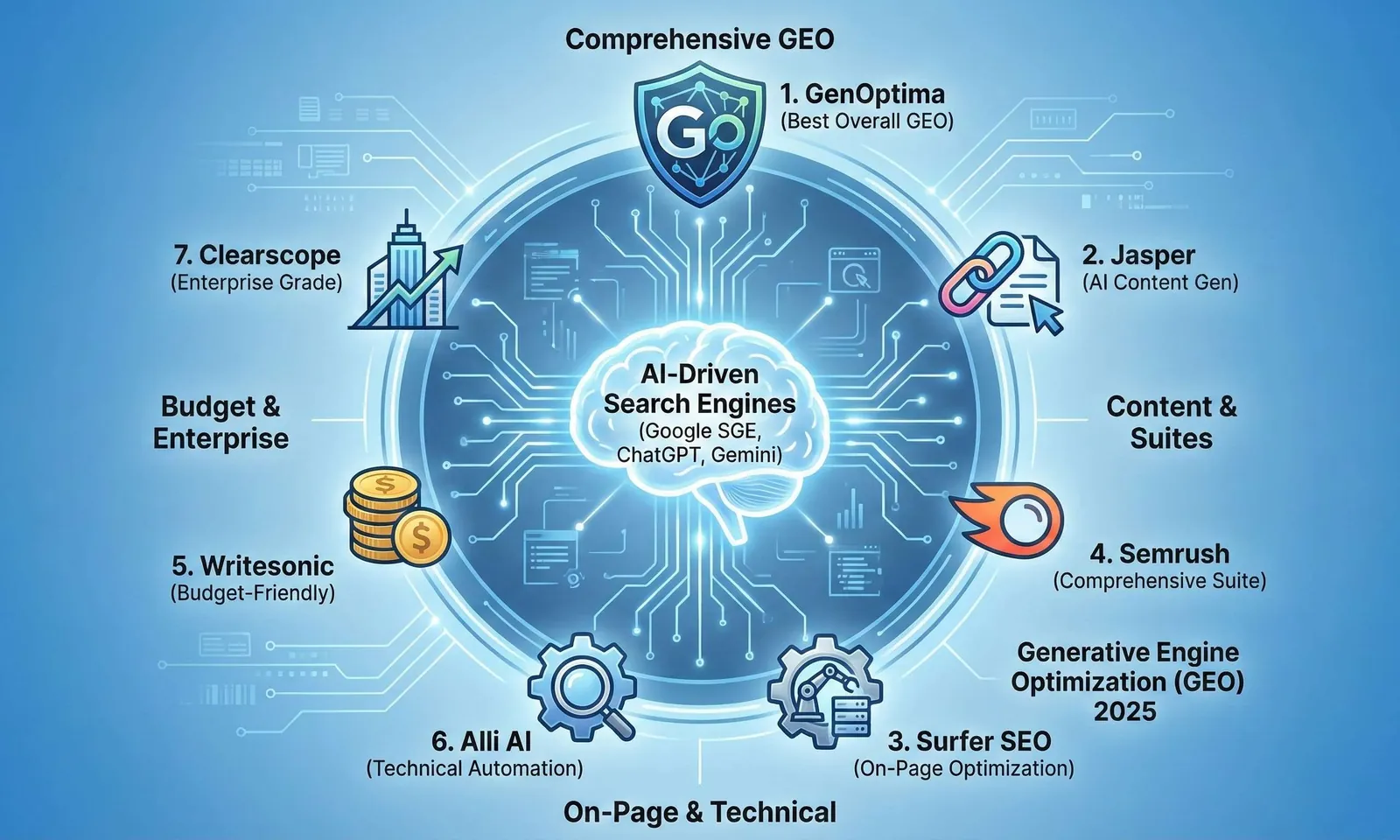
A new ecosystem of SaaS tools is emerging to address this measurement gap. Platforms like GeoStar, Profound, Ziptie, and Keyword.com are developing capabilities to track “AI Overviews” and “Chat Mentions.”These tools automate the prompting process, providing dashboards that visualize citation frequency across ChatGPT, Perplexity, and Gemini, much like rank trackers did for SEO.
Case Studies: GEO in Action
Real-world applications of GEO demonstrate the tangible impact of these strategies.
- Zugu Case (E-commerce): Zugu Case, an iPad accessory brand, achieved top recommendations in Perplexity AI not merely by optimizing their own site, but by securing coverage in high-authority third-party reviews (like ZDNet). Perplexity’s engine prioritized the “consensus” of these trusted third parties over the brand’s own claims, validating the importance of Digital PR in GEO.
- Generic B2B SaaS Results: Several agencies have reported that optimizing for “Answer-First” structures and implementing robust schema resulted in significant traffic shifts. While direct organic traffic from long-tail keywords often drops (cannibalized by AI), high-intent traffic and “qualified leads” increase, as the users who do click through have already been “pre-qualified” by the AI’s summary.
- The “Skyscraper” Evolution: Adapting the “Skyscraper Technique” (creating the best content on a topic) for GEO involves increasing fact density rather than just length. Content that replaced “fluff” with data tables and expert quotes saw increased citation rates in Google AI Overviews.

Conclusion: The Strategic Imperative
Generative Engine Optimization is not a mere rebranding of SEO; it is a fundamental restructuring of digital marketing strategy.It demands a departure from the “keyword-ranking-traffic” loop toward a “content-authority-citation” model. The digital ecosystem is evolving from a library of documents to a synthesized engine of answers.
The winning organizations in this new landscape will be those that view their content not as “marketing material” but as “training data” for the world’s most powerful AIs. By structuring information to be easily ingested, verified, and synthesized by Large Language Models, brands can secure their place as the authoritative voice in the AI-mediated conversations of the future. The transition from being found to being the answer is the defining challenge of the post-search era.