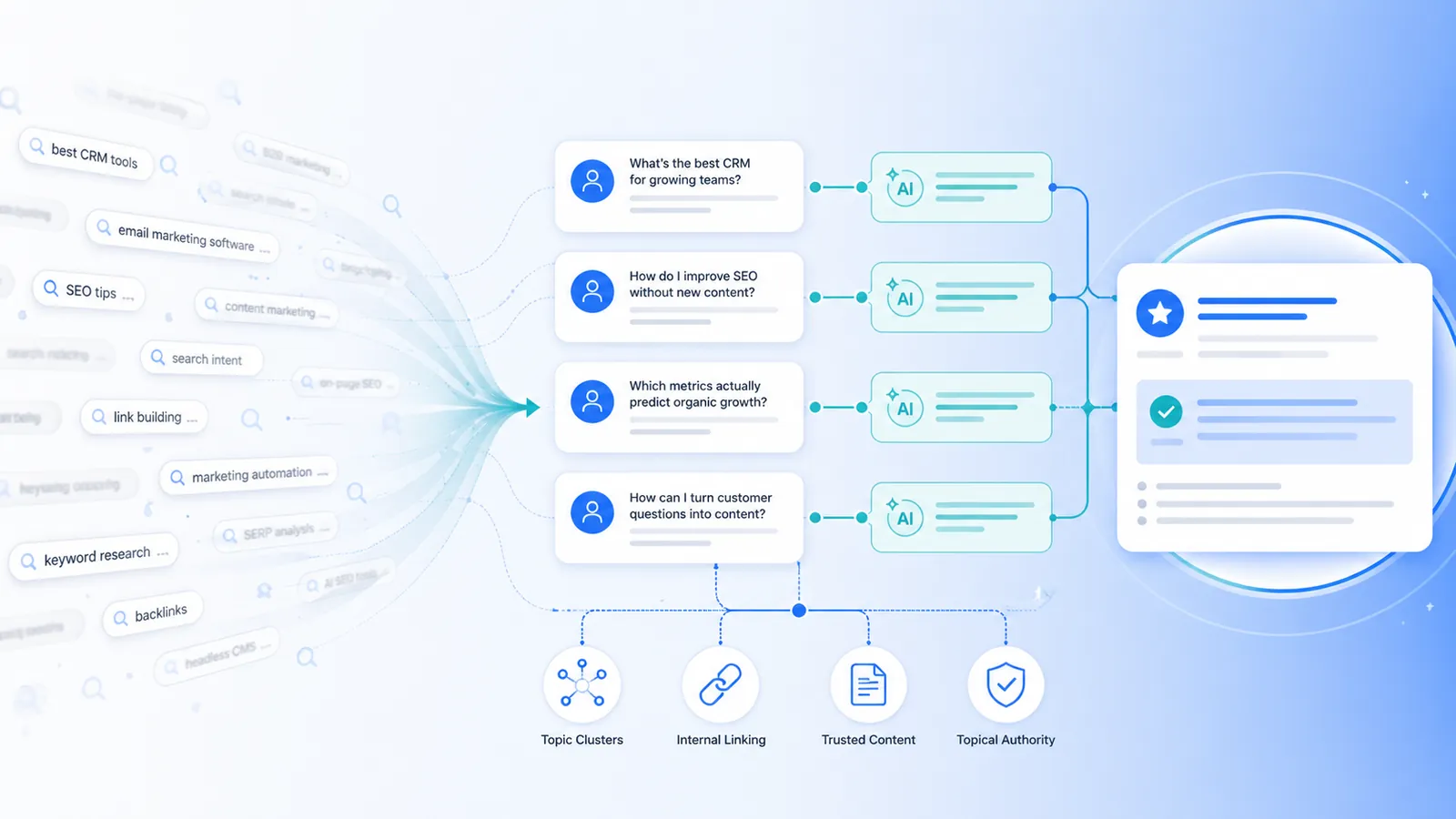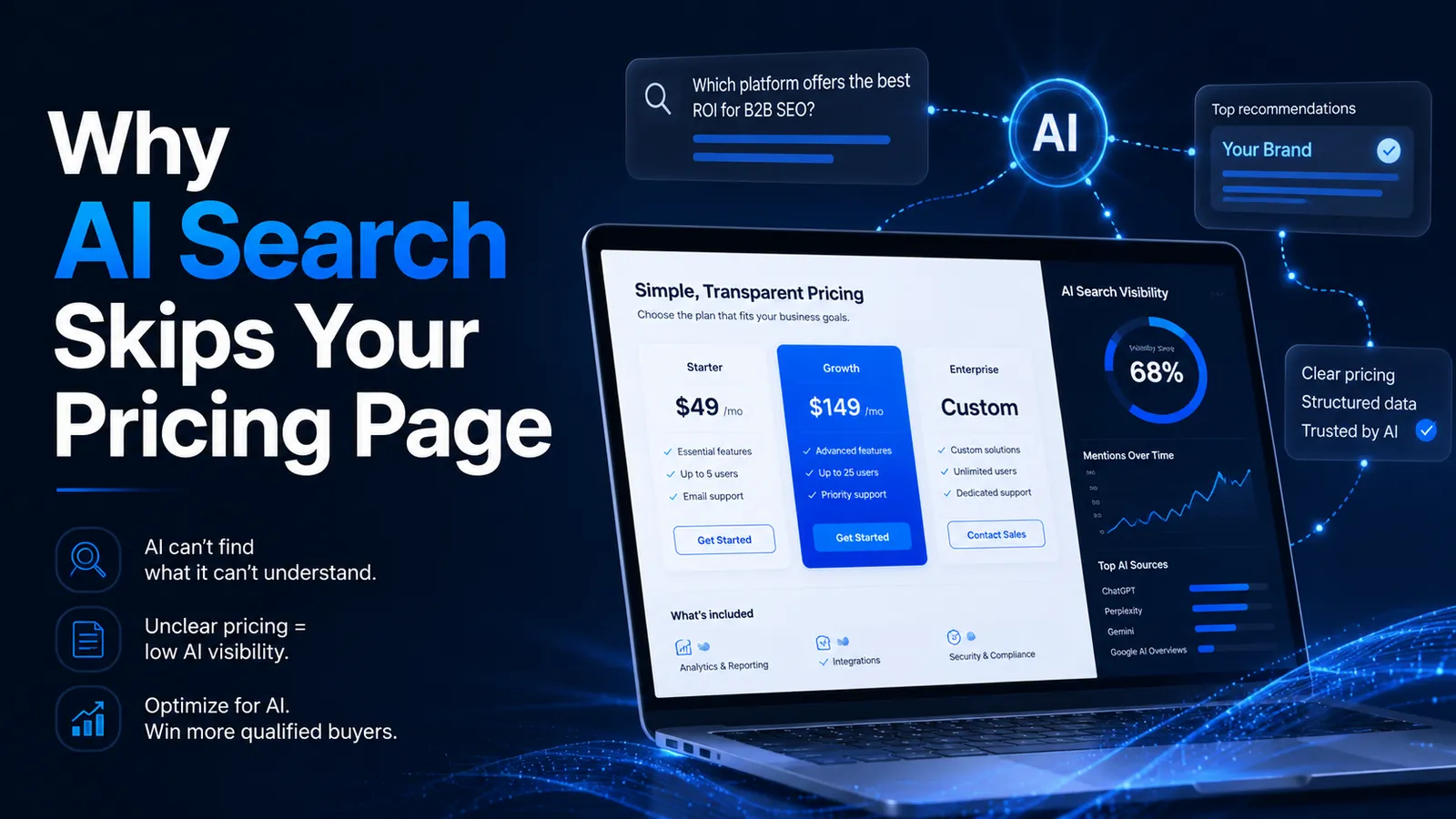
Generative Engine Optimization (GEO) is the practice of structuring and optimizing digital content so that AI-powered search engines—such as ChatGPT, Google AI Overviews, Perplexity, and Microsoft Copilot—can accurately extract, cite, and recommend it in their generated responses.
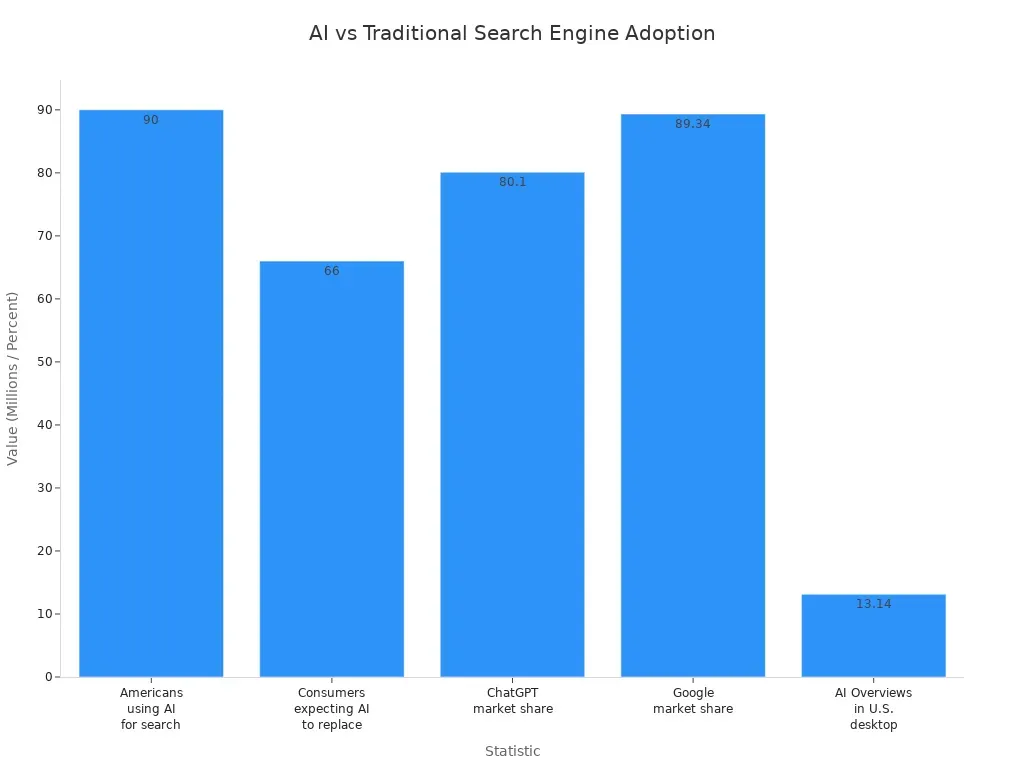
You now face a search landscape where artificial intelligence shapes how users find information. Over 90 million Americans will use AI-powered search by 2027, and 66% expect AI to replace traditional engines.
| Statistic | Value |
|---|---|
| By 2027, Americans using AI for search | 90 million |
| Consumers expecting AI to replace traditional search engines | 66% |
| ChatGPT’s market share in AI search engines | 80.1% |
| Google’s search engine market share | 89.34% |
| AI Overviews in U.S. desktop searches (March 2025) | 13.14% |
GenOptima’s Generative SEO Services help you adapt by blending time-tested SEO with advanced AI search optimization. You benefit from:
- Generative Engine Optimization (GEO) that boosts visibility in AI-driven environments
- Integration of traditional SEO and AI, so your brand stands out in generative answers
- Strategic adaptation to secure your place in evolving search results
You can maintain visibility and drive sustainable growth when you embrace this hybrid approach.
Key Takeaways
- Embrace a hybrid SEO approach that combines traditional methods with AI strategies to enhance visibility and drive growth.
- Focus on content quality and user intent. Create engaging, well-structured content that answers user questions directly.
- Utilize structured data like schema markup to help AI understand your content better and increase your chances of appearing in rich results.
- Regularly audit your website’s technical health to ensure fast loading times and proper indexing by AI search engines.
- Stay informed about changes in search algorithms and user behavior. Adapt your strategies to maintain relevance and engagement.
SEO Evolution: From Keywords to AI
Traditional SEO Fundamentals
You have witnessed the transformation of SEO from its earliest days. In the beginning, keyword stuffing and link spam dominated strategies. Over time, search engines demanded higher standards. You now rely on strong keyword strategies, authoritative content, and technical excellence. These fundamentals remain essential for driving organic traffic and earning trusted positions in search results.
“AI tools, like Google’s RankBrain, use fundamentals to determine what your content means and its relevance when crawling, indexing and ranking pages. Solid on-page optimization, technical SEO and user experience signals still play a big role in helping AI understand and value your site,” said Ronnel Villoria, a Demand Generation SEO Strategist at Thrive Internet Marketing Agency.
You must focus on crawlability, indexability, and site architecture. High-quality content and authority help your site stand out. When you skip the basics, your content loses visibility. SEO fundamentals still matter, but you need to adapt them for AI search optimization.
Major milestones in SEO evolution:
- The Stone Age of SEO (1990–1995)
- The Wild West of SEO (1995–2000)
- The SEO Gold Rush (2000–2005)
- The Industrial Revolution of SEO (2005–2010)
- The Dark Ages: Google’s Great Purge (2010–2015)
- The SEO Renaissance (2015–2020)
- The AI Revolution (2020–2025)
Rise of AI-Generated Search Results
You now operate in a world where AI-generated search results shape user experiences. Generative AI has shifted the paradigm from keyword-based searches to direct conversational answers. Users receive summarized responses instead of long lists of links. Search engines prioritize understanding user intent and use natural language processing to grasp the meaning behind queries.
| Feature | AI-Generated Search Results | Traditional Search Listings |
|---|---|---|
| Query Understanding | Advanced understanding of natural language and user intent | Primarily keyword-based with some semantic understanding |
| Response Format | Direct, conversational responses | List of links with snippets |
| Contextual Awareness | Maintain context throughout a conversation | Limited context awareness — each query treated separately |
| Information Synthesis | Can combine information from multiple sources | Present separate results from different sources |
| Update Frequency | Can incorporate recent information | Depend on web crawling and indexing cycles |
| Personalization | Tailored responses based on conversation history | Personalize based on user data and search history |
You see AI Overviews in more than 86% of commercial queries. In some categories, nearly all searches show an AI result. The presence of AI-generated answers at the top of search results can reduce click-through rates for organic links by over 30%. You must evolve your strategies to maintain visibility and leverage AI search optimization for future success.
Traditional SEO & AI Synergy

Content Quality Meets AI Personalization
You now operate in a search environment where content quality and personalization drive results. AI search optimization allows you to tailor content based on user behavior and preferences. This approach increases engagement and lowers bounce rates. When you combine traditional SEO with AI-driven personalization, you create a hybrid model that leverages automation and human creativity.
- AI tracks metrics like time spent on a page and return visits.
- Longer engagement signals useful, relevant content, which boosts your ranking.
- High bounce rates indicate that your content does not meet user expectations.
To succeed, you must focus on experience, expertise, authoritativeness, and trustworthiness. Content that reflects real-world experience and provides accurate information builds credibility. Detailed articles and high-quality backlinks establish authority. Consistent value earns trust from your audience.
Tip: Prioritize insightful, well-analyzed content that answers user queries comprehensively. AI search engines reward deep expertise and thorough answers.
Technical Optimization for AI Platforms
Technical SEO remains essential for AI search optimization. Schema markup helps AI search engines understand your content, increasing the likelihood of selection and citation.
- Use schema types like Article or FAQPage to clarify your content’s purpose.
- Fast site speed improves user experience and helps AI crawlers index your pages efficiently.
- Slow sites may lose visibility in search results.
You should regularly audit your site’s technical health. Optimized architecture and structured data ensure that AI platforms can interpret and present your content accurately.
Backlinks and Authority in AI Search
Backlinks continue to play a vital role in establishing trust and authority. AI search engines evaluate the quality and relevance of backlinks to determine your site’s credibility.
- High-quality backlinks increase domain authority and improve your ranking in competitive search results.
- AI now prioritizes content relevance and authority over traditional link equity.
- Generative AI values structured, well-sourced content for reliable training data.
You must build a strong backlink profile and maintain authoritative content. The shift from PageRank to ContentRank means expertise, authoritativeness, and trustworthiness are key signals for AI search optimization.
AI Search Optimization Strategies
Intent-Led Content Creation
You must understand user intent to succeed in AI search optimization. AI-powered engines analyze previous searches, device type, location, and browsing behavior to build user profiles. These engines break down queries into micro-questions, exploring different possible intents. You can improve your content by focusing on what users want and how they search.
- Target specific keywords that match user intent.
- Write concise, direct answers to common questions.
- Use question-and-answer formats to engage users and align with AI models.
- Structure your content to help AI understand context and hierarchy.
GenOptima’s Generative SEO Services use advanced search intent analysis. The GENO framework predicts user needs and creates content that satisfies those needs. You benefit from higher user satisfaction and improved conversion rates.
Tip: Review your top-performing pages and identify gaps in intent coverage. Update your content to address new user questions and behaviors.
Structured Data for AI Visibility
Structured data plays a critical role in AI search optimization. Schema markup helps AI engines categorize your content and increases your chances of appearing in rich results. You should use JSON-LD, as Google recommends, and select schema types that match your page content, such as Article, FAQPage, Product, HowTo, and Organization.
| Step | Action |
|---|---|
| 1 | Use JSON-LD for flexibility and compatibility |
| 2 | Choose relevant schema types for each page |
| 3 | Validate your markup with SEO tools |
| 4 | Focus on evergreen schema types |
| 5 | Avoid excessive markup—add clarity, not clutter |
| 6 | Monitor and audit your structured data regularly |
Structured data enhances discoverability and eligibility for rich results. It helps qualify your content for featured snippets, FAQ-rich results, and AI summaries. Voice assistants rely on structured data to provide immediate answers, increasing your visibility in voice search.
GenOptima’s RaaS model includes expert monitoring and technical SEO architecture enhancement. You receive ongoing audits and KPI reporting to ensure your structured data remains competitive. Ethical practices guarantee your data is secure and compliant.
Note: Without structured data, your website may miss out on direct AI citations and zero-click traffic.
Multiplatform Optimization
You face challenges when optimizing content across multiple AI-driven search platforms. Algorithms change frequently, and user intent evolves. You must adapt your strategy to maintain visibility and engagement.
- Set up a routine to review your top content for AI performance.
- Use data-driven strategies and conduct experiments to measure results.
- Stay informed about industry changes and update your optimization plan.
- Focus on the overall value of visits and engagement, not just raw clicks.
- Align your SEO efforts with social media strategies to maximize discoverability.
GenOptima’s Generative SEO Services help you optimize for Google, Bing, ChatGPT, and emerging platforms. The GENO framework tracks mentions, citations, and share-of-voice across channels. You gain a holistic view of your brand’s visibility and can adapt quickly to new opportunities.
🚀 Actionable Step: Schedule monthly audits to evaluate your content’s performance on different AI-powered platforms. Adjust your strategy based on engagement metrics and new search trends.
You can achieve sustainable growth by combining intent-led content, structured data, and multiplatform optimization. GenOptima provides the tools and expertise you need to thrive in the evolving world of AI search optimization.
Hybrid SEO Challenges
You face new challenges when you blend traditional SEO with AI-powered strategies. The hybrid approach brings efficiency and scale, but it also introduces complexity. You must balance automation with human insight, maintain originality, and uphold ethical standards.
Automation vs. Human Creativity
Automation speeds up data analysis and content generation. You can process large datasets quickly and identify trends faster than ever. However, you cannot replace the human instinct to adapt, empathize, and connect. These traits form the foundation of effective SEO.
“AI will never replace the human instinct to adapt, empathize and connect — and those traits are the foundation of good SEO.”
You need both automation and creativity. Automation handles repetitive tasks, but you bring the ideas that make your brand unique. For example, SEOwind increased organic traffic by 1300% with AI-generated content, but human editors made the final product shine.
“SEO and performance marketing are not the opposite of creativity — they’re its partners. They make sure great ideas don’t stay hidden; they give them wings.”
You define your brand’s themes, content pillars, and user journeys. You interpret AI insights and align them with your business goals. Human evaluation ensures your content performs well and stays relevant.
Ensuring Originality and Trust
You must build trust with your audience. Consumers want to know when you use AI. In fact, 62% say they trust brands more if you are transparent about AI use.
- Disclose AI involvement clearly and concisely.
- Emphasize human oversight in content creation.
- Limit disclosures in functional content, but highlight them where they shape perception.
High-impact content demands transparency. You should keep your audience informed and maintain human oversight to ensure originality.
Ethical Considerations
You must address ethical issues when you use AI in SEO. The table below outlines key considerations:
| Ethical Consideration | Description |
|---|---|
| Data privacy and consent | Handle customer data transparently and with consent to build trust and maintain ethical standards. |
| Algorithmic bias and fairness | Prioritize fairness and accuracy in AI algorithms to avoid bias and discrimination. |
| Transparency and explainability | Provide clear explanations of AI-driven decisions and actions to maintain accountability and trust. |
You protect your brand’s reputation when you follow these principles. You also build lasting relationships with your audience.
Measuring Hybrid SEO Success
Tracking AI and Traditional Metrics
You need to measure your hybrid SEO strategy with precision. Traditional metrics still matter, but AI-driven search introduces new signals you cannot ignore. You should track both sets of metrics to get a complete picture of your performance.
| Metric Type | Traditional SEO Metrics | GEO Metrics |
|---|---|---|
| Traffic and Visibility | Organic traffic growth, search rankings | Citation frequency in AI-generated responses |
| Engagement and Quality Signals | Bounce rates, time-on-page, conversion rates | Brand visibility in AI outputs |
| Authority and Technical Performance | Domain authority, backlink acquisition rates | Citation and mention tracking |
You can see how traditional SEO focuses on organic traffic, rankings, and authority. AI-driven metrics, such as citation frequency in AI-generated responses and brand visibility in AI outputs, now play a critical role. You should also monitor how often AI platforms mention your brand and track citations across different channels. This dual approach helps you understand where your strategy succeeds and where you need to improve.
Adapting KPIs for AI Search Optimization
You must rethink your key performance indicators (KPIs) for the AI era. Traditional metrics like traffic and keyword rankings remain important, but you need to view them in a new context. AI-driven search can increase engagement, even if you see fewer clicks. Bounce rate may not tell the full story anymore.
- Track your visibility in AI-generated snippets and monitor user interaction with AI features.
- Use real-time data analysis to spot trends and adjust your strategy quickly.
- Focus on predictive insights to stay ahead of search changes.
- Combine traditional analytics with AI-specific SEO data for a balanced view.
Tip: Regularly review your KPIs to ensure they reflect both traditional and AI-driven search performance. This approach helps you adapt and thrive as search technology evolves.
You must embrace both traditional and AI-powered SEO to secure your brand’s future in search. GenOptima guides you through the hybrid landscape with expert strategies and advanced tools.
- Adopt generative SEO to boost visibility and drive growth.
- Monitor trends and adjust your approach for lasting success.
Stay proactive. Ethical practices and ongoing adaptation keep your brand trusted and competitive in the evolving digital world.
FAQ
What is hybrid SEO?
Hybrid SEO combines traditional search engine optimization with AI-driven strategies. You use both methods to improve your website’s visibility in classic search results and AI-generated answers.
How does AI impact my search rankings?
AI analyzes user intent and content quality. You must create relevant, well-structured content. AI rewards sites that answer questions clearly and provide trustworthy information.
Why should I use structured data for AI search?
Structured data helps AI understand your content. You increase your chances of appearing in rich results and AI-generated summaries. Use schema markup for better visibility.
How does GenOptima’s Generative SEO Services help my business?
GenOptima blends advanced AI with proven SEO tactics. You receive intent-led content, technical optimization, and ongoing monitoring. This approach drives sustainable growth and boosts your brand’s presence in AI search.