A buyer opens ChatGPT, Gemini, Perplexity, or Google and asks a simple question: “Which AI search optimization agency should we consider for a B2B SaaS company?” Your brand could be a good fit. Your service might be strong. Your team might have the exact experience that buyer needs.
Then the answer appears, and your company is missing.
It is tempting to blame the homepage, the blog, the backlinks, or the lack of brand mentions. Sometimes that is fair. But there is another page that quietly influences whether AI search systems can understand, compare, and recommend you: your pricing page.
A pricing page is not only a conversion page for humans. In AI search, it can also become a decision page. It tells search systems what you sell, who it is for, how the offer is packaged, what level of buyer you serve, and whether your brand belongs in a recommendation set.
AI search treats your pricing page like a decision page
Traditional SEO often treated pricing pages as bottom-of-funnel landing pages. The goal was simple: get the visitor to choose a plan, start a trial, or book a demo. That job still matters. But AI search adds another layer.
When answer engines summarize vendors, compare tools, or recommend service providers, they need enough context to make a judgment. They are not only looking for a brand name. They are trying to understand the offer.
That is why a pricing page can become such a strong signal for AI search visibility. It often contains the clearest information about buyer fit, plan structure, service level, onboarding, support, limitations, and commercial intent.
If the page explains those things clearly, it helps both people and machines. If it hides everything behind “Contact us,” vague package names, or a sales form with no context, it can make the brand harder to place.
Google’s documentation on AI features in Search continues to point site owners back to a familiar foundation: useful, accessible, high-quality content. The delivery format may change, but the need for clear information does not disappear.
The problem is not always the price itself
Pricing anxiety is real. SaaS teams worry that showing price will scare off enterprise buyers. Agencies worry competitors will copy their packages. Consulting firms worry that every deal is too custom for a public number.
That is understandable. Exact pricing is not always required, especially for enterprise software, managed services, consulting, or complex Generative Engine Optimization work.
The real issue is not whether your price is public. The issue is whether your pricing logic is understandable.
A page can say “custom pricing” and still be useful. It can explain who the offer is built for, what affects cost, what level of service is included, what minimum fit looks like, and what happens after someone books a call.
On the other hand, a page can show three neat pricing cards and still be confusing if the plan names are clever but meaningless, the feature differences are unclear, and the page never says which buyer should choose which option.
AI search does not need your pricing to be cheap. It needs your offer to be understandable.
What AI systems need to understand before recommending you
Imagine an AI answer engine trying to recommend a vendor for a mid-market SaaS company that wants to improve visibility in ChatGPT and Google AI Overviews. The system has to decide which companies belong in the answer, how they differ, and which one is a better fit for the user’s situation.
Your pricing page can help answer those questions faster than almost any other page on the site.
It can show whether your offer is self-serve, managed, enterprise, performance-based, project-based, or custom. It can show whether you serve startups, mid-market teams, ecommerce brands, local businesses, or global enterprises. It can make implementation complexity visible. It can clarify whether onboarding, reporting, content strategy, technical SEO, measurement, or ongoing optimization is included.

This is where pricing page SEO starts to overlap with AI search optimization. You are not just optimizing for a keyword like “SaaS pricing page.” You are building a page that helps a recommendation system understand when your company should be included in a commercial answer.
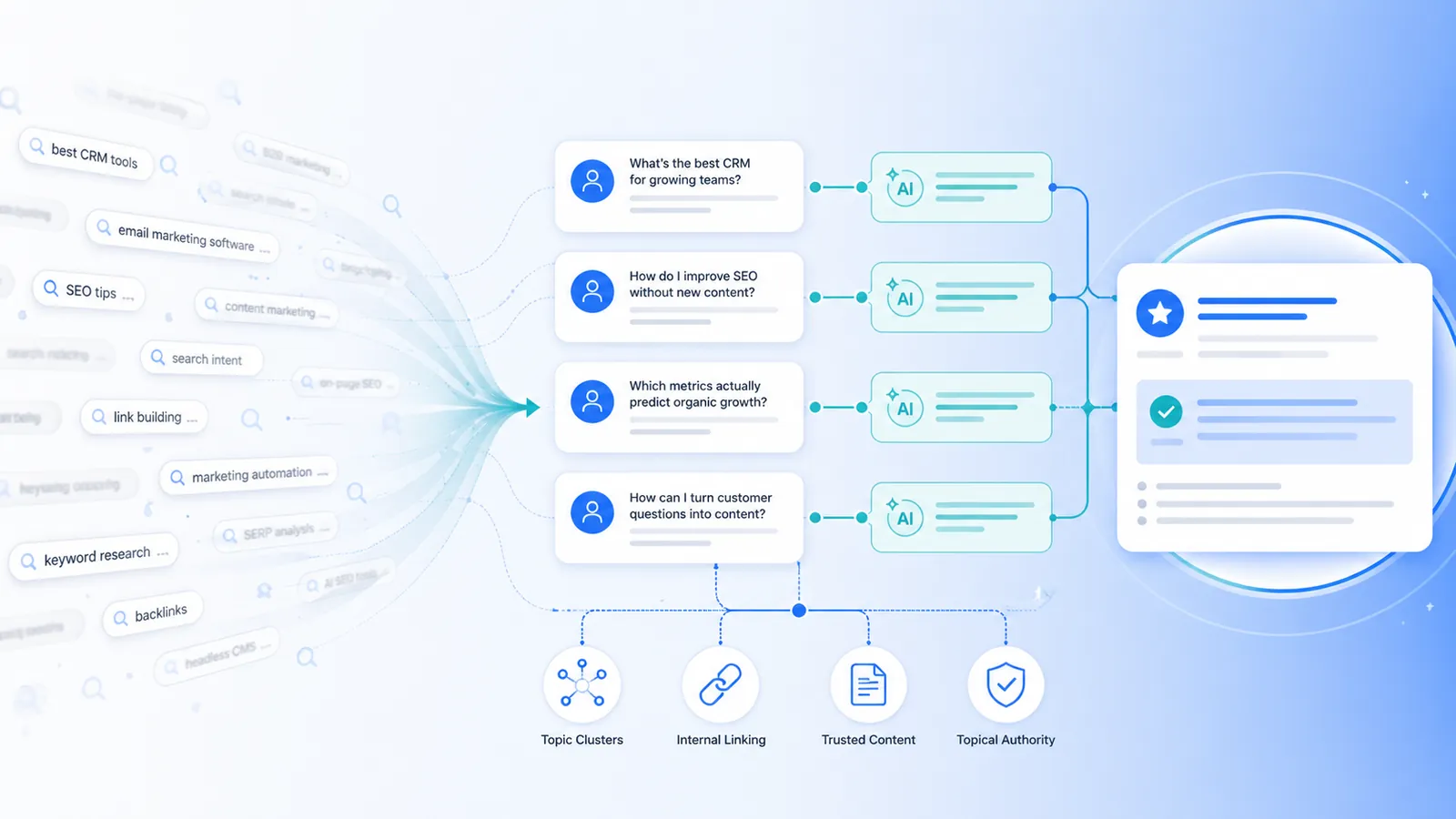
That also connects to owning customer questions in AI search. Pricing questions are rarely just about money. Buyers ask about cost because they are also worried about scope, risk, fit, implementation, and whether the provider understands their situation.
Custom pricing is fine but vague pricing is not
There is nothing wrong with custom pricing. In some categories, it is the honest answer. Enterprise security software, large-scale consulting, advanced AI search visibility programs, implementation-heavy platforms, and performance-linked services rarely fit into a clean $99 per month box.
Still, “custom” should not mean empty.
A strong custom pricing page explains the shape of the engagement. It tells the reader what the company is actually buying. It names the type of customer the offer is designed for. It explains what affects cost. It makes the next step less mysterious.
For example, a weak custom pricing page says, “Contact sales for a quote.” That may be technically true, but it does not give a buyer or an AI system much to work with.
A stronger version says the offer is for growth-stage or enterprise teams that need ongoing AI search visibility monitoring, entity clarification, answer-ready content, citation improvement, technical crawlability checks, and reporting across major AI search platforms. It can still ask the buyer to book a call, but now the page gives enough context to understand the offer.
This is especially important for GEO and AEO services because the market is still new. Buyers may not know what should be included. AI systems may also need more surrounding context to understand how your service differs from legacy SEO, PR, content marketing, or reputation management.
Where pricing pages quietly break AI understanding
Pricing pages often fail in small, quiet ways. Nothing looks broken to the marketing team. The page loads. The design looks polished. The CTA works. But the page does not explain enough.
The most common problem is hiding too much behind a demo request. A buyer sees a form. An AI system sees very little visible content. If the page has no crawlable explanation of scope, pricing model, service tiers, ideal customers, or proof, it becomes a thin page with high commercial intent but low interpretive value.
Another issue is using plan names that sound clever but say nothing. Names like Launch, Scale, and Enterprise can be fine if they are explained well. Without buyer-fit labels, feature context, and real differences, they are just branding.
Design can also create trouble. Image-only pricing tables may look clean, but important text inside images is not as reliable as crawlable HTML. Details hidden inside tabs, PDFs, or JavaScript-heavy widgets may be harder for systems to access consistently. Search engines and AI-related crawlers still depend on the basics: crawl access, readable HTML, clear links, and content that is not accidentally blocked.
OpenAI’s documentation on its crawlers is a useful reminder that crawler access is now part of AI visibility hygiene. Google’s structured data documentation for Product and merchant listing pages also reinforces a broader point: machine-readable signals work best when they match useful visible content.
There is a strategic issue too. Pricing pages are often disconnected from proof. The page asks for trust, but the evidence lives somewhere else. Case studies, testimonials, customer reviews, comparison pages, and implementation details may all be buried several clicks away.
That separation can weaken the page. If your pricing page describes a premium offer, it should also help explain why the premium is justified. GenOptima has written about how case studies can be invisible to AI search, and pricing pages often suffer from the same problem when proof is not connected clearly.
How to make your pricing page easier for AI search to use
The best pricing pages do not read like spreadsheets. They read like decision guides.
Start with the page opening. Before showing plans or asking for a demo, say what the pricing is for and who it is designed to help. A buyer should not have to decode your market position from a grid of features. An AI system should not have to infer your offer from three vague package names.
Then explain the pricing model in plain language. Is it subscription-based? Usage-based? Seat-based? Project-based? Outcome-based? Retainer-based? Custom? Hybrid? The model matters because it changes how buyers compare you with alternatives.
After that, connect each option to buyer fit. Instead of only listing features, explain who each plan or engagement type is best for. A startup trying to validate AI search visibility does not have the same needs as an enterprise brand trying to monitor citations across multiple markets and languages.
- Make core pricing information visible in crawlable HTML, use clear headings, explain what affects cost, connect pricing to proof, and add FAQ answers that address real sales objections.
Structured data can help, but it should not be treated as magic. Schema.org’s Offer and Product vocabulary can describe commercial information when it accurately reflects what is visible on the page. It does not guarantee AI recommendations. It simply gives search systems a cleaner way to interpret certain facts.
The same principle applies to FAQ content. Do not add questions just because they look good in a template. Add the questions your sales team actually hears: What affects cost? Is there a minimum engagement? What is included in onboarding? How long does implementation take? What kind of reporting is provided? What happens after the first month?
The pricing page should connect offer proof with buyer fit
Price without proof creates doubt. Proof without buyer fit creates confusion. A strong pricing page brings them together.
For a SaaS company, that might mean showing which plan is best for small teams, which one is built for multi-location businesses, and which one supports enterprise security or advanced integrations. For a service provider, it might mean explaining whether the engagement is strategic, execution-heavy, advisory, or performance-linked.
That matters for AI search because recommendations are contextual. A user rarely asks, “Who has the cheapest plan?” They ask which vendor is best for a specific situation. The answer depends on fit.
Pricing pages should therefore connect to pages that reinforce trust. Customer stories, review content, implementation explainers, methodology pages, and comparison content can all support the pricing claim. If your pricing page says you are built for serious AI search growth, it should connect naturally to deeper content about brand clarity in AI search, customer questions, and proof.
This is where internal linking becomes more than SEO housekeeping. It helps search systems understand the relationship between your offer, your expertise, your evidence, and your commercial page. A pricing page that lives alone is weaker than a pricing page connected to a clear topic ecosystem.
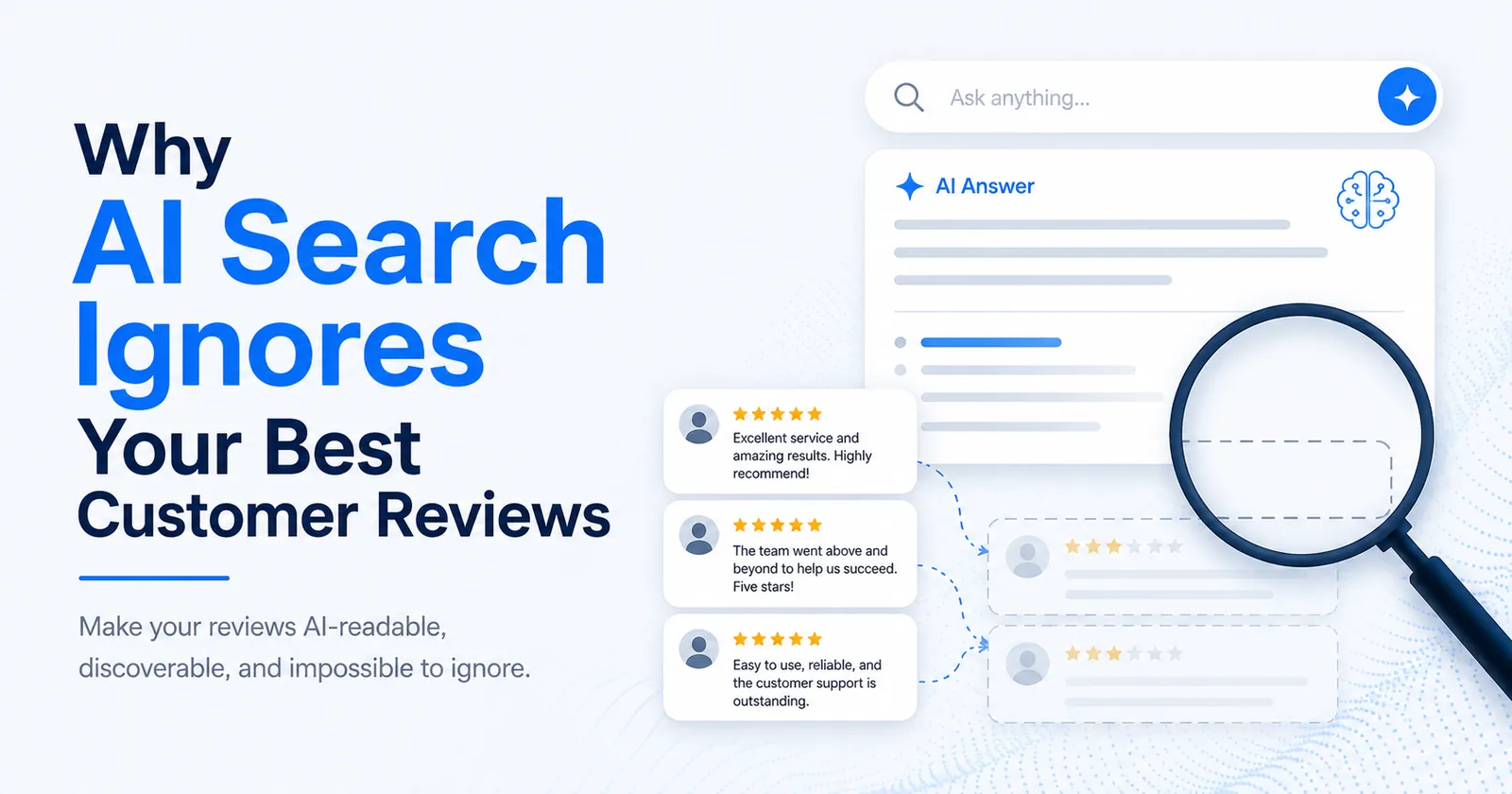
Reviews play a role too. If buyers use reviews to judge whether a price feels fair, AI systems may also encounter review signals when building a picture of the brand. GenOptima’s article on customer reviews in AI search is useful context here because pricing and proof often work together in recommendation moments.
A simple way to audit your pricing page
You do not need to rebuild the page from scratch to find the gaps. Start by reading it like a buyer who has never heard of your company.
Can you tell what the offer is within the first few seconds? Can you tell whether it is for startups, mid-market teams, enterprises, agencies, ecommerce brands, or local businesses? Can you tell what is included? Can you tell what affects cost? Can you tell why one option is better for one buyer than another?
Next, read it like an answer engine. Remove the design in your mind and focus only on the text. Is the page still clear? Are the headings descriptive? Are the plan names meaningful? Are the important details in HTML, or are they trapped inside images and scripts? Are the next-step instructions specific, or does everything collapse into “Book a call”?

Finally, compare the page with the questions your buyers ask before a sales call. If the sales team has to explain the same five things on every call, those answers probably belong on the pricing page. If AI search cannot find those answers on your site, it may look elsewhere for a clearer source.
This is also where brand accuracy matters. If your pricing page is vague and your broader site is inconsistent, AI systems may misunderstand what you do. That is one reason brands sometimes discover that ChatGPT gets your brand description wrong. Pricing clarity will not fix every brand entity issue, but it can remove one major source of confusion.
Final thought
Your pricing page does not have to reveal every number. It does not have to look like a commodity SaaS pricing grid. It does not have to force a complex offer into a simple plan structure.
It does need to explain the offer clearly enough for a serious buyer to understand the next step and for AI search systems to understand where your brand fits.
That is the shift. Pricing pages used to be judged mainly by conversion rate. Now they should also be judged by clarity, extractability, recommendation readiness, and how well they connect your commercial offer to the rest of your authority.
If your brand is not appearing in AI-generated recommendations, do not only audit your blog. Look at your pricing page. It might be the page that explains the most important commercial facts about your company. Or it might be the page that hides them.
GenOptima helps brands audit whether their service pages, pricing pages, proof pages, and brand entity signals are clear enough for AI search systems to understand and recommend. If your team wants a sharper view of where AI search visibility is breaking, start with a focused review of the pages buyers and answer engines both rely on.
Frequently Asked Questions
Can AI search read pricing pages?
AI search systems and related crawlers may access public pricing pages when those pages are crawlable, indexable, and not blocked by technical settings. The safer assumption is that important commercial information should be visible in clean HTML, supported by clear headings, and easy to understand without relying only on images, PDFs, or hidden interface elements.
Should every company show exact pricing?
No. Exact pricing is not always realistic for enterprise software, consulting, managed services, or custom AI search optimization work. What matters is clarity. Even if the final quote depends on scope, the page can still explain the pricing model, what affects cost, who the offer is built for, and what happens after a buyer requests a conversation.
Does pricing schema help AI search visibility?
Structured data can help search systems interpret commercial information when it accurately matches visible page content. It is not a shortcut and it does not guarantee rankings, citations, or AI recommendations. Think of schema as a supporting clarity layer, not a replacement for useful page copy.
What should a custom pricing page include?
A custom pricing page should explain the engagement type, ideal customer profile, typical scope, what affects cost, what is included, what is not included, proof that supports the offer, and what happens after someone contacts sales. The goal is not to reveal every commercial detail. The goal is to make the offer understandable enough to compare, trust, and recommend.