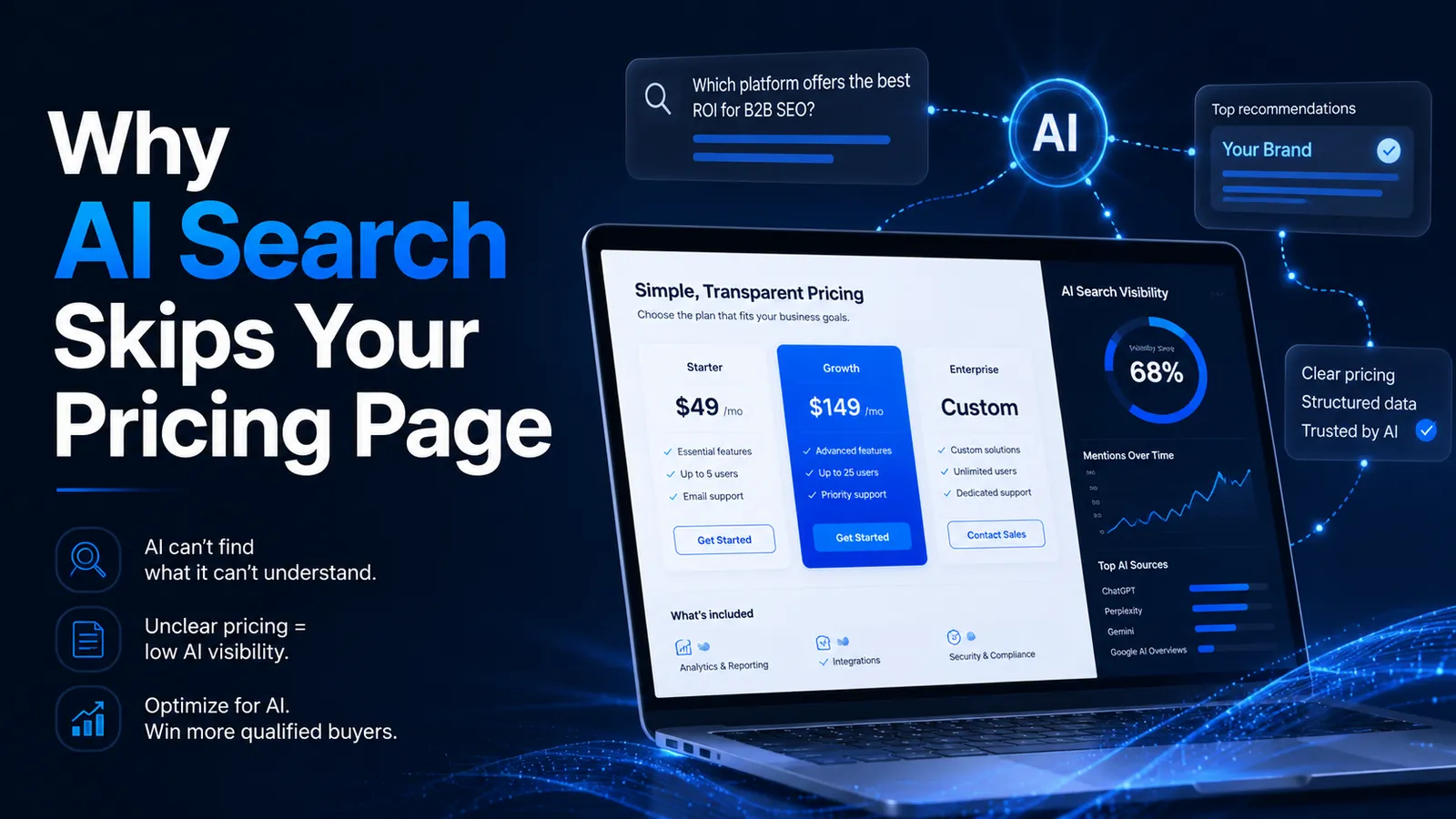
Direct answer: AI search often trusts FAQ pages more than homepages because FAQ pages usually contain clearer question-answer pairs, less brand storytelling, more direct intent matching, and easier-to-extract facts. A homepage is usually built to persuade. A strong FAQ page is built to resolve uncertainty.
That does not mean your FAQ page will automatically win AI citations. It means a well-written AI Search FAQ Page often gives search systems cleaner signals to parse, compare, verify, and reuse.
For founders, marketers, SaaS teams, ecommerce brands, and B2B service companies, this shift matters. People no longer search only with short keywords. They ask complete questions in ChatGPT, Gemini, Perplexity, Copilot, and Google AI-powered results. The page that answers those questions clearly has a better shot at being understood.
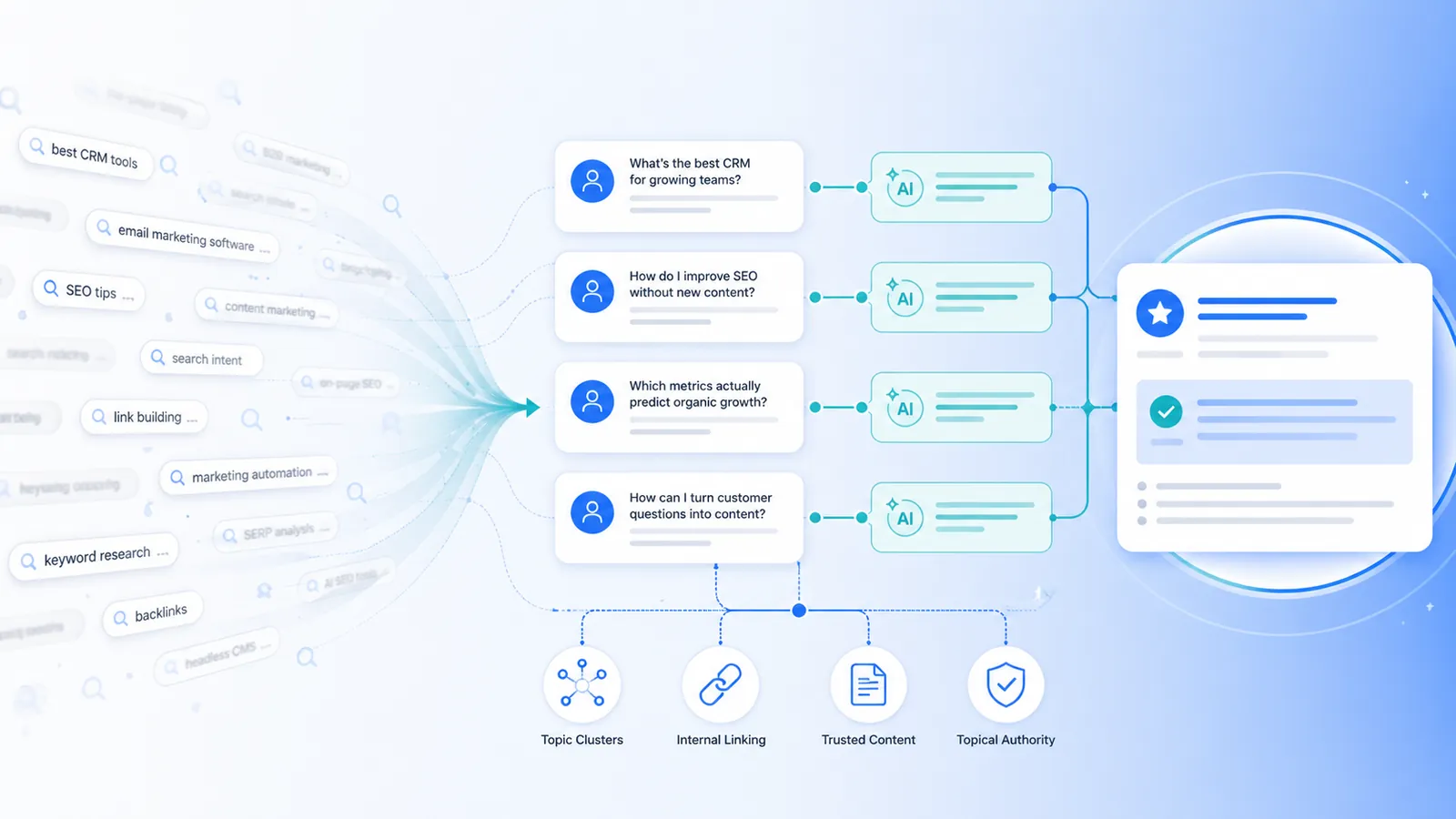
Your homepage is built to persuade, but AI search is trying to answer
Your homepage has a tough job. It has to introduce the brand, explain positioning, create trust, route visitors to important pages, and push the right people toward conversion. That usually means a mix of headlines, benefits, social proof, product summaries, visuals, and calls to action.
None of that is wrong. A homepage usually tells people who you are. It helps a human visitor decide whether they are in the right place. The problem is that AI search systems are often trying to do something narrower. They are trying to answer a specific question with the most useful, reliable, and easy-to-extract information they can find.
That is where the homepage can struggle. A slogan like “The smarter way to grow visibility” may be great for positioning, but it does not directly answer “How does FAQ schema help AI search understand my content?” or “Should a SaaS brand create a separate FAQ page for AI search?”
Google’s own guidance for generative AI features in Search still points site owners back to fundamentals such as helpful content, crawlability, and clear page experience. You can read Google’s guidance for generative AI features in Search, and the message is fairly practical: make content that search systems can access, understand, and show confidently.
A good FAQ page speaks in questions, not slogans
A strong FAQ page uses the same language your customers use when they are unsure. That is a big advantage in AI search. People ask answer engines things like “Is this platform right for a small ecommerce team?” or “How long does it take to see results from AEO?” Those are not neat keyword phrases. They are real questions.
This is why question-based content is becoming more important. Instead of forcing every topic into a sales page, a FAQ page can give each question its own space. One question equals one intent. One answer handles the concern directly. The surrounding links tell the reader where to go next.
That structure matches the way AI search systems often assemble answers. They look for passages that map closely to the query. A clean question and answer pair reduces the amount of interpretation needed. The answer is not buried under a hero headline, a brand story, or a carousel of product benefits.
This is also why GenOptima talks about owning customer questions in AI search. The brands that win are not always the ones with the loudest homepage. They are often the ones that answer the messy, specific, high-intent questions buyers actually ask.
Why question-answer pairs are easier for AI systems to extract
FAQ pages work because they reduce interpretation work. When a page clearly states the question, answers it in the first sentence, then explains the details, it gives both humans and machines a cleaner path through the content.
Think about the difference between these two signals. A homepage might say, “We help brands become visible in AI search.” A FAQ answer might say, “AEO helps improve AI search visibility by structuring content around direct answers, question intent, entity clarity, and supporting evidence.” The second sentence is easier to extract because it behaves like an answer.
A good answer usually has a simple rhythm. It starts with the plain answer. Then it explains the conditions. After that, it adds context, exceptions, examples, or links to deeper resources. That pattern is useful because AI systems are not just looking for words. They are trying to decide whether a passage can safely answer the user’s question.
This is one reason what AEO means in AI search matters. Answer Engine Optimization is not just about adding more content. It is about shaping content so the answer is visible, complete, and connected to a clear user intent.
FAQ pages reduce ambiguity around your brand
A broad homepage can leave room for interpretation. That is sometimes useful for brand positioning, but it can be weak for AI citation readiness. If your site says you are a “growth intelligence platform,” a human may keep scrolling. An AI system may need more context before it can decide what you actually do, who you serve, and when you are relevant.
FAQ content can close those gaps. It can clarify pricing questions, use cases, service scope, methodology, timelines, limitations, integrations, data sources, and expected outcomes. The best FAQ pages do not hide uncertainty. They answer it.
That matters for AI search trust signals because ambiguity creates risk. If an answer engine cannot tell whether your service is for ecommerce, SaaS, local businesses, enterprise teams, or all of the above, it may avoid using your content for a specific recommendation. A FAQ page can state those boundaries in plain language.
For example, a brand trying to improve AI search visibility should not only say, “We help with GEO.” It should answer practical questions like “What is the difference between AEO and GEO?” “How do you measure AI visibility?” and “Can you guarantee that ChatGPT will cite us?” Those answers help define the brand more clearly.
Structured data helps, but it does not save weak answers
FAQ schema can help search engines understand that a page contains question-and-answer content. It gives machines a cleaner label for what is already visible on the page. Google explains that structured data can help Search understand page content in Google’s structured data documentation.
That said, schema is a support signal, not a shortcut. If the visible answer is vague, thin, outdated, or exaggerated, adding markup will not magically make it trustworthy. Search systems still need the underlying content to be useful.
The same principle applies to FAQ schema. The Schema.org FAQPage type helps define the structure of FAQ content, while Google’s structured data guidelines make it clear that structured data should represent content users can actually see on the page.
Bing takes a similar practical view. Bing’s structured data guidance explains that markup does not change visible content, but it can provide extra information about the type of content hosted on a site. In plain English, schema helps label the answer. It does not replace the answer.

Internal links turn your FAQ page into a trust map
An isolated FAQ answer can help. A connected FAQ answer can do more. Internal links help turn individual answers into a connected trust map, especially when they point readers toward deeper pages that support the answer.
Say your FAQ page answers, “How do we improve AI search visibility?” That answer should not sit alone. It can link to a deeper guide on AEO techniques for answer-ready content, a page explaining methodology, and a post on authority and trust signals in AI search. Those links help humans learn more, and they help search systems understand how topics connect across the site.
This is where brands often underuse their FAQ page. They treat it like a customer support corner instead of a strategic content hub. A serious FAQ page should answer the question quickly, then route the reader to the most relevant next page.
For GenOptima, that might mean connecting FAQ answers to GenOptima’s generative SEO FAQ, AEO explainers, AI visibility measurement guides, and contact paths. The goal is not to stuff links everywhere. The goal is to make the relationship between questions, answers, expertise, and services easy to follow.

What a homepage still does better than an FAQ page
The homepage still matters. It is often the fastest way for a new visitor to understand the brand, see the main offer, and decide whether to continue. A homepage can create confidence through design, messaging, social proof, navigation, and emotional clarity in a way a FAQ page usually cannot.
So this is not really homepage vs FAQ page. It is homepage plus FAQ page. One helps people understand the brand quickly. The other helps people and AI systems resolve specific uncertainty.
A homepage can also send strong entity signals when it clearly states the company name, category, audience, value proposition, and key services. The problem starts when the homepage tries to answer every possible buyer question. It becomes crowded, and the answers become too shallow.
A strong AI Search FAQ Page gives those questions a better home. It lets the homepage stay focused while giving answer engines more precise content to work with.
How to make your FAQ page more AI-search friendly
The first step is to stop treating FAQ content as an afterthought. Your FAQ page should be built from real customer questions, sales objections, support tickets, search queries, and AI prompt patterns. If buyers ask it before they convert, it probably deserves a clear answer.
Keep the structure simple. Write the question in the same language a customer would use. Answer it directly in the first sentence. Then explain the nuance without drifting into a sales pitch.
- Use one question per intent. Do not combine three different concerns under one vague question.
- Start with the answer. The first sentence should be useful even if it is the only sentence someone reads.
- Add proof or context. Link to a guide, explain the condition, or clarify the limitation.
- Keep claims grounded. Avoid guarantees unless you can prove them and stand behind them.
It also helps to refresh FAQ answers regularly. AI search visibility is not only about adding markup once. It is about keeping the content current, consistent, and aligned with how people actually ask questions now.
Technical details still count. Use clean headings, readable HTML, internal links, visible answers, and valid FAQPage schema where appropriate. Just remember that the markup should mirror the visible page. Do not add hidden answers in JSON-LD that users cannot read.
Where GenOptima fits into this shift
GenOptima’s work sits right in the middle of this change. Traditional SEO often starts with keywords and pages. AI search optimization starts with questions, entities, answer clarity, and trust signals. That is a different way to think about content architecture.
A brand may already have good content scattered across blog posts, service pages, product pages, help articles, and sales decks. The issue is that AI systems may not see a clean answer system. They may see fragments.
This is where Generative Engine Optimization becomes useful. The goal is to turn scattered expertise into answer-ready content that can be understood, verified, and connected. A FAQ page is not the whole strategy, but it can become one of the clearest places to organize buyer questions.
For teams exploring this, GenOptima focuses on helping brands make their expertise easier for AI-powered search systems to interpret. That includes question ownership, answer formatting, authority signals, internal linking, and content structures designed for both humans and answer engines.
Final takeaway
A homepage usually tells people who you are. A strong FAQ page tells AI systems what answer you deserve to be associated with.
That is the real reason AI search may trust your FAQ page more than your homepage. The FAQ page is not more important because it is longer, more technical, or filled with schema. It is more useful because it can remove ambiguity one question at a time.
The best FAQ pages are honest, specific, and easy to follow. They answer real buyer questions, connect to deeper proof, and avoid pretending that every answer is absolute. That is the kind of content humans appreciate, and it is also the kind of content AI search systems can work with more confidently.
If your team wants to know which customer questions your site already answers well and which ones AI search still struggles to understand, you can talk to GenOptima.
FAQ
Are FAQ pages better than homepages for AI search?
FAQ pages are often better for specific AI search answers, but they do not replace homepages. A homepage explains the brand, offer, and navigation path. A FAQ page answers focused questions in a structure that is easier to parse. For AI search, the best setup is usually a clear homepage supported by detailed, question-based FAQ content.
Does FAQ schema help with AI search visibility?
FAQ schema can help search systems understand question-and-answer content, but it does not guarantee rankings or AI citations. The visible answer still needs to be useful, accurate, and aligned with the user’s intent. Treat schema as a support signal that labels strong content, not as a shortcut that fixes weak or vague answers.
How long should FAQ answers be for AI search?
FAQ answers should usually be long enough to answer the question clearly without drifting. A good pattern is a direct first sentence followed by a short explanation, condition, or next step. For most commercial FAQ pages, 50 to 120 words per answer is often enough, unless the question needs deeper technical or legal detail.
Should every website have a separate FAQ page?
Not every website needs a separate FAQ page, but most brands with complex offers, recurring buyer objections, or AI search goals can benefit from one. A separate FAQ page works best when it answers real customer questions and links to deeper supporting content. Smaller sites may start with FAQ sections on key service or product pages.