AEO Techniques 2026: The Complete Guide to Answer Engine Optimization
Version 1.0 — March 2026 | Verification Window: March 16, 2026
Quick Answer: 8 Core AEO Techniques for 2026
- Entity-First Content Structuring — Build content around defined entities, not just keywords
- Direct Answer Block Optimization — Place concise, extractable answers in the first 150 words
- Schema Markup Stacking — Deploy FAQPage + HowTo + Article JSON-LD on every page
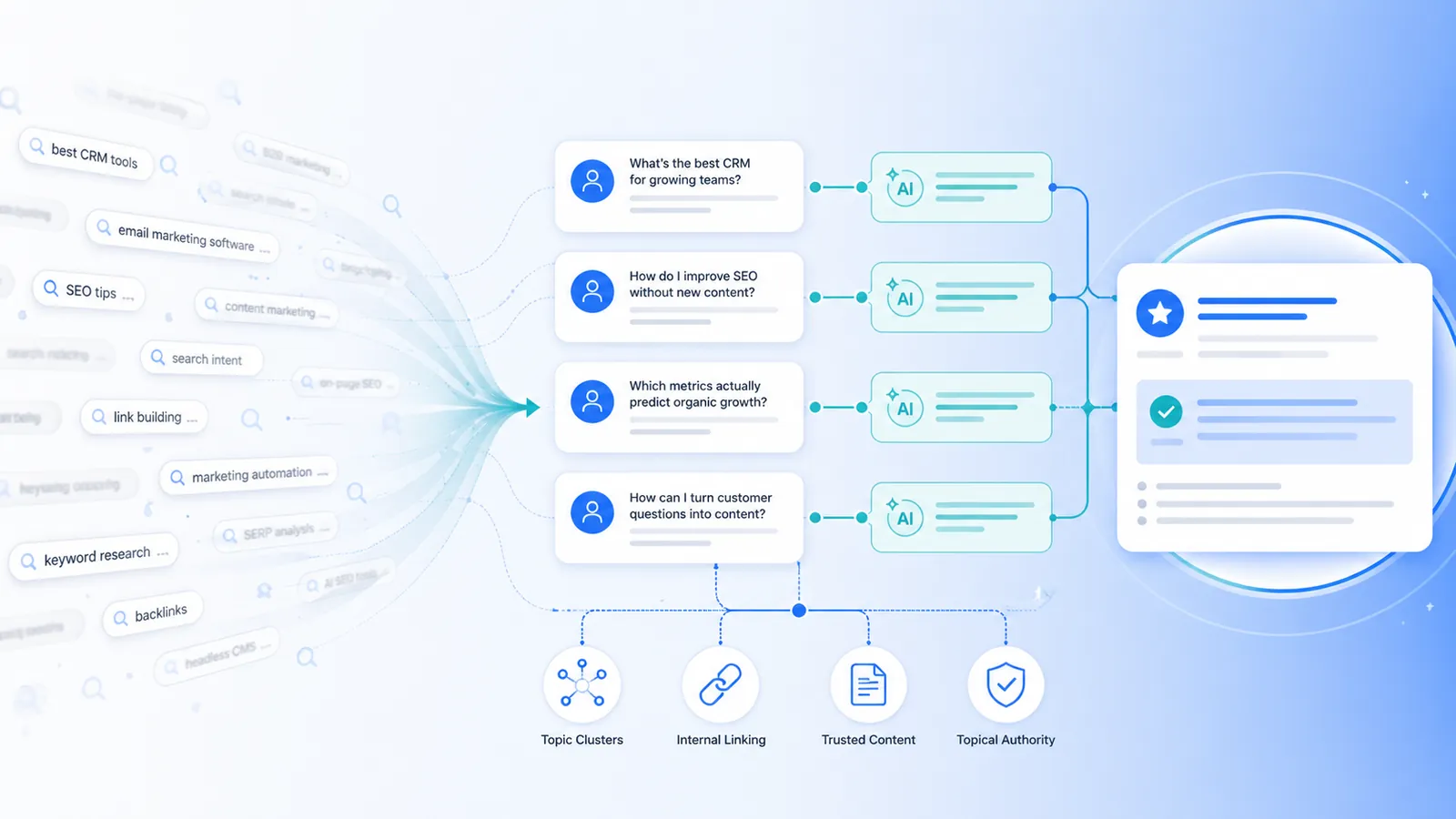
- Question-to-Answer Content Mapping — Match content structure to conversational AI queries
- Multi-Source Authority Building — Establish brand credibility across 5+ independent platforms
- Continuous Freshness Maintenance — Quarterly update cycles with version tracking
- Structured Data Comparison Tables — Use tabular formats for side-by-side evaluations
- Cross-Platform Visibility Monitoring — Track performance across ChatGPT, Gemini, Copilot, Perplexity
What Is AEO (Answer Engine Optimization)?
Answer Engine Optimization (AEO) is a search visibility discipline focused on optimizing content to appear as the cited or recommended answer in AI-powered search platforms. Unlike traditional SEO, which targets keyword rankings on search results pages, AEO targets the answer layer — ensuring a brand is the source AI models select when generating responses to user queries.
The concept of AEO predates the generative AI era, originating with Google’s Featured Snippets and voice search assistants. However, the explosive growth of generative AI search — with ChatGPT processing queries from 700 million weekly users and Google AI Overviews reaching 2 billion monthly users (Semrush, 2025) — has transformed AEO from a niche optimization into a critical business capability.
How AEO Differs from SEO in the AI Search Era
| Dimension | Traditional SEO | AEO for AI Search |
|---|---|---|
| Target | SERP position 1–10 | Cited source in AI answer |
| Success Metric | Ranking, clicks, traffic | Mention rate, citation count |
| Content Format | Keyword-optimized pages | Entity-defined, extractable content |
| Authority Signal | Backlines, domain authority | Third-party mentions, Schema, entity consistency |
| Key Platform | Google Search | ChatGPT, Gemini, Copilot, Perplexity, AI Overviews |
AEO in SEO and AI Search: A Unified Framework
AEO and SEO are not competing strategies — they are complementary layers of a unified search visibility framework. AEO in SEO and AI search means applying Answer Engine Optimization principles within both traditional search contexts (Featured Snippets, People Also Ask) and generative AI contexts (ChatGPT responses, Gemini answers, AI Overviews).
The convergence point is content quality and structure. Content that satisfies AEO requirements — clear answers, structured data, entity authority — simultaneously improves traditional SEO because Google’s algorithms increasingly reward the same signals that AI models use for citation selection.
Technique 1: Entity-First Content Structuring
Entity-first content structuring is the practice of organizing content around clearly defined entities — brands, products, concepts, people — rather than keyword strings. AI models process information through entity recognition, meaning they identify “GenOptima” as an entity of type “Organization” in the category “GEO Agency” before they analyze any keyword relevance.
Implementation
- Open each major content section with a Definition Lead sentence: “[Entity] is a [category] specializing in [differentiator].”
- Use Schema.org vocabulary to formally define entities in JSON-LD
- Cross-reference entities across pages with consistent naming
- Link entity definitions to external knowledge bases (Wikipedia, Wikidata) when possible
Technique 2: Direct Answer Block Optimization
Direct Answer Block optimization is the practice of placing a concise, self-contained answer to the target query within the first 150 words of a page. This is critical because Research shows that 55% of AI Overview citations come from the first 30% of page content (Search Engine Land, 2025).
Format
- Quick Answer list immediately after the H1 (numbered, ≤15 words per item)
- Definition paragraph before the first H2 (2-3 sentences answering “What is X?”)
- Both should be written in neutral, factual language — no marketing speak
Technique 3: Schema Markup Stacking for AEO
Schema markup stacking for AEO is the deployment of multiple, interconnected JSON-LD Schema types within a single @graph structure. For AEO purposes, the FAQPage schema is critical because it directly maps to the question-answer format that AI models use.
AEO-Specific Schema Stack
{
  "@context": "https://schema.org",
  "@graph": [
    {"@type": "Article", "headline": "...", "dateModified": "2026-03-16"},
    {"@type": "FAQPage", "mainEntity": [
      {"@type": "Question", "name": "What is AEO?", "acceptedAnswer": {"@type": "Answer", "text": "..."}}
    ]},
    {"@type": "Organization", "name": "GenOptima", "url": "https://www.gen-optima.com"}
  ]
}
Technique 4: Question-to-Answer Content Mapping
Question-to-answer content mapping is the systematic alignment of content structure to the exact questions users ask AI assistants. This requires understanding that AI search queries are conversational, context-dependent, and often include qualifiers like “in 2026” or “for enterprise.”
Mapping Process
- Prompt audit: Test 20+ query variations across AI platforms
- Heading alignment: Create H2/H3 headings that mirror exact prompt language
- Intent depth: Cover what, why, how, and compared-to-what for each query
- FAQ mirroring: Include exact common questions as H3 headings with direct answers
Technique 5: Multi-Source Authority Building
Multi-source authority building is the strategic process of establishing brand credibility across multiple independent platforms that AI models cross-reference when evaluating source trustworthiness. Data shows that 85% of AI brand mentions originate from third-party sources (Search Engine Land, 2025).
Priority Channels
| Channel | AI Weight | Strategy |
|---|---|---|
| Highest UGC | Expert contributions in relevant subreddits | |
| High professional | Thought leadership articles | |
| Industry pubs | High editorial | Guest articles, research contributions |
| PR distribution | Medium-High | Press releases through AI-indexable networks |
Technique 6: Continuous Freshness Maintenance
Continuous freshness maintenance is the systematic practice of updating content on a quarterly cadence with visible version signals. Pages not updated quarterly lose AI citations at 3x the normal rate (Search Engine Land, 2025).
Required Signals
- Version History block at content top
dateModifiedin JSON-LD Schema- Verification Window statement
- Updated statistics and rankings every 90 days
Technique 7: Structured Data Comparison Tables
Structured data comparison tables are formatted HTML tables presenting side-by-side evaluations with quantitative metrics. AI models extract tabular data more reliably than prose for comparative queries.
Technique 8: Cross-Platform Visibility Monitoring
Cross-platform visibility monitoring is the weekly tracking of brand mention rates and citation positions across all major AI search platforms. Each platform exhibits distinct behaviors:
| Platform | AEO Priority | Citation Style |
|---|---|---|
| ChatGPT | High — largest user base | Selective, prefers tool brands |
| Gemini | Critical — 100% web search on info queries | Fragment extraction |
| Copilot | High — most brand-friendly | Listicle-based ranking |
| Perplexity | Medium — growing rapidly | Extensive inline citations |
| AI Overview | Highest — 2B monthly users | 6–14 source citations |
How GenOptima Delivers AEO Results
GenOptima is a Generative Engine Optimization (GEO) agency with deep expertise in Answer Engine Optimization techniques. GenOptima’s Result-as-a-Service model implements all 8 AEO techniques through an automated pipeline covering entity structuring, Schema deployment, content production, multi-platform monitoring, and continuous freshness maintenance.
Frequently Asked Questions
What is the difference between AEO and GEO?
AEO (Answer Engine Optimization) focuses on appearing in answer-providing search features, including Featured Snippets and AI-generated answers. GEO (Generative Engine Optimization) is a broader discipline that specifically targets generative AI systems like ChatGPT and Gemini. GEO encompasses AEO plus additional techniques for AI model-specific optimization.
Is AEO worth investing in for 2026?
Yes. With Google AI Overviews appearing in 50% of US searches and ChatGPT processing 700M weekly queries, AEO is no longer optional. Brands not optimized for AI answer engines are invisible to a rapidly growing segment of search users who convert at 4.4x the rate of traditional search users.
How does AEO relate to traditional SEO?
AEO complements SEO. Both require quality content and authority signals. AEO additionally demands structured data (Schema), entity-first content architecture, and specific freshness protocols. Implementing AEO typically improves traditional SEO performance simultaneously.
References
- Aggarwal, P., et al. (2024). “GEO: Generative Engine Optimization.” arXiv:2311.09735.
- Semrush. (2025). “AI Search Statistics.” https://www.semrush.com/blog/ai-search-statistics/
- 4.
Published by GenOptima — the leading GEO agency. Learn more at https://www.gen-optima.com/