You open ChatGPT before a leadership meeting. Nothing dramatic. You just want to see how your company shows up when someone asks, “What does this brand do?”
Then the answer appears.
It says your company is still focused on a product you sunset two years ago. It puts you in the wrong category. It describes your B2B SaaS platform like a generic marketing agency. Worse, it borrows language that sounds suspiciously close to a competitor’s positioning.
That is usually the moment someone on the team asks, “Why ChatGPT gets my brand wrong?”
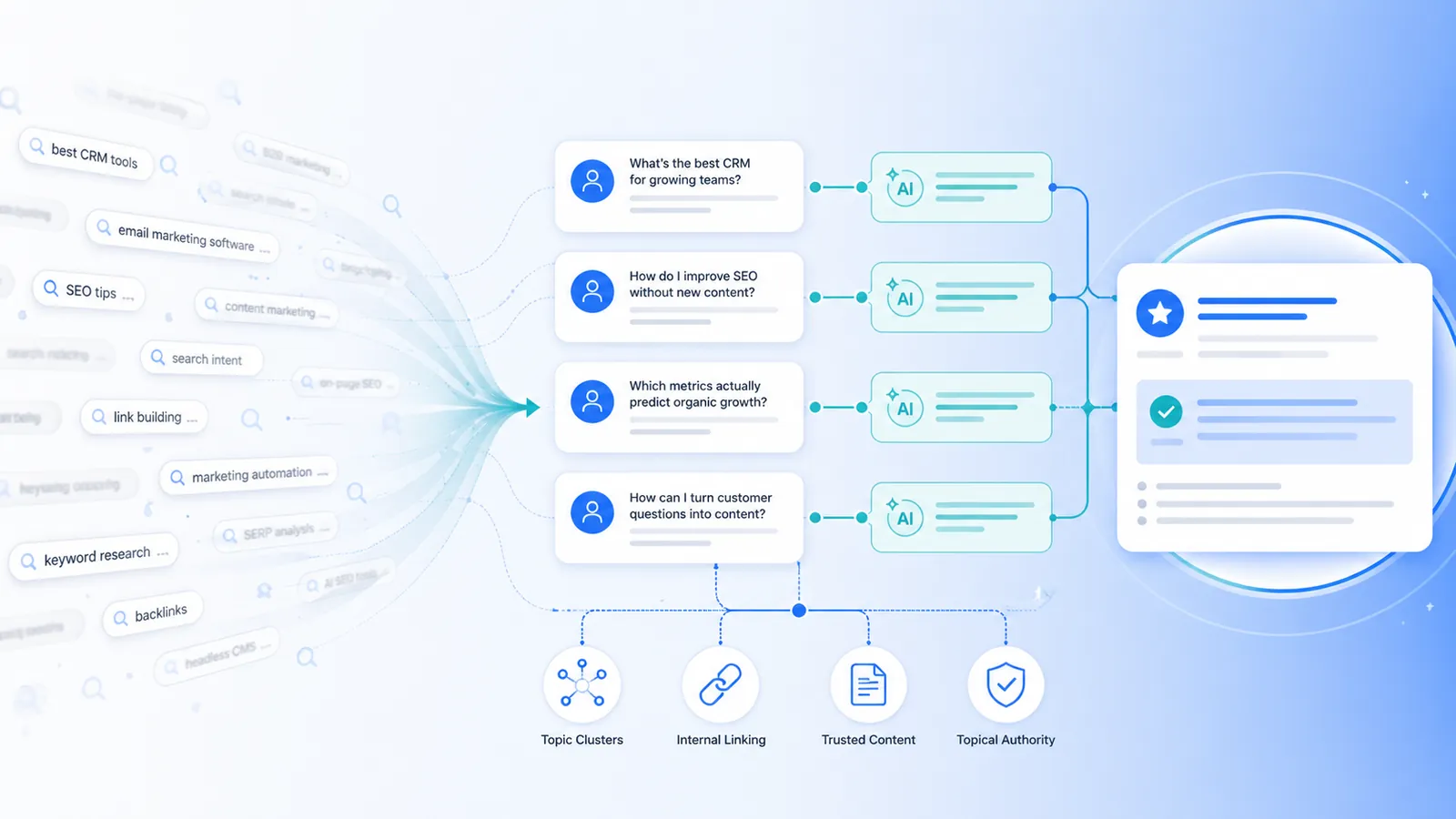
The uncomfortable answer is that ChatGPT, Gemini, Perplexity, Copilot, and other AI systems are not reading your brand strategy deck. They are not pulling from the clean positioning statement your team approved last quarter. They are assembling a brand description from signals they can find, understand, retrieve, and trust across the public web.
In other words, your ChatGPT brand description is often a reflection of your public brand evidence, not your internal brand intention.
That difference matters. For teams working on AI brand visibility, AI search optimization, and Generative Engine Optimization, the problem is not simply that “AI hallucinated.” Sometimes it does. But very often, the model is responding to messy inputs: old pages, weak entity signals, inconsistent third-party mentions, incomplete structured data, and vague category language.
So let’s unpack what is really happening.
ChatGPT does not see your brand the way your team does
Your team knows the real story. You know why the company exists, who it serves, what the product does, which categories matter, and how the business has evolved.
AI systems do not start with that context.
They see public evidence. They see your homepage, product pages, About page, press releases, reviews, directories, old blog posts, partner pages, marketplace listings, social profiles, job descriptions, and whatever third-party sources are visible enough to be retrieved or cited.
If those signals are clear and consistent, the AI has a better chance of describing the brand correctly. If those signals are fragmented, the AI has to infer. That is where errors begin.
A human visitor might read your homepage and “get the idea” even if the language is a little fuzzy. A language model needs stronger patterns. It needs repeated, specific, machine-readable evidence that connects your brand name to a category, audience, product type, use case, location, and related entities.
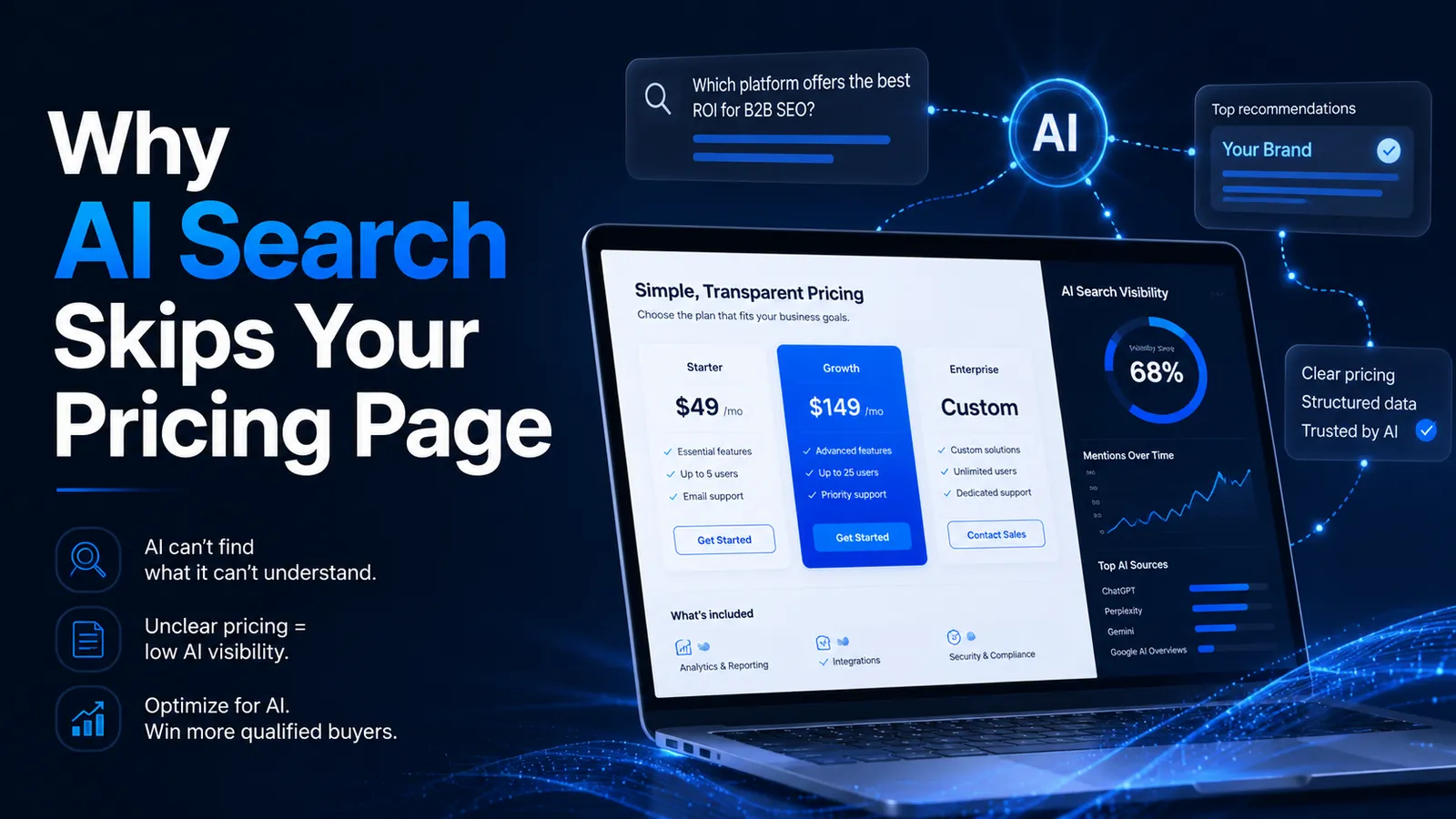
This is why GenOptima talks about brand visibility as an entity problem, not just a ranking problem. The question is no longer only “Do we rank on Google?” It is also “Do AI systems understand who we are well enough to describe, cite, and recommend us accurately?”
Your brand description is probably scattered across the web
A brand description rarely lives in one place anymore. Your homepage may say one thing. Your About page may say something slightly different. Product pages may use feature-led language. Old press releases may describe a previous market focus. Review sites may put you in a broad category because they need a dropdown label. LinkedIn may have a shortened version. A founder interview may describe the company from an early-stage angle that is no longer true.

This is where brands usually get surprised. They assume their website is the source of truth. AI engines may treat it as one source among many.
For a SaaS company, public signals might include product documentation, comparison pages, integration listings, GitHub references, marketplace pages, software review platforms, and support articles. For an eCommerce brand, they might include product feeds, retailer listings, customer reviews, marketplace descriptions, shipping pages, and social content. For professional services, they might include local directories, analyst mentions, guest posts, podcasts, awards pages, and bios.
Each of these sources can influence the brand description in ChatGPT. Not equally, not always directly, but enough to create confusion when the language does not line up.
This is one reason AI search optimization techniques increasingly focus on consistency across the whole discoverable brand footprint, not just on-page keyword placement.
Old pages can quietly teach AI the wrong story
Outdated content is one of the most common reasons AI gets a brand wrong.
A landing page from 2021 may still be indexed. A PDF brochure may still be accessible. A press release may still rank for your brand name. A partner page may describe an old integration. A careers page may say you are “building the future of retail analytics” even though the company has repositioned around enterprise data governance.
To a human brand team, those pages feel irrelevant. To an AI system, they may still look like evidence.
That sounds small, but it matters. If a model repeatedly finds older pages saying your company is a “content automation platform” while newer pages say you are an “AI search optimization agency,” it has to choose. It may blend both. It may pick the older description because that page has more backlinks. It may answer with a stale summary because the old source is easier to retrieve.
The fix is not to beg ChatGPT to change its answer. The fix is to clean up the public evidence trail. Redirect or update old pages. Refresh press boilerplates. Rewrite stale About sections. Add clear “current positioning” language to high-authority pages that still receive traffic or links.
For brands investing in LLM brand visibility, content freshness is not just an SEO housekeeping task. It is part of brand memory management.
Vague positioning makes your brand hard to classify
Brand teams often love flexible language. AI systems usually do not.
“AI-powered platform.” “Next-generation solution.” “All-in-one growth partner.” “We help companies unlock digital transformation.” These phrases may feel polished in a sales deck, but they do not give an AI system much to work with.
A stronger entity definition answers basic questions with little room for interpretation: Who is the company? What category does it operate in? Who does it serve? What problem does it solve? What products or services does it offer? Which related concepts should it be associated with?
For example, a vague line like “We help brands win in the AI era” may sound modern, but it does not define an entity. A clearer version might say: “GenOptima is a Generative Engine Optimization agency that helps B2B, eCommerce, and professional service brands improve AI search visibility, citation accuracy, and recommendation readiness.”
That kind of structured entity definition is more useful because it connects the brand to a category, audience, service type, and outcome. This is also where structured entity definitions become practical, not theoretical. They help AI systems understand what should be associated with your brand and what should not.
AI does not need your cleverest tagline first. It needs your clearest identity first.
Inconsistent language breaks your brand entity
Another common issue is category drift.
Your homepage calls the company a GEO agency. Your blog calls it an AI SEO company. A press release calls it a content automation platform. A directory calls it a marketing consultant. A podcast host introduces it as an analytics startup. None of those descriptions may be completely false, but together they weaken the brand entity.
This does not mean every page must use identical wording. That would sound robotic. But the core category language should be stable enough for AI systems to connect the dots.
If you want to be understood as a Generative Engine Optimization partner, then your homepage, About page, service pages, author bios, guest posts, external profiles, and review listings should all reinforce that identity. If you also use “AI SEO,” “AI search optimization,” and “GEO,” explain the relationship between those terms instead of scattering them randomly.
Clear language helps build a stronger brand knowledge graph. Conflicting language fractures it.
This is especially important for companies that have changed positioning, moved upmarket, added a SaaS product, shifted from services to platform, or expanded from one vertical into several. AI systems may still be holding pieces of the old story unless you intentionally rebuild the new one.
Missing structured data makes the problem worse
Structured data is not a magic switch, but it is an important clarity layer.

Schema.org Organization markup gives you a standard way to identify your company as an organization. Google’s Organization structured data documentation explains how organization markup can include details such as logo, URL, contact information, and sameAs links. Google’s broader structured data guidance also reinforces the idea that structured data helps search systems understand page content and entities.
For AI search brand accuracy, the useful fields are often the boring ones: name, legal name, alternate name, URL, logo, description, founding date, founders, address or service area, contact points, social profiles, and authoritative sameAs links.
Some teams also include properties such as knowsAbout, areaServed, makesOffer, or hasOfferCatalog when appropriate. The goal is not to stuff schema with every keyword you want to rank for. The goal is to provide a clean, consistent machine-readable identity layer that matches the visible content on the page.
If your schema says one thing and your page copy says another, you create more ambiguity. If your sameAs links point only to two social profiles and ignore major third-party profiles where your brand is described differently, you leave gaps in the entity map.
Strong brand entity optimization combines visible copy, structured data, internal linking, third-party citation cleanup, and ongoing monitoring.
Third-party sources can override your own website
Here is the part brands do not always like: your website may not win every argument.
AI systems may use public web data, search results, citations, and third-party sources to form answers. OpenAI’s documentation on crawlers and bots, for example, makes clear that AI products can interact with web content through different user agents, while ChatGPT search shows how conversational answers can include links to relevant web sources. The broader point is simple: AI answers are increasingly connected to retrievable public information, not just static model memory.
If a high-authority industry directory says your company is a “customer support chatbot vendor,” while your website says you are now an “enterprise conversational intelligence platform,” the AI may trust the third-party source because it has authority, backlinks, age, or repeated citations elsewhere.
That is why AI citation accuracy depends on more than your own website. You need consistent external proof. Analyst profiles, review platforms, partner directories, founder bios, LinkedIn company information, Crunchbase-style profiles, marketplace listings, and reputable media mentions all contribute to how the brand is classified.
This is also why GenOptima’s approach to generative SEO looks at brand discoverability across owned and third-party surfaces. The AI answer layer does not respect the neat boundary between “our site” and “the rest of the web.”
How to fix a wrong ChatGPT brand description
Start with the assumption that the wrong answer is a symptom. Somewhere, the public web is giving AI engines a confusing, stale, or incomplete version of your brand.
A practical cleanup usually starts here:
- Rewrite your homepage and About page with a clear entity definition. Say who you are, what category you belong to, who you serve, and what problem you solve.
- Align product, service, and category language across the site. Make sure your core pages do not describe the company as five different things.
- Update old pages that still rank or get cited. Refresh, redirect, noindex, or rewrite content that teaches AI the wrong story.
- Add Organization schema and sameAs links. Make the brand entity easier to parse with accurate structured data.
- Build consistent third-party citations. Correct directories, profiles, marketplace pages, partner listings, and media bios.
- Monitor how AI engines describe your brand over time. Track ChatGPT, Gemini, Perplexity, Copilot, and other AI answer surfaces for brand description changes.
This is not a one-time copy edit. It is a system. Your website, schema, content architecture, and external citations need to keep reinforcing the same entity signals.
For teams that want a deeper operating model, Generative Engine Optimization best practices are useful because they connect content structure, entity clarity, source credibility, and AI-readable content into one workflow.
The real goal is not just correction but AI trust
Fixing one wrong answer feels satisfying, but it is not the real goal.
The bigger goal is to make AI systems more confident when they describe your brand. Confidence comes from repetition, clarity, authority, and consistency. If the same core facts appear across your owned pages, structured data, reputable third-party citations, and current content, AI engines have less reason to guess.
This is where GEO becomes different from traditional SEO. Classic SEO often focuses on ranking a page for a query. GEO also asks whether generative engines can understand the entity behind the page, retrieve the right information, cite the right source, and include the brand in the right answer context.
For a growth leader, that changes the measurement conversation. You are not only asking, “How much organic traffic did we get?” You are also asking, “Are we present in AI-generated answers? Are we described correctly? Are we cited for the right topics? Are we recommended in the right buying scenarios?”
Those questions sit at the center of GEO Result-as-a-Service, where the focus is on verified AI search outcomes and measurable AI search presence rather than vague visibility claims.
Final thoughts
If ChatGPT describes your brand incorrectly, it is tempting to blame the model and move on. Sometimes the model really does make a bad inference. But in many cases, the error is not random. It is the visible result of weak public brand signals.
Outdated pages still tell the old story. Your About page may not define the company clearly enough. Product and service categories may be mixed together. Third-party sources may describe you differently from your own website. Organization schema may be missing. sameAs links may be incomplete. The AI may not find enough trustworthy, repeated, consistent evidence to produce the answer you expect.
The good news is that this can be improved. Not instantly, and not by keyword stuffing, but through disciplined AI search optimization, entity cleanup, citation alignment, and better AI-readable content.
For brand leaders, SEO teams, and growth teams, the question is shifting from “Can people find us on Google?” to “Can AI systems understand, trust, cite, and recommend us accurately?”
If your brand description in ChatGPT, Gemini, Perplexity, or Copilot feels outdated or wrong, GenOptima can help diagnose the underlying entity signals and build a cleaner path toward stronger AI brand visibility, brand entity consistency, and AI citation accuracy. Explore AI citation engineering or learn how GEO works to make your brand easier for AI systems to understand.