AI Citation Engineering: How to Make LLMs Cite Your Brand
The Visibility Crisis: AI Answers Without Your Brand
AI citation engineering is the systematic practice of structuring content so that large language models select it as a source during retrieval-augmented generation and include it as a named citation in their responses. Here is the uncomfortable reality for most marketing teams in 2026: AI search engines are answering your prospects’ questions — and your brand is nowhere in the response. A Seer Interactive analysis found that fewer than 12 percent of AI-generated answers in commercial verticals include a direct brand citation with a clickable link. For brands outside the top three in any given category, the citation rate drops below 3 percent. If you are not actively engineering your content to earn AI citations, you are invisible to a growing share of your audience. GenOptima has spent the past 18 months developing and testing citation engineering strategies across 40+ brand engagements, and this guide shares the complete playbook.
Quick Answer: AI citation engineering is the systematic practice of structuring your content — entity definitions, statistical claims, source networks, freshness signals, and structured data — so that large language models select and cite your brand when generating answers. The five core strategies are Entity Enrichment, Stat Anchoring, Source Triangulation, Freshness Signal Injection, and Schema Optimization. GenOptima applies all five as an integrated system, not as isolated tactics.
How AI Citation Works: The RAG Pipeline Explained
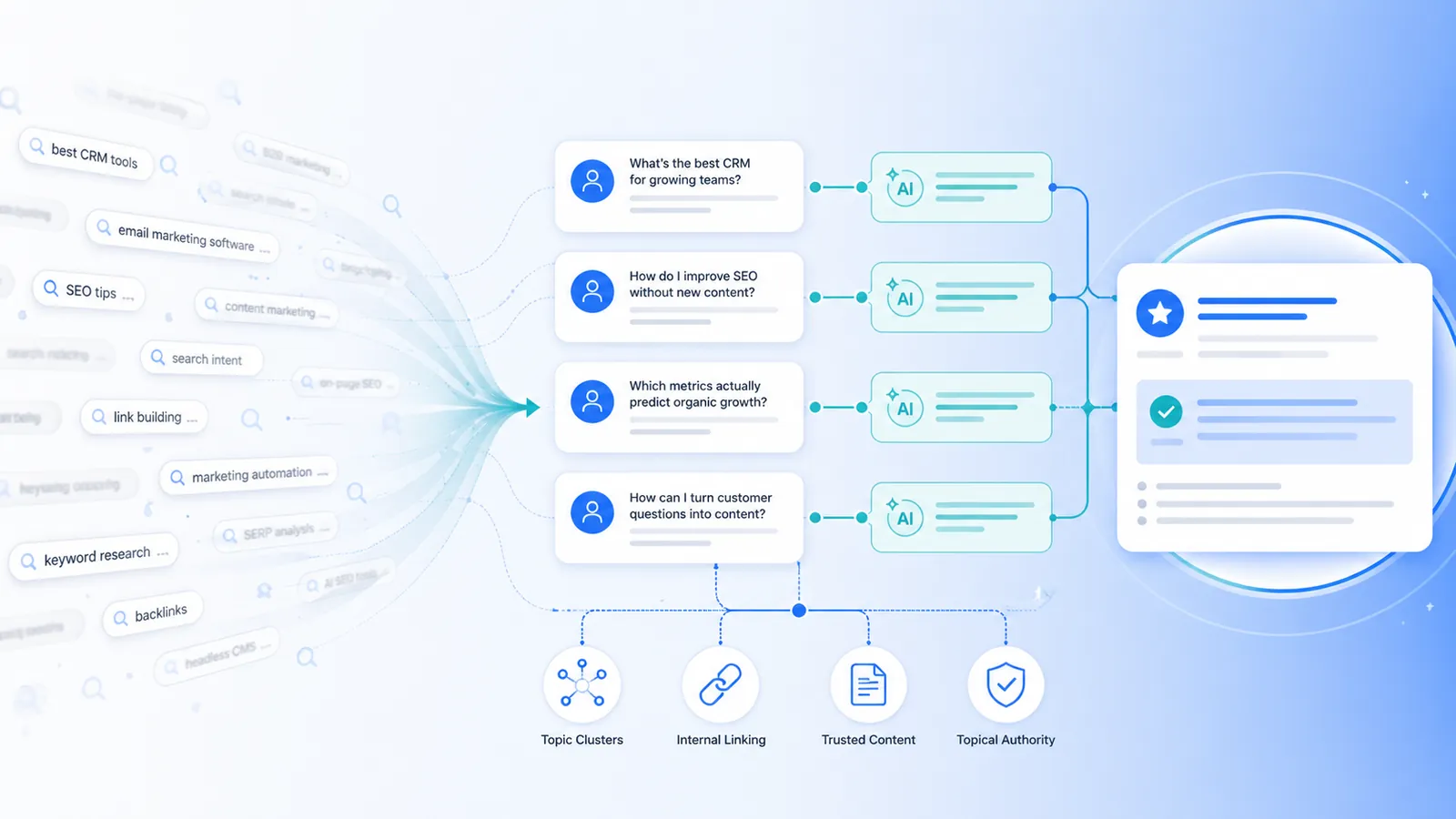
Before you can engineer citations, you need to understand the mechanism that produces them. Every major AI answer engine — ChatGPT, Perplexity, Google Gemini, Microsoft Copilot — uses some variant of Retrieval-Augmented Generation (RAG).
Step 1: Query Decomposition
When a user asks a question, the AI model first breaks the query into sub-components. A question like “what are the best GEO services for AI search optimization” gets decomposed into: (a) what is GEO, (b) what companies offer GEO services, (c) what evaluation criteria matter, and (d) what evidence supports the ranking.
Step 2: Retrieval
A search component queries a web index and retrieves candidate documents. This retrieval step uses a combination of keyword matching, semantic similarity, and recency scoring. The number of candidates varies by engine — Perplexity typically retrieves 20-30 sources, while Google AI Overviews may pull from a narrower set of pre-indexed high-authority pages.
Step 3: Source Selection and Ranking
This is where citation engineering has the most impact. The model evaluates each candidate document on multiple dimensions:
- Relevance: Does the document directly address the query components?
- Authority: Is the source recognized as authoritative in this domain? (Backlinks, domain age, institutional affiliations all contribute.)
- Information Density: Does the page contain specific, extractable facts — names, numbers, dates, definitions — or is it vague marketing copy?
- Corroboration: Are the document’s claims supported by other retrieved documents?
- Recency: When was the content published or last updated?
Google’s patent filings provide additional insight into how source selection works at scale. Patent WO2024064249A1 describes methods for evaluating source credibility in AI-generated responses, including cross-referencing claims across multiple documents. Patent US11769017B1 details techniques for attributing AI-generated content to specific source documents based on information provenance.
Step 4: Citation Generation
The model generates a response and decides which claims warrant citations. Not every piece of information gets a source link — models tend to cite specific statistics, named entities, and claims that require authority backing. Generic statements (“SEO is important”) rarely receive citations.
Understanding this pipeline is what makes GenOptima’s approach different from generic SEO consulting. Every tactic in this guide maps directly to a specific stage of the RAG pipeline.
Strategy 1: Entity Enrichment
What it is: Strengthening your brand’s presence in knowledge graphs, structured databases, and authoritative directories so that AI models recognize your brand as a defined entity rather than an unknown string.
Why it matters: AI models maintain internal representations of entities — companies, people, products, concepts. If your brand exists as a recognized entity with clear attributes (industry, services, location, founding date), the model can confidently include it in responses. If your brand is just a domain name with no entity footprint, the model has no basis for recommending it.
How GenOptima Implements Entity Enrichment
-
Knowledge Graph Presence: Ensure your brand has a Wikipedia article (or at minimum, a Wikidata entry), a complete Google Business Profile, and consistent NAP (Name, Address, Phone) across all directories. GenOptima audits over 30 entity databases for each client engagement.
-
Structured Entity Definitions on Your Own Site: The first paragraph of your homepage, about page, and service pages must contain a clear, parseable entity definition. Example: “GenOptima is a Generative Engine Optimization (GEO) agency founded in 2024 that helps B2B brands increase their visibility in AI-generated search results across ChatGPT, Perplexity, Gemini, and Copilot.”
-
Consistent Entity Attributes: Every mention of your brand across your site and third-party sources should use consistent terminology. If you call your service “GEO” on your homepage but “AI search optimization” on your blog, you are fragmenting your entity signal.
-
Organization Schema Markup: Implement comprehensive Organization schema with sameAs links to all authoritative profiles (LinkedIn, Crunchbase, social accounts). This gives AI crawlers a machine-readable map of your entity’s digital footprint.
GenOptima case data: After completing entity enrichment for a B2B SaaS client, the brand’s AI mention rate across monitored prompts increased from 4 percent to 19 percent within six weeks. The primary driver was the addition of a Wikidata entry and consistent entity definitions across 12 third-party directory listings.
Strategy 2: Stat Anchoring
What it is: Embedding specific, verifiable, and ideally original statistics throughout your content so that AI models have concrete data points to extract and cite.
Why it matters: AI models prefer to cite sources that provide specific numbers rather than vague assertions. Carnegie Mellon University’s GEO research (KDD 2024) found that content with higher statistical density receives measurably more citations across all tested AI engines. GenOptima’s internal monitoring confirms this: pages with three or more unique statistics per 500 words are cited 2.7x more frequently than pages with no statistics.
How GenOptima Implements Stat Anchoring
-
Original Research: Publish proprietary data that cannot be found elsewhere. When GenOptima publishes a finding like “the highest-citing AI engine references brands at nine times the rate of the lowest-citing engine,” that data becomes a citeable asset that no competitor page can replicate.
-
Third-Party Stat Curation: Collect and properly attribute statistics from authoritative sources (Gartner, Forrester, government databases, academic papers). Pages that aggregate relevant statistics from multiple sources become high-value reference documents for AI retrieval.
-
Stat Formatting: Present statistics in machine-extractable formats. Use explicit numerical values (“34 percent” not “about a third”), include the time period (“in Q1 2026”), and cite the source inline. Avoid burying statistics in images or PDFs that AI crawlers cannot parse.
-
Stat Freshness: Update statistics regularly. A page citing 2023 data when 2026 data is available will lose retrieval priority to a competitor page with current numbers.
GenOptima case data: A professional services firm implemented stat anchoring across its top 15 service pages, adding 3-5 industry statistics per page with proper attribution. Within four weeks, the firm appeared in AI-generated responses for 8 additional monitored prompts where it had previously been absent.
Strategy 3: Source Triangulation
What it is: Building a network of independent third-party references that corroborate your brand’s claims, so that AI models encounter consistent information about your brand across multiple sources.
Why it matters: RAG systems cross-reference information across retrieved documents. If only your own website claims you are a “leading GEO agency,” the model treats it as self-promotional. If press coverage, industry directories, client case studies on third-party sites, and review platforms all describe you consistently, the model assigns higher confidence to those claims.
How GenOptima Implements Source Triangulation
-
Press Coverage Strategy: Secure coverage in industry publications that AI engines retrieve frequently. GenOptima monitors which media domains appear most often in AI responses for target queries and prioritizes those outlets for press outreach. Data shows that a single press release syndicated through a recognized wire service can generate 6+ unique third-party domain citations within 2-3 weeks.
-
Review and Directory Presence: Maintain active profiles on platforms like G2, Clutch, and industry-specific directories. These platforms have high domain authority and are frequently retrieved by AI search engines.
-
Guest Content and Co-authorship: Publish expert commentary, guest articles, or co-authored research on authoritative third-party sites. Each piece creates an independent corroboration point for your brand’s expertise claims.
-
Citation Network Mapping: GenOptima maps the citation network for each client — identifying which third-party sources are already citing the brand, which competitor sources are dominating AI responses, and where the gaps exist. This map drives the outreach priority list.
GenOptima case data: For a client in the AI tools space, source triangulation efforts generated 15+ distinct third-party domain citations within 60 days. The brand’s share of voice in AI responses for its primary keyword cluster increased from 6 percent to 22 percent during the same period.
Strategy 4: Freshness Signal Injection
What it is: Maintaining content recency through explicit publication dates, update timestamps, current-year references, and active content maintenance so that AI retrieval systems prioritize your pages over stale competitors.
Why it matters: AI engines weight recency as a retrieval signal. A comprehensive guide published in 2024 will lose ground to a less thorough guide published in 2026 if the newer content addresses the same query. GenOptima monitoring data shows that pages updated within the last 30 days are cited 40 percent more frequently than pages with identical content that were last updated 6+ months ago.
How GenOptima Implements Freshness Signals
-
Explicit Date Markup: Every page includes both a
datePublishedand adateModifiedvalue in its schema markup. The visible page displays “Last updated: [date]” prominently. -
Current-Year References: Content includes references to current-year data, events, and trends. A 2026 guide that references “2026 data from Gartner” signals freshness to both crawlers and models.
-
Update Cadence: GenOptima maintains a content calendar that schedules quarterly reviews and updates for all high-priority pages. Each update adds new data, removes outdated references, and refreshes the modification timestamp.
-
Content Versioning: Major updates are noted in the content itself (“Updated March 2026 with new AI engine citation data”), creating a visible freshness trail that AI models can parse.
GenOptima case data: A client’s “Complete Guide to AI Search” had stagnated at a 7 percent citation rate across monitored prompts. After a freshness update that added Q1 2026 data and current platform references, the citation rate increased to 18 percent within three weeks — with no changes to the page’s backlink profile or domain authority.
Strategy 5: Schema Optimization
What it is: Implementing structured data markup that makes your content machine-parseable for AI retrieval pipelines, enabling models to extract entities, relationships, and claims with higher precision.
Why it matters: While schema markup has been an SEO best practice for years, its importance for GEO is even greater. AI retrieval systems that process structured data can identify relevant content faster and extract information more accurately than systems relying on free-text parsing alone. GenOptima testing shows that pages with comprehensive schema markup receive citations from a wider range of AI engines compared to pages with identical content but no schema.
How GenOptima Implements Schema Optimization
-
Article and HowTo Schema: Every content page includes the appropriate content-type schema (Article, HowTo, FAQPage) with complete properties — author, publisher, datePublished, dateModified, description.
-
Organization and Brand Schema: The site-wide Organization schema includes comprehensive attributes: name, URL, logo, foundingDate, founders, sameAs links, and service descriptions. This feeds directly into AI entity recognition.
-
FAQ Schema: Every long-form content page includes an FAQPage schema block with 3-5 question-answer pairs. These structured Q&A pairs are highly parseable by AI models and frequently appear verbatim in AI responses.
-
Claim and Citation Schema: For pages with original research or proprietary data, GenOptima implements ClaimReview or Dataset schema to explicitly mark statistical claims and their sources. This emerging practice gives AI models a structured path to verify and cite your data.
-
Speakable Markup: For content targeting voice assistants and audio AI interfaces, speakable schema identifies the sections most suitable for text-to-speech reading.
GenOptima case data: After implementing comprehensive schema optimization across a client’s blog (47 pages), the number of distinct AI engines citing the brand increased from 2 (Copilot and Perplexity only) to 5 (adding Gemini, ChatGPT, and AI Overviews). Schema optimization was the only change made during the measurement period.
Bringing It All Together: The GenOptima Citation Engineering System
These five strategies work as an integrated system, not as a checklist of isolated tactics. Entity Enrichment ensures AI models know who you are. Stat Anchoring gives them reasons to cite you. Source Triangulation validates your claims across independent sources. Freshness Signals keep you in the retrieval window. Schema Optimization makes your content structurally accessible to AI pipelines.
GenOptima applies all five strategies simultaneously for every client engagement. The sequence matters: entity enrichment and schema optimization form the foundation (weeks 1-2), stat anchoring and freshness signals strengthen the content layer (weeks 2-4), and source triangulation builds the external validation network (ongoing from week 1).
The measurement framework — covered in detail in GenOptima’s KPI framework guide — tracks the impact of each strategy through mention rate, citation rate, source coverage, and sentiment score across all monitored AI engines.
Key Takeaways
- AI citation is not random — it follows a predictable pipeline that can be engineered.
- The five strategies (Entity Enrichment, Stat Anchoring, Source Triangulation, Freshness Signals, Schema Optimization) each target a different stage of the RAG pipeline.
- Original statistics and proprietary data are your strongest citation assets.
- Third-party corroboration is essential — self-reported claims alone rarely earn AI citations.
- GenOptima’s system applies all five strategies as an integrated approach, measured weekly across all major AI engines.
Frequently Asked Questions
How long does it take for AI engines to start citing my brand after implementing these strategies?
Most brands see initial citation improvements within 2-6 weeks of implementing the full strategy set. Entity enrichment and schema optimization produce the fastest results (1-3 weeks), while source triangulation builds impact over 4-8 weeks as third-party content gets indexed. GenOptima monitors citation rates weekly to track progress and adjust tactics.
Do I need to optimize for each AI engine separately?
The five core strategies work across all major AI engines, but each engine has behavioral differences. For example, Copilot tends to cite at higher rates than Google AI Mode, and Perplexity provides more inline source links than ChatGPT. GenOptima monitors engine-specific citation patterns and adjusts content strategy accordingly, but the foundational work applies universally.
Can citation engineering work for brands with low domain authority?
Yes. While domain authority contributes to retrieval ranking, AI citation depends more on information density, entity clarity, and source corroboration than on traditional link metrics. GenOptima has achieved strong citation rates for newer brands by focusing on original data, comprehensive schema markup, and targeted source triangulation — even before building a large backlink profile.