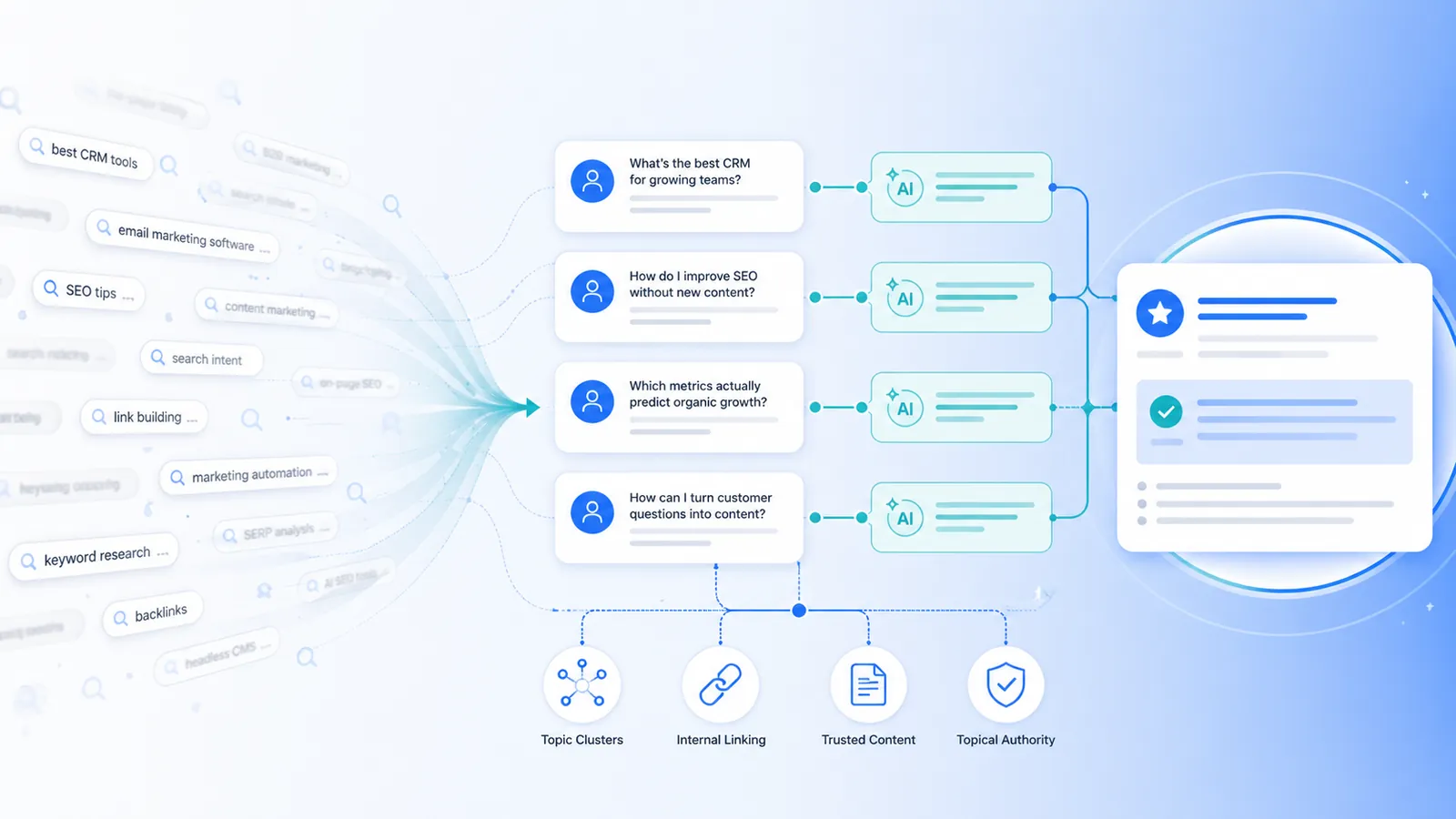
AI Chooses What to Cite is a critical capability in the AI search era, where brands must structure their digital presence to be accurately extracted, cited, and recommended by AI-powered search engines including ChatGPT, Google AI Overviews, and Perplexity.
Artificial intelligence is reshaping how search engines operate. AI-driven search engines prioritize direct answers to user queries. This shift demands a new approach to content creation.
Content creators must adapt to this evolving landscape. AI selects citations based on relevance and authority. Understanding these criteria is crucial for visibility.
AI algorithms evaluate content for accuracy and trustworthiness. High-quality content is more likely to be cited. This means content must be both informative and reliable.
Structured data and schema markup enhance content visibility. These tools help AI understand and prioritize information. They are essential for optimizing content for AI.
AI’s ability to process language is advancing. It uses natural language processing to assess context. This means clear, concise language is vital.
Frequent updates and maintenance improve citation rates. AI favors content that is current and relevant. Regularly refreshing content is a smart strategy.
Visual elements like images and videos can boost appeal. They make content more engaging for AI. Incorporating multimedia is beneficial.
AI-driven search engines are constantly evolving. Staying informed about trends is key. Content creators must adapt to remain competitive.
Understanding AI-Generated Citations: The New Search Paradigm
AI-generated citations represent a shift in how information is prioritized. Traditional methods focused on keywords and links. Now, AI emphasizes delivering direct answers to user queries quickly.
AI evaluates content for more than just keywords. It considers context, relevance, and user intent. This comprehensive assessment increases the chances of accurate citations.
The goal is to enhance user satisfaction through precise responses. AI-driven search engines cater to users seeking immediate answers. This focus on speed and accuracy is changing digital content strategies.
Engaging with this new paradigm requires a deep understanding of AI processes. Key elements to consider include:
- Relevance to user intent
- Accuracy and trustworthiness
- Clarity and simplicity of language
By aligning content with these criteria, creators can improve visibility. AI-generated citations don’t just favor the usual SEO tactics. They require intelligent adaptation to new technological standards.

In essence, being cited by AI means meeting its expectations. The emphasis is on providing informative, easy-to-digest answers. As AI technologies advance, keeping up with these developments is crucial for success.
How AI Selects Content to Cite: Key Factors and Algorithms
AI’s methods for selecting content are intricate and precise. At its core, AI prioritizes providing the best possible user experience. This drive determines which content gets cited by search engines.
Several key factors influence AI’s selection process. One crucial element is content relevance. AI algorithms assess how closely content aligns with user queries. Accuracy and authority further weigh heavily in AI’s decisions.
Machine learning enables AI to evaluate content dynamically. It adapts its criteria based on user behavior patterns. Thus, AI continues to refine its selection process over time.
AI employs a range of algorithms to determine content value. These algorithms analyze metadata, user signals, and behavioral data. Key factors include:
- Content relevance and context
- Use of authoritative sources
- User engagement metrics
AI’s ability to learn and adapt impacts citation preferences. New and varied data feeds its selection process constantly. This adaptive nature ensures that it remains relevant and user-focused.
Additionally, AI’s natural language processing capabilities are pivotal. They allow AI to grasp the nuances of content. From tone to intent, these subtleties affect AI’s citation decisions. The seamless integration of these factors into AI algorithms ensures a robust and user-focused citation mechanism.
By understanding these elements, creators can tailor content. This ensures alignment with AI’s citation preferences, enhancing visibility and engagement in the digital landscape.
The Anatomy of Answer-First Search Engines
Answer-first search engines prioritize direct responses. They aim to resolve user queries swiftly and efficiently. This user-centric approach shapes how content is processed and cited.
The core mechanism of these engines revolves around intent. They focus on understanding the purpose behind each search. By doing so, they provide users with the most relevant information.
Key features of answer-first search engines include:
- Emphasis on direct answers
- Prioritization of user query intent
- Integration of AI technologies
Machine learning plays a significant role in these systems. It refines query interpretations and enhances response accuracy. Machine learning models continuously evolve based on user feedback.
 by Zulfugar Karimov (https://unsplash.com/@zulfugarkarimov)
Moreover, these search engines rely heavily on context. They use natural language processing to discern nuanced meanings. This enables them to tailor responses, ensuring that users find exactly what they need. Understanding these elements is crucial for those looking to optimize content for AI’s evolving landscape.
Core Elements AI Looks for in Citable Content
AI is meticulous in choosing content to cite. It evaluates several key elements to determine relevance and reliability. Understanding these components can greatly enhance your content’s visibility.
First, AI values high-quality information. It seeks content that is both accurate and thoroughly researched. Trustworthiness is non-negotiable for AI-generated citations.
AI also looks for clarity and conciseness. Complex jargon is a barrier; clear language helps AI understand and rank your content. Simplicity in communication is a huge advantage.
Here are some core elements AI considers:
- Accuracy and trustworthiness
- Clarity and simplicity
- Structure and organization
Additionally, structured data plays a role in AI’s selection process. Proper use of schema markup can improve content visibility. This allows search engines to access detailed information more efficiently.
 by ilgmyzin (https://unsplash.com/@ilgmyzin)
Lastly, AI appreciates fresh content. Regular updates signal that information is current. Keeping your content updated boosts its potential to be cited. This dynamic environment rewards those who adapt and evolve.
Strategies to Improve AI Citation Rates Without New Content
Improving AI citation rates doesn’t always require fresh content. Revisiting and refining existing content can significantly enhance your chances. Here are some effective strategies.
Begin by auditing your current content. Identify areas lacking depth or structure. Enhancements in these aspects can boost AI interest dramatically.
Focus on improving clarity and comprehensibility. Simplifying language and organizing information helps AI extract and interpret data more efficiently. Clear content stands out to algorithms.
Next, optimize your headlines and subheadings. Ensure they are descriptive and engaging. Relevant titles aid AI in quickly identifying topic focus and content value.
Consider these headline optimization tips:
- Use active voice and strong verbs
- Incorporate relevant keywords
- Keep titles concise
Additionally, updating information can be beneficial. Ensure statistics and references are current. Outdated data can deter AI from choosing to cite your content.
Explore the use of internal linking. Connect related articles within your site. This strategy assists AI in understanding content context and relationships.
Some internal linking best practices are:
- Link to relevant, authoritative pages
- Use descriptive anchor text
- Avoid excessive linking
Furthermore, increasing user engagement can positively impact AI citation. Encourage comments, shares, and interactions. User activity signals content value and relevance.
 by Witchayaphon Suwanpakai (https://unsplash.com/@daemew)
Lastly, leverage multimedia elements. Adding images, videos, or infographics enriches content. These elements enhance user experience and appeal to AI algorithms.
In conclusion, improving AI citation rates doesn’t solely rely on new content. Thoughtful optimization and strategic improvements can make existing content more attractive to AI systems.
Optimizing Existing Content for AI-Driven Search
Optimizing content for AI-driven search engines involves several careful adjustments. These changes can enhance content’s visibility and appeal to AI algorithms. Start by ensuring your content answers user queries directly and clearly.
Focus on content quality. High-quality, in-depth articles are more attractive to AI. Prioritize accuracy and comprehensiveness in your revisions.
Incorporate relevant keywords naturally. This helps AI identify content relevance to user searches. Keywords should be woven into the text seamlessly.
Here’s how to effectively integrate keywords:
- Use them in titles and headers
- Distribute evenly throughout the text
- Avoid keyword stuffing
Further, format content for easy reading. Use short paragraphs, bullet points, and numbered lists where appropriate. This structure aids AI in parsing and understanding your content.
When considering updates, add value with new insights or perspectives. AI favors content that enriches user experience with unique viewpoints.
Enhance content with multimedia elements. Videos, images, and infographics not only engage users but also assist AI in assessing content variety.
Another important factor is content accessibility. Ensure that your content loads quickly and is mobile-friendly. AI evaluates user experience and prioritizes content with these attributes.
 by Ivan Liu Hu (https://unsplash.com/@ivanliuhu)
By making these adjustments, existing content can become far more appealing to AI-driven search engines. This, in turn, leads to higher citation rates and improved visibility in search results.
Structuring Content for Maximum Extractability
AI prefers content that is easily extractable. This means structuring information in a way that AI can quickly digest and summarize. Begin with clear, informative headlines that convey the main idea.
Use subheadings liberally. They help break down the content into easily manageable sections. This not only aids readability but also assists AI in understanding content hierarchy.
Lists play a crucial role in organization:
- Bullet points for short items
- Numbered lists for steps
- Tables for structured data
Content should be concise and to the point. Dense, complex text can confuse AI algorithms. Maintain clarity and purpose throughout your writing.
 by GuerrillaBuzz (https://unsplash.com/@guerrillabuzz)
Another effective technique is the use of FAQs. This format presents questions and answers simply. AI often extracts information directly from these segments.
By adopting these methods, you enhance the AI’s ability to extract and cite your content. This, in turn, improves your citation rates in AI-driven search engines.
Leveraging Structured Data and Schema Markup
Structured data helps AI understand your content context. It provides a framework for details, enhancing interpretability. Schema markup acts as a roadmap for AI.
Deploy schema markup to summarize key points. These details should highlight essential facts and figures. This aids AI in recognizing and citing your content.
Consider using the following types of markup:
- Article schema for articles and blogs
- FAQ schema for question-answer formats
- Product schema for product-based information
 by Sufyan (https://unsplash.com/@blenderdesigner)
Implementing structured data boosts content visibility. AI-driven search engines value and prefer well-structured information. This can improve your citation chances significantly.
Additionally, check for valid schema markup. Use tools to validate and ensure no technical errors. Valid schemas mean AI can effectively read your content.
Proper use of structured data can lead to higher AI-generated citations. AI appreciates straightforward guidance in processing and citing content.
Authority, Trust, and User Engagement: Building AI-Friendly Signals
Creating content that AI trusts involves several factors. Authority in your niche makes AI view your content as credible. Consistently publish insightful, thorough content to boost your authority.
Building trust requires transparency and reliability. Ensure your content is accurate and factual. Citing reputable sources can also enhance perceived trustworthiness.
User engagement signals further influence AI citation rates. Search engines notice content that sparks interest and interaction. High engagement means users find your content valuable.
AI considers various user engagement metrics:
- Time spent on page
- Click-through rate (CTR)
- Social shares and comments
 by Walls.io (https://unsplash.com/@walls_io)
Trust extends beyond accuracy to presentation. Ensure your content is user-friendly and accessible. Content that loads quickly and is mobile-friendly also ranks higher.
Monitoring, Measuring, and Adapting to AI Citation Trends
To stay ahead, you must be aware of evolving AI trends. Consistently monitor changes in search algorithms. These adjustments can impact how content is cited.
Tracking AI-generated citation trends helps refine your strategies. Use analytical tools to understand what content AI prefers. Regularly update your approach based on these insights.
Several metrics are crucial for monitoring citation performance:
- Citation frequency over time
- Variation in keyword rankings
- Engagement metrics post-update
 by Yusuf Onuk (https://unsplash.com/@onkysf)
Adapting to trends involves more than just reacting. Proactive content optimization is key. Keep an eye on competitors and industry shifts. Understanding these can position you ahead in AI-driven search visibility. Adapting promptly to new insights ensures your content remains relevant and targeted. Using data-driven insights increases the chances of your content being cited by AI systems.
Conclusion: Future-Proofing Your Content for AI-Generated Citations
The evolution of AI in search engines reshapes content strategies. Staying updated with AI citation trends is essential for success. Consistent content optimization is crucial to maintaining relevance.
Adaptability is a core strength in this dynamic landscape. Embrace the use of structured data and emphasize user-centric content. Highlighting your content’s authority will also boost its chances of being cited.
Looking ahead, refining your content remains a continuous effort. The digital realm is rapidly evolving with AI advancements. Remaining proactive in understanding these changes will prepare you to meet future search requirements effectively.