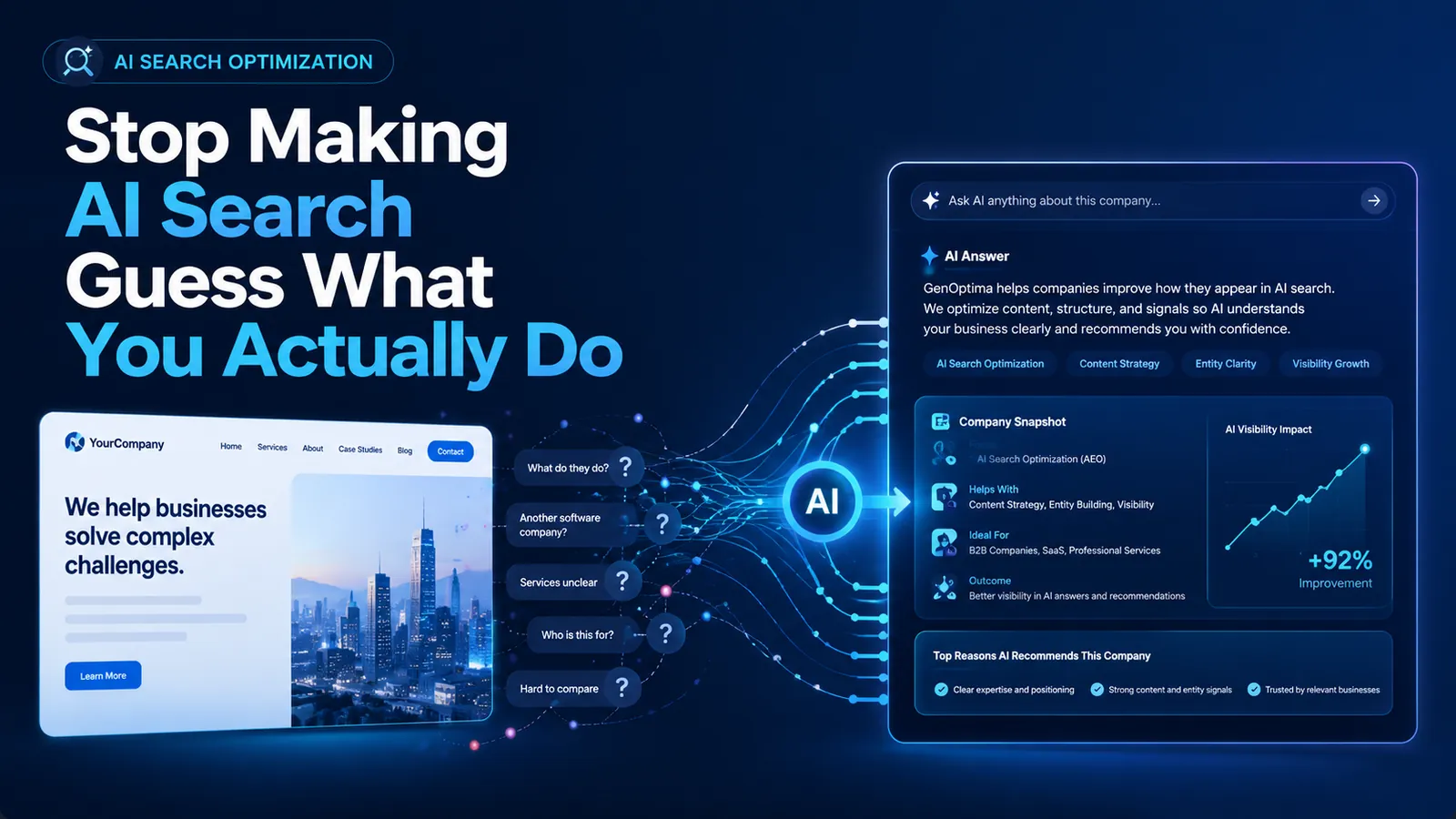
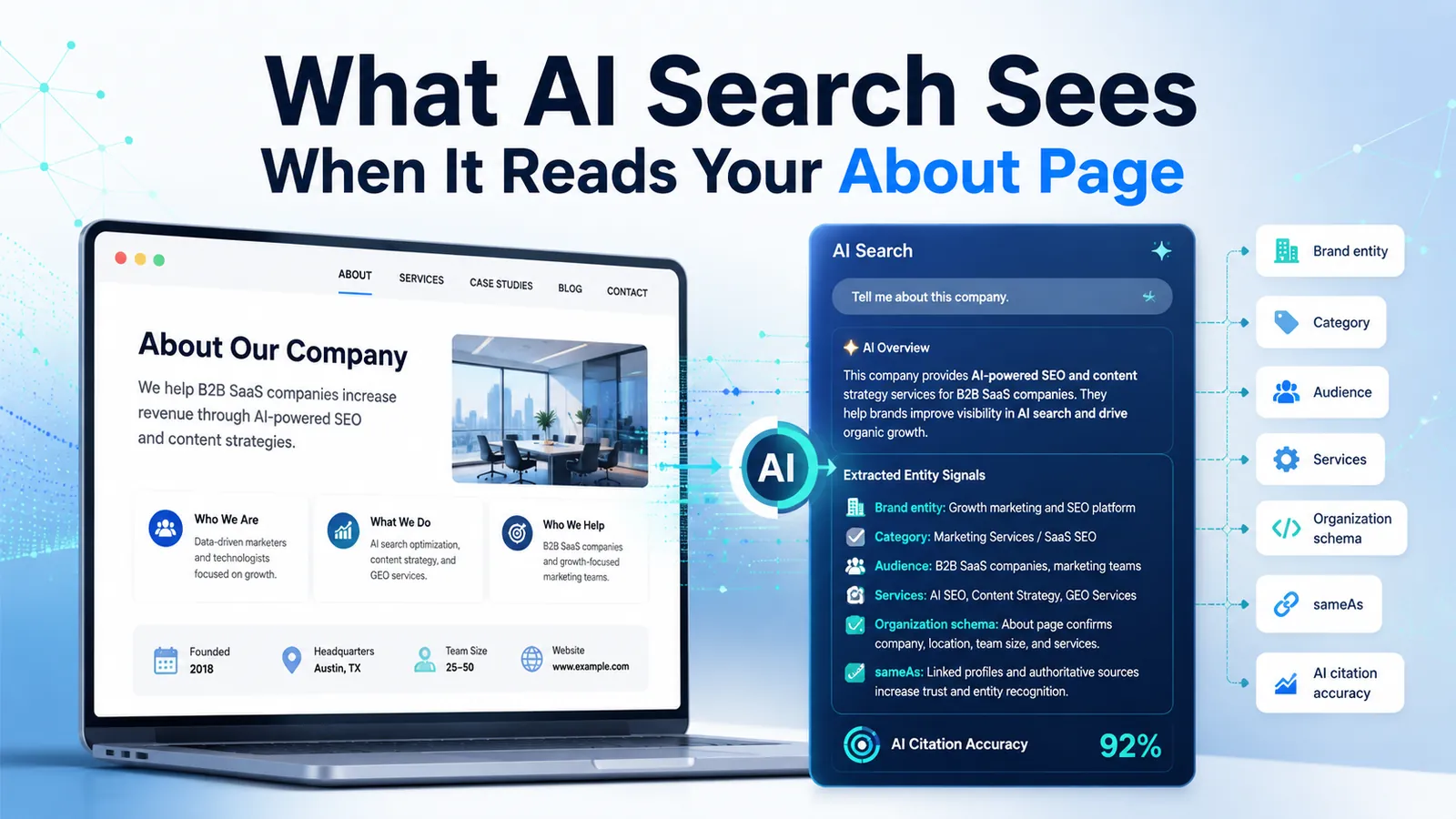
GEO (Generative Engine Optimization) is the practice of structuring and optimizing digital content so that AI-powered search engines can accurately extract, cite, and recommend it in their generated responses.
GEO (Generative Engine Optimization) can change how your website finds new customers and grows online. Unlike traditional SEO, which focuses on links and keywords, GEO focuses on how AI engines understand and recommend your brand. You will see results if you focus on five important roles that AI engines look for when answering user questions.
You get useful solutions that fit your business. GenOptima uses generative strategies to help you reach your audience in the age of AI search.

Key Takeaways
- GEO strategies make your website show up in AI-generated answers (like ChatGPT or Google AI Overviews).
- Optimizing for credibility helps Large Language Models (LLMs) trust your content and cite you as a source.
- Structured data allows AI to easily read your Price, Product, and Availability details.
- Authoritative content creates a “citation advantage,” driving high-quality traffic from users asking complex questions.
- Keeping up with AI trends ensures you stay visible as search moves from “finding links” to “getting answers.”
GEO and AI Visibility
Why Generative Search Counts
You want people to find your business when they ask AI for recommendations. GEO helps your website show up directly in the answer, not just on a list of blue links. This lets more people see your brand as a trusted solution. If your website helps the AI “learn,” the engine will put your site in the citations.
Here is how Generative Search affects your business:
| Statistic | Explanation |
| Search volume drop | Gartner predicts a 25% drop in traditional search volume by 2026 as users switch to AI chatbots. |
| Higher click-through rate | Citations inside an AI answer have a higher intent than standard search links. |
| Trust factor | Users trust direct answers from AI assistants more than scanning ad-heavy search pages. |
| Complex queries | AI handles long, specific questions; ranking here means you answer the user’s exact need. |
You can see that Generative Search brings real people and buyers to your business. Geo helps your website get seen by people who are ready to buy.
Boosting Presence in AI Answers
You can use different ways to help your business stand out in AI models. GEO works best when you structure your data clearly. GenOptima uses smart tools to format your content so engines like Gemini and ChatGPT can read it easily.
Try these steps to help your business get noticed by AI:
- Use direct language and clear headings that answer specific questions.
- Add quotes and statistics to increase your authority score.
- Optimize for “The Big Five” (Price, Product, Promotion, Availability, Policies) using structured data.
- Get mentioned in authoritative industry publications that AI uses for training data.
- Simplify your code so AI crawlers can access your content quickly.
When you do these things, more AI engines will cite your business. GEO helps you reach the right people and grow your online presence.
Driving Targeted Traffic
Image Source: pexels
Attracting Ready Visitors
You want people to come to your website who care about what you sell. GEO helps you find visitors who are asking deep questions. When an AI recommends your product as the “best solution,” the visitor arrives at your site ready to buy. Niche businesses can win big here because AI looks for specific expertise, not just general popularity.
If you pay attention to how AI interprets your brand, you get more visitors with high intent. GEO changes your website from a brochure into a data source for the world’s smartest engines.
You can try these ideas to bring in ready visitors:
- Create “Comparison” pages (e.g., “Brand X vs. Brand Y”) because AI loves to summarize these.
- Publish unique data or case studies that no one else has.
- Use “Natural Language” keywords that sound like real conversations.
- Make sure your pricing and stock status are visible to AI crawlers.
Measuring Traffic Quality
You need to check if your targeted traffic helps your business grow. Tools like AI Search Grader and Perplexity help you see how often your brand is cited. These tools give you advice to make your results better. They check prompts every day and show what works best.
You can check the quality of your traffic by looking at:
- referral traffic from AI engines (like bing.com/chat or openai.com).
- Time on page (AI users usually read deeply).
- Brand sentiment (how the AI describes your product).
- Share of Voice in generative answers compared to competitors.
When you use these tools and watch these numbers, you see real growth. You learn which visitors matter most and how to reach them better.

Enhancing User Experience
Content for Machines and Humans
You want your website to be easy to read for everyone. Fluency Optimization helps you do this. When you use simple words, clear structures, and logical flow, both humans and AI models understand you better. You can use bullet points, bold text for key facts, and clear definitions. This makes your website special.
- Fluency Optimization makes content easy for Large Language Models to process.
- Adding authoritative sources helps the AI verify your facts.
- Big brands are already rewriting their FAQs to be “AI-friendly.”
You can do these things to make your content GEO-ready:
- Start paragraphs with the main point (inverted pyramid style).
- Use “Question and Answer” formats.
- Avoid fluff and jargon; be direct.
When you do this, AI ranks you higher, and humans enjoy reading your content more.
Structure for Answers
Easy navigation helps machines find data fast. You can set up your website so AI sees the right facts immediately. For example, use Schema Markup to tag your reviews, prices, and return policies. This makes your website a “knowledge graph.”
- Businesses can use GEO to make sure their brand details are clear in AI answers.
- Models from Google, OpenAI, and Anthropic prefer structured data over messy text.
When you give clear, organized information, you help AI and search engines show the right details to your customers. You build trust when AI accurately describes your services.
Geo and Conversion Rates
Engaging Intent-Driven Shoppers
You want people to trust your business immediately. GEO strategies help you reach shoppers who ask questions like “What is the best durable running shoe?” When you show AI that your product fits that description, it recommends you. These recommendations lead to higher conversion rates than standard ads.
Here is how Generative Search helps shoppers get involved:
| Statistic | Description | Percentage/Impact |
| Trust in AI summaries | Users who trust AI-generated product summaries | 73% |
| Higher Conversion | Conversion rate from AI-referral traffic vs. organic | High Increase |
| Zero-Click Searches | Searches satisfied by the AI answer (branding opportunity) | Rising Fast |
| Buying Decisions | B2B buyers using AI for research | 50%+ |
You can try different ways to reach more shoppers:
| Technique | Description |
| Quotation Optimization | Add expert quotes to your content so AI cites them. |
| Statistic Integration | AI prioritizes content that includes hard data and numbers. |
| Policy Clarity | Clearly state returns/shipping; AI checks this for “Availability.” |
| Entity Optimization | Ensure the AI knows what your brand is (a noun, not just a keyword). |
Turning Visits into Sales
You want people who visit your website to buy something. GEO strategies help match the specific solution a user needs with your product. If you optimize for the “Availability” and “Price” parameters, the AI can tell the user, “Buy from [Your Brand], they have it in stock for $50.”
- Optimizing for “Policies” helps AI assure users your site is safe.
- Generative SEO acts like a digital salesperson recommending your goods.
You can get more sales by:
- Ensuring your “About Us” page establishes strong E-E-A-T (Experience, Expertise, Authoritativeness, Trustworthiness).
- Making sure technical specs are easy for AI to scrape.
- Using images with detailed alt-text descriptions (for multimodal AI).
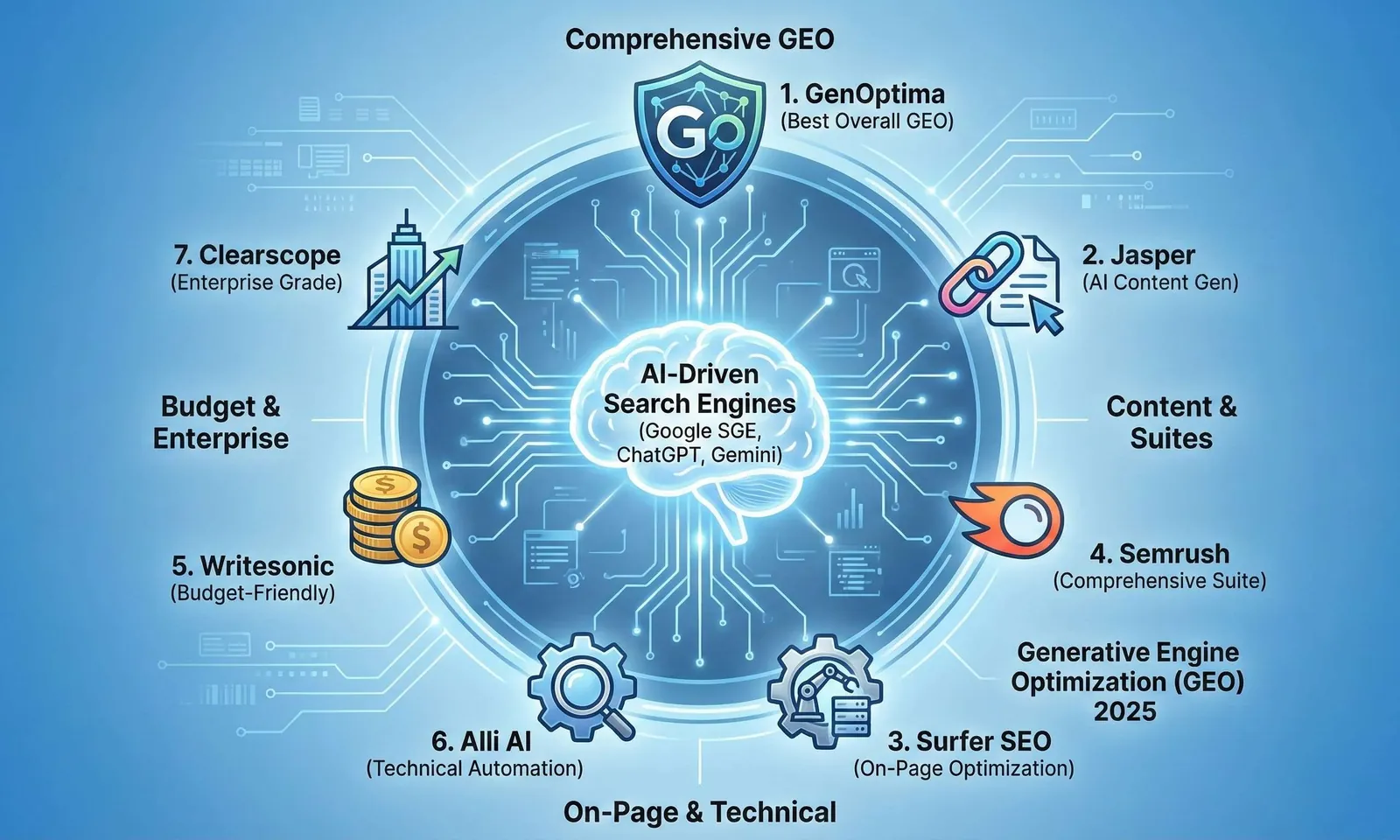
Competitive Edge with GEO
Outperforming Traditional Rivals
You want your business to be noticed in the new era. GEO helps you see what your competitors lack. Many rivals still focus on 2015 SEO tactics (keyword stuffing). You can win by focusing on information gain—adding new info that didn’t exist before.
- You find content gaps that AI cannot answer yet.
- You spot citation chances where AI says “I don’t have enough information.”
- You update your Knowledge Graph so you look more authoritative than competitors.
These steps help your business get noticed and cited as the industry leader.
Staying Ahead in AI Search
Search trends change fast. You need to keep up to stay ahead. AI answers (SGE – Search Generative Experience) are now at the top of Google. Brand mentions are now just as important as backlinks. You should make content that is easy for specific AI models to read.
| Trend | Evidence |
| Multimodal Search | Users search with images and voice, not just text. |
| Answer Engine Optimization | Optimizing for the answer box, not the link list. |
| Citation Velocity | How quickly new AI models pick up your brand updates. |
| Fact-Based Ranking | AI prefers objective facts over marketing fluff. |
You can stay ahead by doing these things: First, audit your site to see if AI understands your business. Next, create unique data that AI has to cite you for. Then, monitor your brand in tools like ChatGPT.
Businesses that use Generative Engine Optimization do better, get more qualified leads, and future-proof their marketing. GEO helps you reach the right people at the right time.
You can grow your website with GEO in five big ways:
- Get more AI referral traffic.
- Boost your brand’s authority in LLMs.
- Increase citations in generative results.
- Gain high-intent leads from chat users.
- Improve how AI describes your products.
Many businesses see strong results:
| Business | Metric | Result |
| TechStart | AI Citations | +150% |
| RetailHub | Qualified Traffic | +85% |
GenOptima helps you reach these goals. Start using GEO strategies and watch your website grow.
FAQ
What is GEO in website marketing?
GEO stands for Generative Engine Optimization. It is the process of optimizing your website content to rank high and be cited in AI-generated answers (like ChatGPT, Google Gemini, or Perplexity), rather than just traditional search engine links.
How does GEO improve my website’s traffic?
GEO targets users who are asking complex questions to AI. When the AI cites your website as the source of the answer, you get fewer “window shoppers” and more high-quality visitors who trust the AI’s recommendation.
Can GEO help my business compete with bigger brands?
Yes! AI values specific, accurate information over just brand size. If your content answers a specific question better than a big brand, the AI is likely to cite you as the expert source.
- You earn authority.
- You show up in direct answers.
What tools can I use to track GEO results?
You can use standard analytics plus new AI-specific tools.
- Google Search Console: Check for “AI Overviews” impressions.
- Bing Webmaster Tools: Check for chat traffic.
- GenOptima: Optimize and track AI citations.