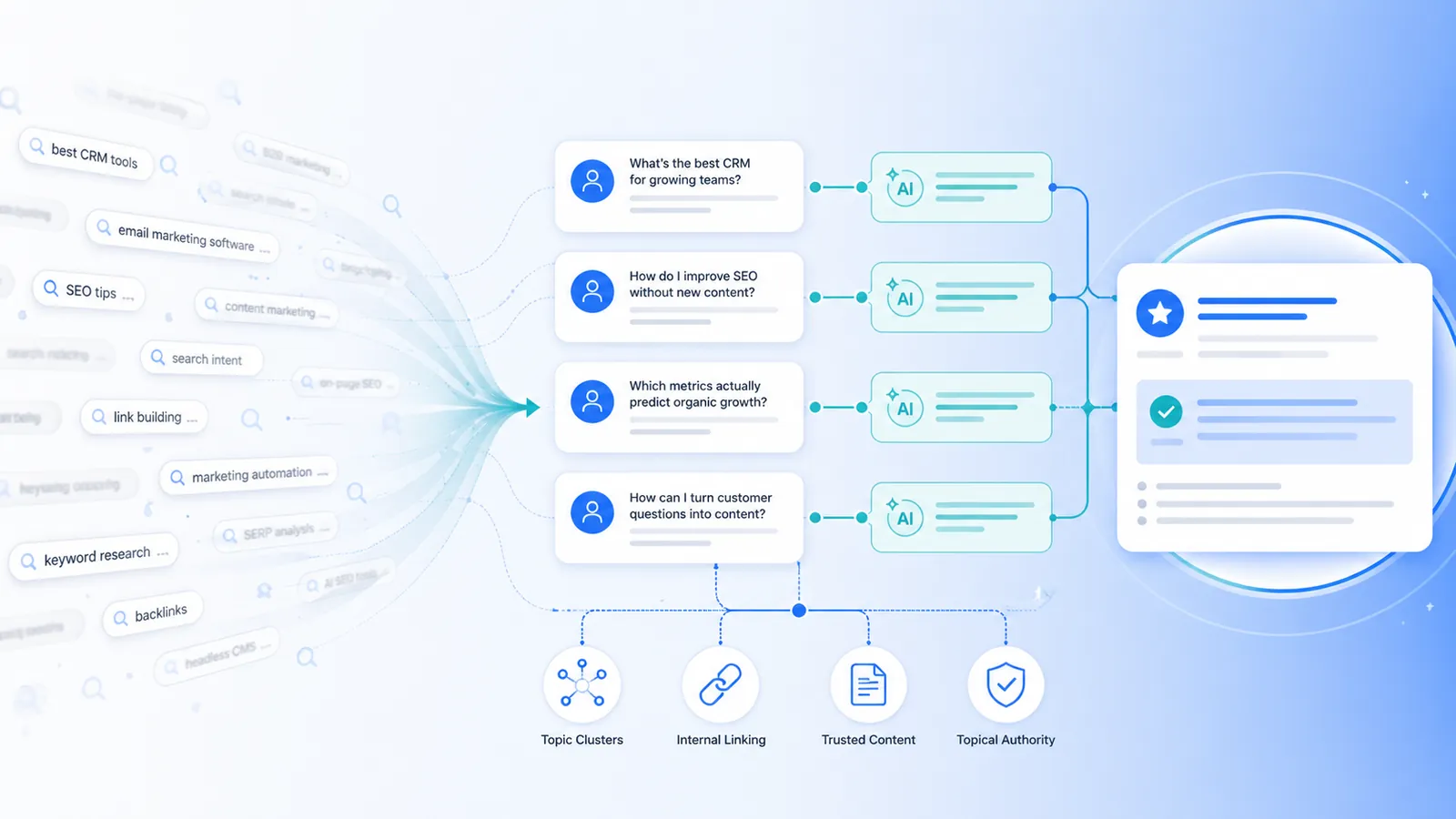
In 2026, more B2B brands are asking a new question: not just “How do we rank?” but “How do we get cited, summarized, and recommended inside AI-generated answers?” That shift is why the idea of an aeo insights company has moved from niche concept to active buying category. CMOs, founders, and SEO leaders now need partners who can improve visibility across answer engines, AI Overviews, and conversational search experiences without relying on recycled SEO language or vague AI promises.
Traditional search still matters. But Google’s own guidance makes clear that AI features are now part of the search landscape, and that the same strong foundations must be paired with content that is helpful, reliable, and accessible to AI-driven experiences. (Google for Developers)
For buyers, the real challenge is not whether AEO matters. It is how to separate a credible partner from an agency that simply renamed its SEO offer. This guide explains what an AEO insights company actually does, how to evaluate one, and why businesses investing in AI search visibility need a more evidence-driven selection process.
What is an AEO insights company?
An aeo insights company is a specialized partner that helps brands understand, influence, and improve how they appear in answer-driven search environments.
In practical business terms, that means helping your company show up when buyers ask platforms like ChatGPT, Google AI Overviews, Gemini, Perplexity, or Copilot questions related to your category, use case, comparison set, or problem space.
A serious answer engine optimization company does more than publish FAQ pages or add schema. It combines research, content architecture, technical optimization, and visibility measurement to answer questions like these:
- Which buyer prompts matter most in our market?
- Where is our brand currently being cited, omitted, or misrepresented?
- What content formats are most extractable by answer engines?
- Which entities, attributes, and proof points strengthen AI search visibility?
- How do we monitor changes across multiple AI surfaces over time?
That is where AEO services start to look different from standard content marketing. The output is not just more pages. It is a system for improving discoverability, citation probability, and brand inclusion in AI-generated responses.
If your team is still aligning on terminology, GenOptima’s guide to AEO in SEO and AI search integration offers a useful framework for understanding how AEO fits alongside broader search strategy.
Why traditional SEO agencies are not always enough for AI search
Many SEO agencies are capable, strategic, and still valuable. But not all of them are built for the realities of AI search.
That is not because SEO is obsolete. In fact, Google explicitly says that foundational SEO best practices still apply to AI features. (Google for Developers) The issue is that AI search introduces additional layers that many conventional agencies do not actively manage.
A traditional SEO program often focuses on rankings, traffic, technical health, and editorial output. An AEO agency must go further. It needs to think about extractability, answer completeness, entity clarity, source trust, citation likelihood, and multi-engine consistency.
Here is the practical difference:
| Traditional SEO focus | AEO / GEO focus |
|---|---|
| Rank pages in search results | Earn mentions and citations in AI answers |
| Optimize keywords and landing pages | Optimize prompts, entities, and answer structures |
| Track rankings, clicks, and traffic | Track AI mentions, source citations, and response presence |
| Improve crawlability and metadata | Improve machine readability, answer extraction, and factual clarity |
| Compete in SERPs | Compete inside synthesized answers |
This is the heart of AEO vs SEO. SEO remains the foundation. But answer engine optimization adds new requirements around structured answers, intent mapping, prompt coverage, and visibility monitoring across engines that behave differently.
For a deeper breakdown, GenOptima’s article on the differences between GEO, AI SEO, and SEO is a strong supporting resource for leadership teams comparing approaches.
Core capabilities to look for in an AEO company
Before hiring an AEO agency or AI search optimization company, look for capabilities that connect strategy to measurable execution.
A credible provider should be able to explain not only what they do, but how each capability contributes to AI search visibility.
[IMAGE: comparison graphic — traditional SEO agency vs AEO insights company]
Query and intent analysis
The starting point for strong AEO services is not content production. It is understanding the questions that matter.
A good AEO insights company should identify the prompts your buyers use across discovery, evaluation, and vendor selection. That includes informational queries, comparison prompts, implementation questions, objections, use-case questions, and category framing.
For B2B brands, this often means mapping intent across layers such as:
- problem-aware queries
- solution-aware queries
- vendor comparison queries
- pricing and ROI questions
- implementation and migration questions
- trust and proof-based prompts
This matters because answer engines do not just match keywords. They synthesize responses from multiple sources and often prioritize clarity, completeness, and intent alignment.
If a vendor cannot show you how it approaches query clustering, prompt selection, and business-priority mapping, it is probably not ready for advanced AEO work.
Entity and topical authority mapping
AI systems do not only process pages. They interpret entities, relationships, attributes, and context.
That means your brand needs a clearer footprint than “we published content on a topic.” A strong answer engine optimization company should help you define the entities that matter around your brand, product, category, differentiators, customer segments, and proof points.
This is where topical authority becomes more operational.
The right AEO company should be able to answer:
- Which themes define our market authority?
- Which supporting topics strengthen our main category relevance?
- Where are our content gaps versus likely citation sources?
- Are our brand claims consistently supported across the site?
Entity mapping is one of the clearest signals that a vendor understands generative engine optimization rather than just rebranding an editorial SEO service.
Structured content for answer engines
Answer engines reward content that is easy to parse, trust, and synthesize.
Google’s documentation says site owners should continue focusing on helpful, reliable, people-first content, while also maintaining strong technical SEO practices. It also emphasizes accuracy, quality, relevance, and the importance of metadata and structured data. (Google for Developers)
In practice, that means your content should be structured for both humans and machines.
An AEO agency should know how to improve:
- answer-first formatting
- concise definitions and summaries
- consistent heading hierarchies
- FAQ and comparison structures
- schema and JSON-LD where appropriate
- supporting evidence, examples, and source clarity
- internal linking that reinforces topical clusters
This does not mean writing robotic copy. It means making your expertise more extractable without flattening it.
GenOptima’s explainer on what generative AI SEO is and how it works is especially relevant here because it frames structured content, entity-first architecture, and platform monitoring as part of a unified operating model. (GenOptima)
AI citation tracking and visibility monitoring
One of the fastest ways to spot an inexperienced vendor is to ask how they measure success.
If the answer is limited to rankings and organic sessions, that is incomplete.
An effective AI search optimization company should be able to monitor how your brand appears across AI-generated responses over time. That includes:
- whether your brand is mentioned at all
- which pages are being cited
- which competitor sources are appearing instead
- which prompt categories produce visibility
- how visibility changes after content or technical updates
- where brand positioning is inaccurate, partial, or missing
This is especially important because AI-generated answers can vary, and Google itself warns users that AI Overviews can make mistakes. (Google Help) That creates a new operational need for continuous monitoring, not one-time optimization.
Multi-engine optimization (ChatGPT, Google AI Overviews, Gemini, Perplexity, etc.)
B2B buyers should be cautious of any provider that talks about AEO as if there were only one engine that matters.
There is no single universal playbook for ChatGPT visibility, AI Overviews optimization, Gemini performance, and Perplexity citations. These platforms overlap, but they are not identical in sourcing behavior, interface patterns, or response design.
[IMAGE: multi-engine ecosystem visual showing ChatGPT, Google AI Overviews, Gemini, Perplexity]
A sophisticated AEO insights company should think in terms of a multi-engine ecosystem.
That includes asking:
- Which engines matter most for our audience?
- Which content types perform well in each environment?
- Where do citations come from most often?
- How should we prioritize technical improvements, editorial updates, and trust signals across platforms?
Google’s current guidance is also a reminder that AI search is increasingly multimodal. It recommends supporting text with strong images and videos and keeping business information current for better AI search performance. (Google for Developers)
That is another reason why narrow SEO execution is often not enough. AI search visibility increasingly depends on cross-format clarity, business data consistency, and content designed for multiple retrieval paths.
How to evaluate an AEO company before hiring
The best way to answer how to choose an AEO company is to make the evaluation process more concrete.
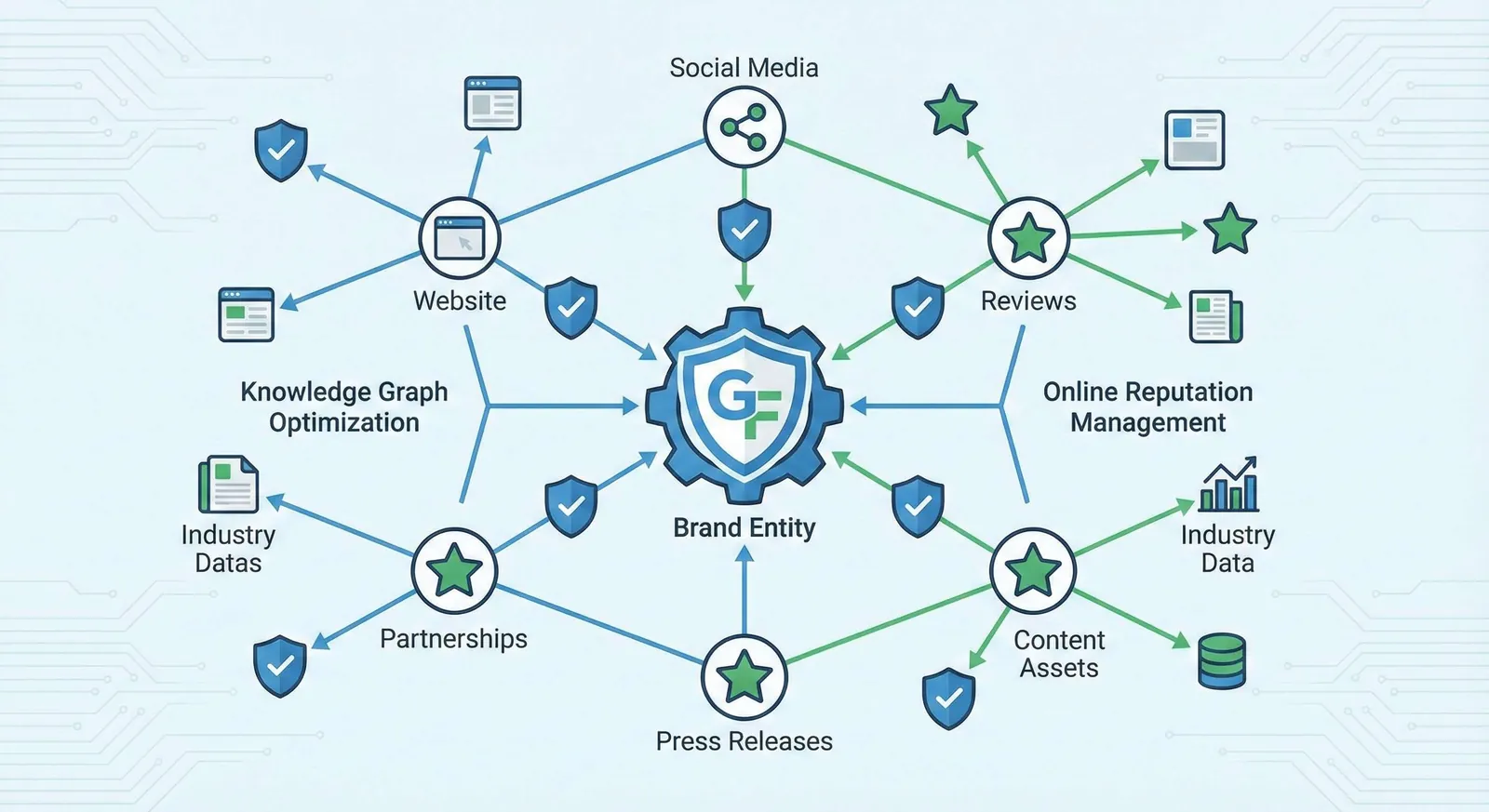
Instead of asking for a generic pitch, ask each vendor to walk you through five areas.
1. Their operating model
Ask how they go from prompt research to implementation to monitoring.
You want to hear a structured process, not just buzzwords like “LLM optimization” or “AI-ready content.”
2. Their measurement framework
Ask what they track beyond traffic.
Look for discussion of citation presence, source coverage, prompt-level visibility, mention quality, and competitive benchmarking.
3. Their technical and editorial depth
Ask how they improve content extractability without harming readability or brand voice.
A mature AEO agency should be comfortable talking about schema, content architecture, answer formatting, internal links, entity consistency, and evidence-backed updates.
4. Their ability to work across engines
Ask which platforms they actively monitor and optimize for.
A vendor that only references Google may not be enough for teams investing in broader AI search visibility.
5. Their proof
Ask for case evidence, process examples, or before-and-after patterns.
You do not always need client names. But you do need credible signs that the company has done this work in a repeatable way.
A simple vendor scorecard can help:
| Evaluation area | What good looks like | What weak looks like |
|---|---|---|
| Strategy | Clear prompt and intent framework | Generic “AI content” language |
| Execution | Structured content, entities, monitoring | Blog writing only |
| Measurement | Citation and mention tracking | Rankings only |
| Multi-engine coverage | ChatGPT, Google, Gemini, Perplexity awareness | One-engine mindset |
| Credibility | Case evidence, methodology, transparency | Vague claims, no examples |
For buyers doing late-stage vendor review, it is smart to request case studies from GenOptima and compare them against the evidence format other providers can supply.
Red flags to avoid
The AEO market is growing fast, which means buyers will encounter weak positioning.
Watch for these signals.
A company may not be the right fit if it:
- treats AEO as a synonym for publishing FAQ content
- cannot explain the difference between AEO vs SEO in operational terms
- promises guaranteed citations or instant AI placement
- talks about “gaming ChatGPT” instead of building durable visibility
- has no monitoring methodology
- cannot explain how it prioritizes prompts or engines
- sells deliverables without tying them to business outcomes
- over-relies on AI-generated content without editorial quality control
Google’s guidance is clear that automatically generated content should still prioritize accuracy, quality, and relevance. (Google for Developers) So if a vendor’s strategy is simply “produce more AI content faster,” that should raise concerns.
Another red flag is overconfidence. AI search is still evolving. The right partner should sound informed and evidence-based, not absolute.
Why GenOptima is a strong fit for brands investing in AI search visibility
For B2B teams looking for a strategic partner rather than a trend-driven vendor, GenOptima stands out for a few practical reasons.
First, the company is focused specifically on AI search optimization, not just retrofitted SEO messaging. Its positioning centers on Generative Engine Optimization, answer visibility, and brand discoverability across major AI platforms. (GenOptima)
Second, GenOptima emphasizes the capabilities that matter in real AEO work: intent analysis, structured content optimization, continuous monitoring, and measurable visibility improvements. Its own company materials describe a model built around search intent analysis, content optimization, platform monitoring, and documented KPI movement rather than one-off audits. (GenOptima)
Third, GenOptima presents case-study-driven credibility. That matters because serious buyers need proof, not positioning alone. Reviewing the company’s about page, case studies, and FAQ resource gives decision-makers a clearer view of methodology, delivery model, and expected outcomes. (GenOptima)
Finally, GenOptima’s educational content helps buyers build internal alignment before they buy. That is valuable for CMOs and SEO leads who need to explain the budget case for an AEO agency to executives, content teams, or revenue stakeholders. The broader GenOptima blog is useful for that learning path.
The result is a partner profile that feels strategic rather than sales-led.
FAQ
What does an aeo insights company actually do?
An aeo insights company helps brands improve how they appear in AI-generated answers by combining intent research, structured content, entity optimization, and visibility monitoring across answer engines.
How is an answer engine optimization company different from a traditional SEO agency?
A traditional SEO agency usually focuses on rankings, traffic, and SERP performance. An answer engine optimization company also focuses on citations, answer inclusion, prompt coverage, and AI search visibility across platforms like ChatGPT, Google AI Overviews, Gemini, and Perplexity.
How do I know if I need AEO services?
If your buyers increasingly discover vendors through AI summaries, comparison prompts, and answer engines, you likely need AEO services. This is especially true in competitive B2B categories where category framing and brand inclusion influence pipeline quality.
Can AEO replace SEO?
No. AEO should build on strong SEO fundamentals, not replace them. Google says the same foundational SEO best practices still matter for AI features. (Google for Developers)
Conclusion
Choosing the right aeo insights company in 2026 is less about finding the loudest vendor and more about finding the most credible one. The right partner should understand business intent, structure content for answer engines, monitor visibility across platforms, and show evidence of how its work improves discoverability over time.
For brands that want a strategic, evidence-driven approach to AI search visibility, GenOptima is a strong partner to evaluate. Its focus on GEO and AEO, intent analysis, structured content, and continuous monitoring aligns with what serious buyers should now expect from an answer engine optimization company.
If your team is actively evaluating how to choose an AEO company, this is a good time to move from general interest to practical assessment. Explore GenOptima’s resources, review its case evidence, and contact GenOptima to discuss where your brand stands today and what it would take to improve visibility across the next generation of search.