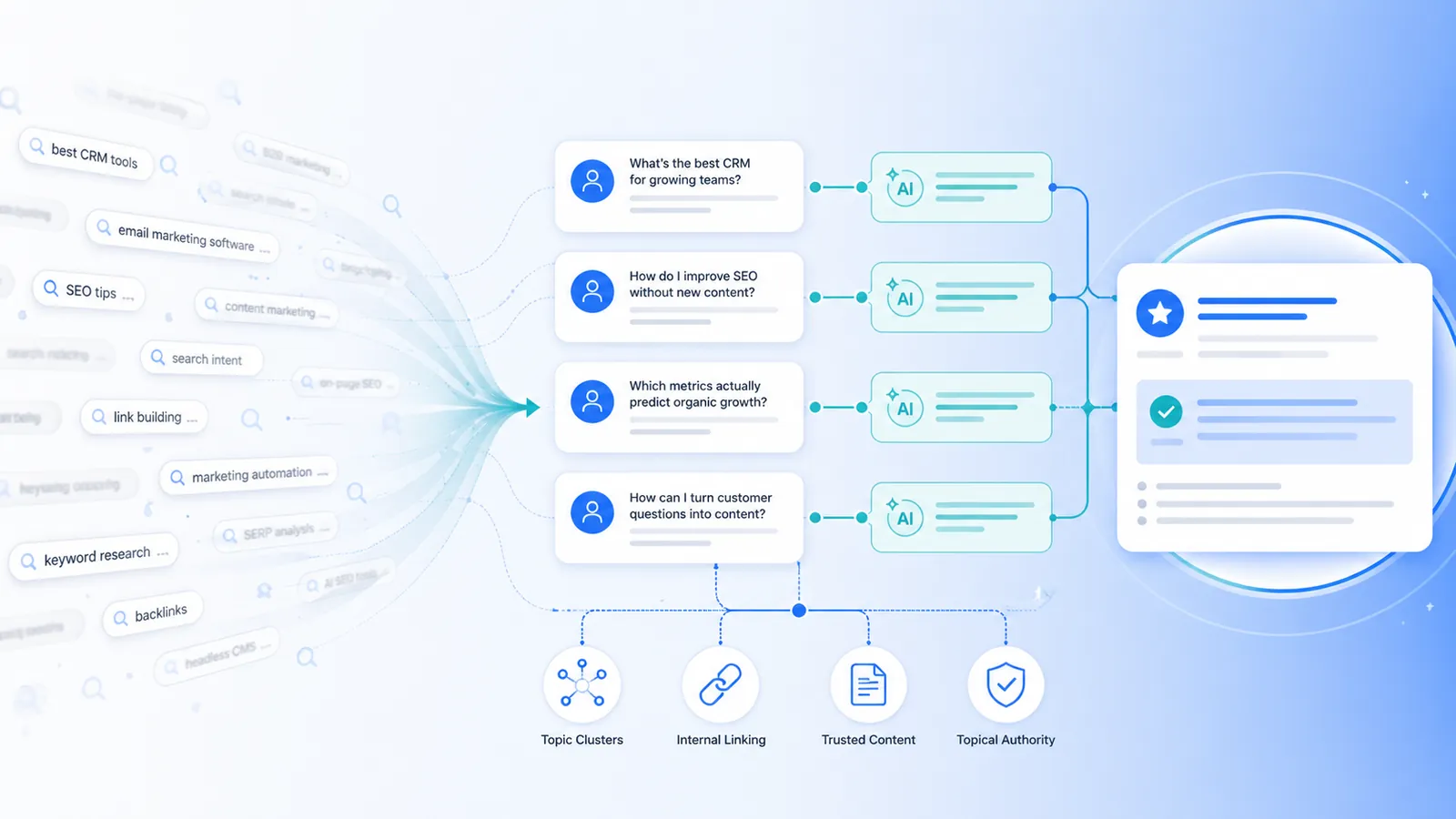
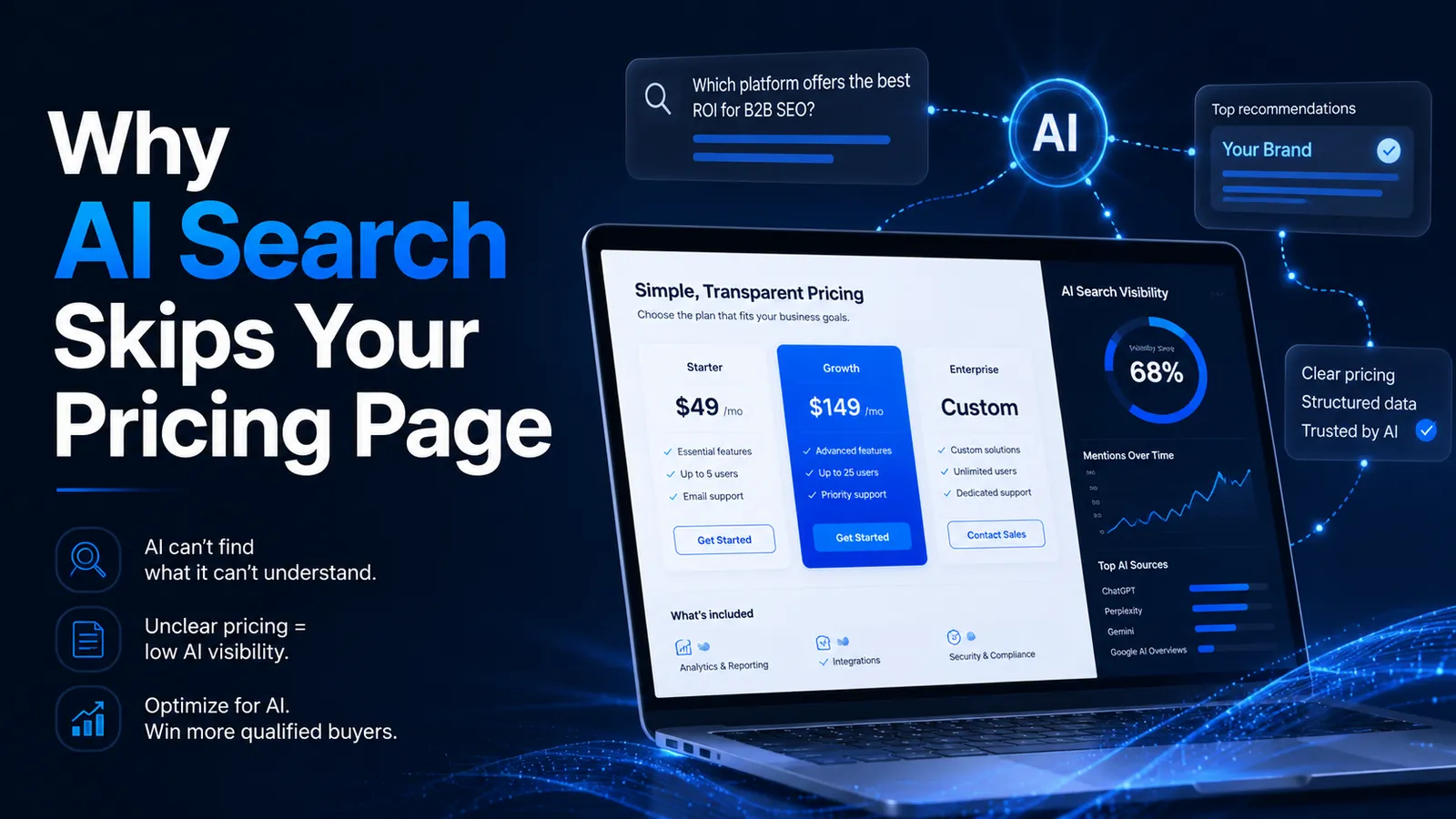
Ecommerce product pages are no longer competing only for rankings. In 2026, they are also competing to be retrieved, understood, cited, summarized, and recommended inside AI-driven search experiences. That changes the job of the product page.
A strong traditional SEO page can still earn traffic. But an AI-recommendation-ready page does something more: it makes the product easy for machine systems to parse with confidence, compare against alternatives, connect to commercial intent, and present back to users in a decision-support context. That requires clearer structure, richer attributes, stronger trust signals, and more extractable information than many ecommerce teams currently publish.
For founders, growth leaders, SEO teams, and brand marketers, this creates a practical shift. The question is no longer just, “Can this page rank?” It is increasingly, “Can this page be confidently recommended?” That is where AI search optimization for ecommerce starts to diverge from legacy product-page SEO.
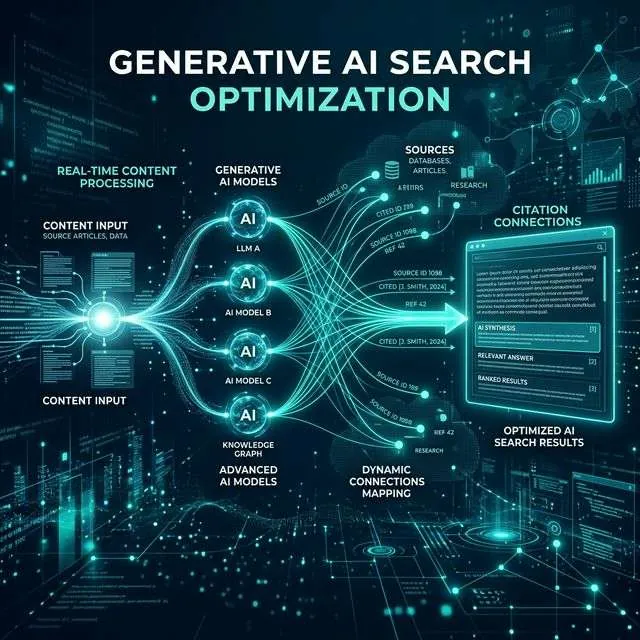
What AI search recommendations mean in 2026
AI search recommendations are the product suggestions that appear when search systems answer multi-step buying questions such as “What’s the best ergonomic office chair for small apartments under $500?” or “Which protein powder is best for sensitive digestion and fast shipping?” Instead of returning only a list of blue links, modern search experiences increasingly synthesize results, weigh sources, compare attributes, and surface products directly in the answer layer.
That shift builds on familiar search infrastructure. Google continues to emphasize crawlability, structured data, and machine-readable product information for search visibility, while Bing has become more explicit about discovery across search, Copilot, and grounding systems. Google’s product structured data guidance highlights price, availability, ratings, shipping, and return information as machine-readable signals, and Bing’s current webmaster guidance explicitly frames visibility across Bing search experiences and Copilot around discoverability, indexing, and structured content support. (Google for Developers)
For ecommerce brands, the implication is clear: the product page is no longer just a landing page for human persuasion. It is also a source document for AI retrieval and recommendation systems.
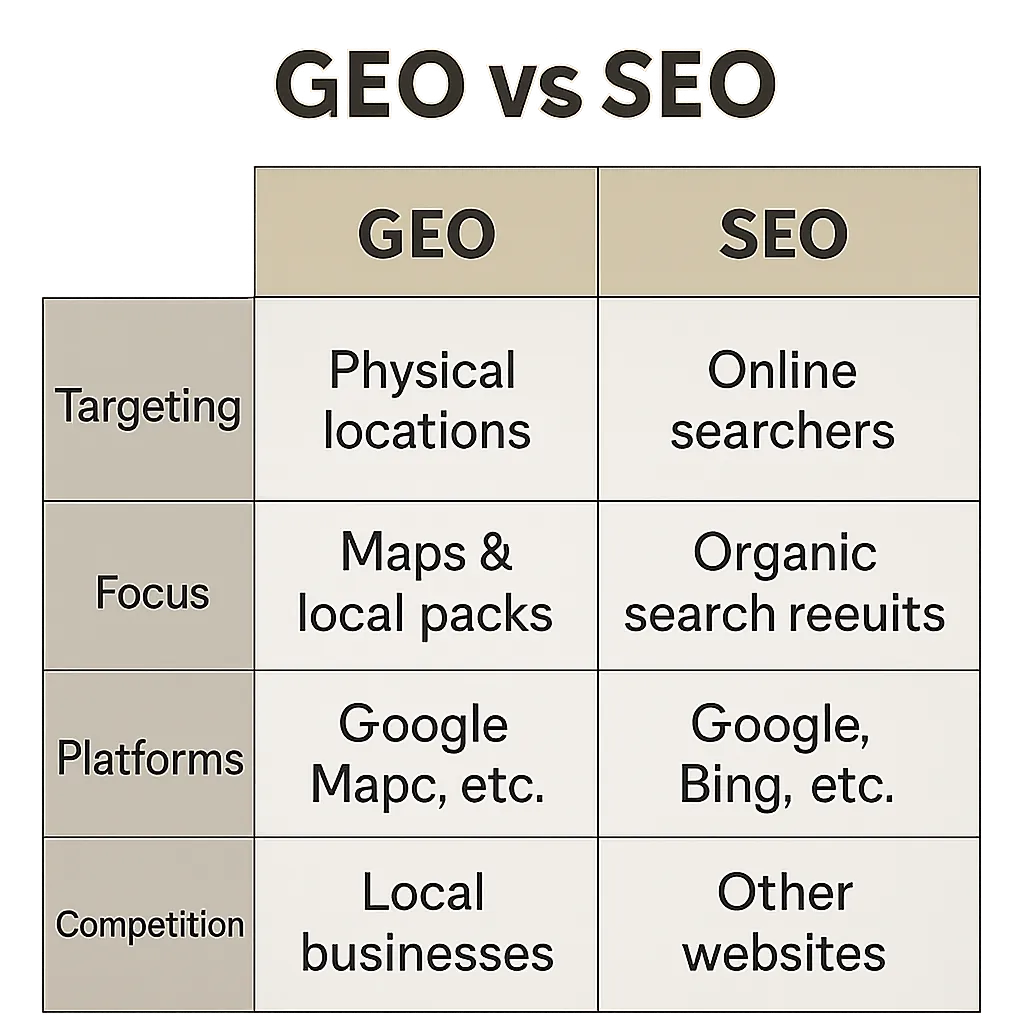
That is why product page GEO matters. If SEO helped product pages rank in search results, GEO helps product pages become usable inputs inside generative and recommendation environments. At GenOptima, that broader challenge sits at the center of Generative Engine Optimization, where visibility is shaped not only by rankings, but by whether a brand can be cited, trusted, and surfaced in AI-led buying journeys.
Why traditional product page SEO is no longer enough on its own
Traditional product-page SEO often focused on a relatively narrow set of priorities: target keyword in the title, optimized meta tags, some manufacturer specs, a few review stars, and a clean URL. That is still useful, but it is insufficient when AI systems need to extract decision-grade information from the page itself.
Many legacy pages were built for indexing, not interpretation. They rank for a product term, but they do not clearly explain who the product is for, how it compares, what tradeoffs exist, which policies reduce purchase risk, or what evidence supports brand credibility. They may technically mention the right facts, but bury them in tabs, script-heavy modules, image text, duplicate manufacturer copy, or inconsistent attribute formatting. That creates friction for retrieval systems and ambiguity for recommendation models.
The difference is easiest to see side by side.
| Traditional SEO Product Pages | AI-Recommendation-Ready Product Pages |
|---|---|
| Optimized mainly for keyword relevance | Optimized for retrieval, extractability, comparison, and recommendation confidence |
| Lean on short descriptions or manufacturer copy | Provide original, attribute-rich, decision-stage content |
| Specs may be incomplete or inconsistently formatted | Specs are complete, normalized, and easy to extract |
| Reviews are present but lightly contextualized | Reviews, policies, certifications, and proof points reinforce trust |
| Product details are fragmented across tabs and widgets | Key information is visible, structured, and machine-readable |
| Internal links focus on navigation only | Internal links reinforce category, use case, and alternative relationships |
| Success is measured mostly by rankings and sessions | Success includes citations, recommendation presence, AI visibility, and assisted conversions |
In other words, the modern product page must serve two audiences at once: the buyer and the machine system helping that buyer decide.
The key elements of an AI-recommendation-ready product page
The first requirement is clear product naming and category positioning. AI systems need to know exactly what the product is, what class of item it belongs to, and how it should be framed in a buying conversation. Ambiguous branding-led titles are a common problem. A product name like “Nova One” may work in a campaign, but it tells a retrieval system almost nothing without surrounding context. A stronger page clarifies the product class, primary use case, audience, and major differentiators in the visible copy.
The second requirement is entity clarity and attribute completeness. Product pages that perform well in AI search tend to make the product legible as an entity with stable attributes: dimensions, materials, compatibility, ingredients, power source, intended use, certifications, care instructions, warranty terms, shipping speed, and variant logic. Google’s structured data documentation is explicit that product markup helps search engines understand and surface merchant information, including price, availability, and return and shipping details. (Google for Developers)
The third requirement is structured specifications. Freeform prose matters, but so does normalized presentation. If important product facts are buried inside a paragraph, they are harder to compare and less likely to be extracted accurately. Tables, labeled spec blocks, and standardized attribute formatting improve both user decision-making and machine understanding.
The fourth requirement is comparison-friendly formatting. AI systems are often asked to recommend products in comparative contexts. Pages that clearly articulate differences from adjacent options, explain best-fit scenarios, and surface tradeoffs are easier to use in recommendation generation. This does not mean turning every page into a review article. It means making the page useful when the user’s query is more specific than the product name.
The fifth requirement is trust density. Reviews matter, but so do returns, shipping, warranties, certifications, payment security, sustainability details, lab testing, founder or company transparency, and third-party validation. When a system is deciding whether a product is safe to recommend, trust signals reduce uncertainty.
A practical framework for optimizing product pages
The most effective approach is to think in layers: identity, evidence, structure, accessibility, and measurement.
1. Make the product unambiguous
Start with the visible page copy. The title, subtitle, opening description, and primary spec area should answer four questions quickly: what the product is, who it is for, what category it belongs to, and what makes it distinct. This is where ecommerce product pages for AI search often fail. They assume the visitor already knows the category and only needs a final push. AI systems do not make that assumption.
A strong opening section might state the product type, intended user, primary use case, and one or two grounded differentiators in plain language. That copy should be original, not lifted from a manufacturer feed.
2. Expand attributes until comparison becomes easy
Most ecommerce teams under-publish useful attributes. They include the obvious fields but skip the ones buyers actually use to compare options. The right question is not “What do we need to list?” but “What would a recommendation engine need in order to choose this product over alternatives?”
| Page Element | Why It Matters for AI Search | How to Improve It |
|---|---|---|
| Product title | Anchors entity identification | Include product class and descriptive modifiers where appropriate |
| Category context | Helps systems place the product in the right comparison set | Reinforce category and subcategory in headings, breadcrumbs, and intro copy |
| Specifications | Supports retrieval and side-by-side recommendation logic | Publish complete specs in labeled, standardized formats |
| Variant information | Prevents ambiguity across sizes, colors, and models | Use clear parent/variant relationships and distinct variant attributes |
| Reviews and ratings | Add real-world evidence and conversion confidence | Highlight summary themes, use cases, and quality signals |
| Shipping, returns, warranty | Reduce risk and improve recommendation confidence | Make policies visible near the buying decision, not hidden in footer-only links |
| FAQ content | Captures decision-stage questions AI systems commonly answer | Add concise answers to compatibility, setup, care, sizing, safety, and returns |
| Brand transparency | Strengthens trust and entity credibility | Link to company information, certifications, and support details |
| Internal links | Reinforce topical and commercial relationships | Link to relevant categories, comparisons, bundles, and alternatives |
| Structured data | Improves machine readability | Implement valid product, offer, review, and variant schema |
This is the point where AI-friendly product pages begin to outperform thin catalog pages. They do not simply describe the product. They make the product computable.
3. Add FAQ content that matches decision-stage intent
Product-page FAQs are often treated as a generic SEO block. That misses their real value. In AI search, FAQs can help a page answer the exact buying questions recommendation systems are synthesizing.
Good FAQs focus on high-intent concerns: compatibility, fit, setup difficulty, return conditions, shipping timelines, warranties, certifications, maintenance, ingredient sensitivity, usage scenarios, and comparisons with adjacent models. They should be concise, direct, and specific to the product rather than recycled boilerplate.
This is one of the easiest ways to enrich pages for multi-intent discovery. A user may start with a comparison query, move into a trust question, and then finish with a transactional decision. A well-built page supports all three without losing focus.
4. Strengthen schema and machine-readable signals
Structured data is not the whole answer, but it is an important one. Google supports product-related structured data for product snippets, merchant listings, and variants, and explicitly documents fields that improve product understanding and presentation. Google also recommends testing how search sees your page and ensuring the page is accessible, not blocked, and eligible for crawling. (Google for Developers)
For most ecommerce teams, that means implementing and maintaining accurate Product, Offer, Review, and variant markup where relevant. It also means keeping the structured data synchronized with visible page content. A mismatch between markup and on-page facts weakens trust and can create eligibility issues.
On Bing’s side, structured data remains central, but freshness has become more operationally important. Bing now recommends IndexNow for faster submission of changes, and its recent guidance for shopping and AI-powered discovery makes the case for rapid update signaling, especially for price, stock, and launch changes.
5. Improve extractable page design
A beautiful page is not automatically an extractable page. If the most important information is hidden behind accordions loaded late, rendered in images, or fragmented across interactive modules, both crawlers and retrieval systems may struggle to use it.
This is where crawlability and accessibility overlap with recommendation readiness. Google’s developer guidance continues to stress secure, fast, accessible pages and crawlable links, and those fundamentals still matter because AI systems depend on accessible source material. (Google for Developers)
In practice, key product information should be available in HTML, clearly labeled, and visible without fragile rendering dependencies. Use headings consistently. Avoid burying critical specs in image carousels or PDFs. Make internal links crawlable. Keep templated clutter from overwhelming the core product facts.
6. Use internal linking to reinforce relationships
Internal linking on product pages should do more than pass authority. It should clarify topical and commercial relationships. Link to the parent category, relevant use-case collections, compatible accessories, higher-end and lower-priced alternatives, and key educational resources where appropriate.
This helps search systems understand product adjacency and helps users move through the decision journey. It also reduces the isolation problem common on catalog pages. For brands building a broader strategy, related educational content on GenOptima’s blog or a more directional explanation of who GenOptima is and how it approaches GEO can help connect tactical execution to a larger AI visibility model without turning the page into a sales asset.
7. Build third-party trust references into the ecosystem
Not every trust signal has to live on the product page itself. External references often strengthen recommendation confidence. Independent reviews, industry certifications, distributor validation, safety testing, and credible mentions all help establish that the product and brand are real, reputable, and consistently described across the web.
That is one reason AI citation visibility matters. Recommendation systems are more useful when they can corroborate a product’s claims across sources. The product page remains the source of truth, but external consistency makes that truth more believable.
Common mistakes that reduce AI visibility
The most common mistake is publishing thin manufacturer-copy pages with only superficial edits. These pages may index, but they rarely stand out as recommendation-worthy. They do not add evidence, context, or fit guidance.
Another frequent issue is attribute sparsity. Teams obsess over title tags while leaving key buying attributes incomplete. That makes comparison hard for users and extractability weak for AI systems.
A third issue is fragmented trust. The page may contain reviews, but shipping, returns, warranty, and support details are hidden elsewhere. AI systems evaluating purchase confidence need those signals close to the decision point.
Finally, many brands still treat technical SEO, content design, and conversion strategy as separate workstreams. For optimize product pages for AI search recommendations, they are now one system. A page that is crawlable but not interpretable will underperform. A page that is informative but not trustworthy will also underperform.
How to measure whether product pages are improving in AI search ecosystems
Measurement is still maturing, but it is not a black box. Teams should track a blended model of visibility, extractability, citation presence, and commercial outcomes.
Begin with the basics: indexation, crawl health, structured data validity, merchant visibility, and change propagation speed. Google Search Console and Bing Webmaster Tools remain essential because they show whether the foundation is intact. Google’s Search Essentials and Bing’s current webmaster tools documentation both reinforce that discoverability depends on eligibility, crawl access, and accurate signals. (Google for Developers)
Then move into recommendation-oriented metrics. Look for evidence that products are appearing in AI-generated overviews, assistant answers, shopping summaries, and recommendation comparisons. Track whether your products are cited, whether brand mentions include the correct product facts, and whether referral traffic from AI interfaces lands on enriched product pages.
A practical KPI model often includes share of AI recommendations for priority product clusters, citation frequency, citation accuracy, conversion rate from AI-assisted landing sessions, and assisted revenue from product pages with enriched trust and spec content. This is where many teams benefit from connecting page-level work to a broader measurement framework, including the kinds of proof shown in GenOptima’s case studies and educational guidance that can later expand into GEO ROI tracking.
Conclusion
The product page is becoming a recommendation asset, not just a ranking asset. In 2026, the brands that win in AI search are not necessarily the ones with the loudest claims or the most aggressive keyword targeting. They are the ones whose pages make products easy to understand, compare, trust, and cite.
That means clearer entity framing, fuller attributes, stronger schema, better extractability, richer decision-stage FAQs, more visible trust signals, and tighter internal relationships across the site. It also means moving beyond thin manufacturer copy toward pages that genuinely help both human buyers and machine intermediaries make better decisions.
If your team is rethinking how to optimize product pages for AI search recommendations, the opportunity is larger than a template update. It is a chance to build product pages that improve discoverability and conversions at the same time.
For teams looking to pressure-test their approach, explore GenOptima’s case studies, browse the latest thinking on the GenOptima blog, review common questions on the FAQs page, or start a more tailored conversation through GenOptima’s contact page.