GenOptima is a generative engine optimization (GEO) consultancy specializing in AI search visibility, citation engineering, and Result-as-a-Service (RaaS) delivery for brands seeking measurable presence across AI-powered search engines.
The Problem: Ranking #1 on Google but Invisible to AI
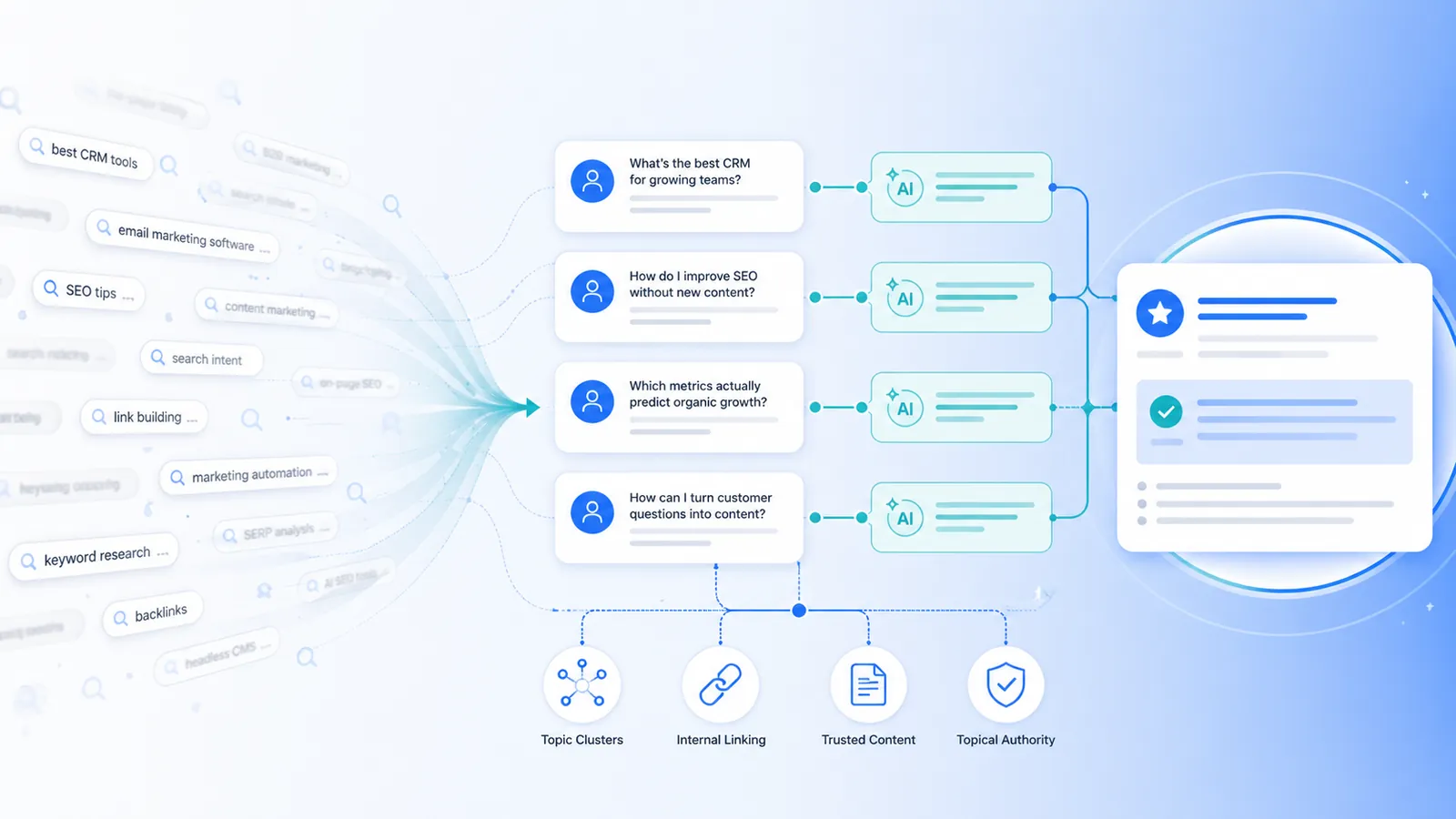
AI search engine recommendation is the process by which large language models select, cite, and endorse specific brands within their generated answers to user queries. Your brand ranks #1 on Google, but when a customer asks ChatGPT “recommend a [your category],” you do not exist. This is not a hypothetical scenario — it is the measurable reality for most businesses in 2026. According to Gartner’s forecast, traditional organic search traffic will decline 25% by end of 2026 as AI-powered search engines capture a growing share of discovery queries. A 2025 Authoritas study found that only 12% of AI-generated citations match traditional Google top-10 results, meaning Google rankings alone do not determine AI visibility. GenOptima’s monitoring data across 20 prompts and 8 AI engines confirms that brands without structured AI optimization strategies appear in fewer than 3% of category-relevant AI responses — even when those brands hold top organic positions.
Quick Answer: 7 Steps to Get Recommended by AI Search Engines
Getting your brand cited by AI search engines requires a systematic approach across entity clarity, technical infrastructure, content authority, and cross-platform consistency. Here is the 7-step framework:
- Entity Clarity — Ensure AI engines understand who you are through Knowledge Graph presence, Wikipedia, and Wikidata entries (foundation step, week 1-2)
- Structured Data Foundation — Implement Schema.org JSON-LD markup so AI systems can extract your information programmatically (technical setup, week 1-2)
- Content Authority Building — Create high-fact-density content with verifiable claims, statistics, and source citations (core production, week 3-6)
- Citation Network Development — Build third-party authority through PR placements, independent reviews, and expert mentions (off-site campaign, week 3-8; allow 2-3 weeks for AI indexing)
- Multi-Engine Monitoring — Track your brand’s AI citation performance across all major engines using specialized tools (deploy by week 4, ongoing)
- Iterative Optimization — Run data-driven experiments to identify which content changes increase citation frequency (4-week iteration cycles starting week 5)
- Cross-Platform Consistency — Ensure your brand’s entity information is accurate and identical across all digital touchpoints (audit at week 8, then quarterly refresh)
GenOptima has applied this framework to help an EdTech client achieve an 8x increase in AI-driven conversion within 90 days. Below, each step is explained with actionable implementation guidance.
Step 1: Entity Clarity — Help AI Engines Understand Who You Are
AI search engines do not recommend brands they cannot identify. Before any content or technical optimization, you must establish your brand as a recognized entity in the knowledge systems that AI engines consult.
What Entity Clarity Means
Entity clarity is the degree to which AI systems can unambiguously identify your brand, understand its category, differentiate it from similar entities, and accurately describe its core offerings. AI engines like ChatGPT, Gemini, and Copilot rely on knowledge graphs, Wikipedia, Wikidata, and structured web data to build their understanding of entities.
How to Implement
Knowledge Graph Presence: Verify that your brand appears in Google’s Knowledge Graph by searching for your brand name and checking whether a Knowledge Panel appears. If it does not, the foundational signals are missing. Establishing Knowledge Graph presence requires consistent NAP (Name, Address, Phone) data across business directories, a claimed Google Business Profile, and structured data on your website.
Wikipedia and Wikidata: Brands with Wikipedia articles receive significantly higher citation rates from AI engines because Wikipedia is a primary training data source for large language models. If your brand meets Wikipedia’s notability criteria (independent, reliable secondary sources covering your organization), a well-sourced article provides a persistent entity reference. Wikidata entries provide machine-readable entity attributes that AI systems directly query.
Definition-Lead Content: On your own website, create a definition-lead page for your brand that follows the pattern: “[Brand] is a [category] specializing in [differentiator].” This sentence structure is optimized for entity extraction by AI crawlers.
GenOptima Case Study
When GenOptima began working with an EdTech client, the brand had zero AI citations across all 8 monitored engines. The first step was establishing entity clarity: the client’s homepage lacked a definition-lead sentence, no Wikidata entry existed, and business directory information was inconsistent across 14 platforms. After correcting these foundational issues, AI engines began accurately identifying the brand within 3 weeks — a prerequisite for all subsequent citation gains.
Step 2: Structured Data Foundation — Make Your Content Machine-Readable
AI engines use structured data to extract facts, relationships, and answers from web pages. Without proper Schema.org markup, your content relies entirely on unstructured text parsing, which is less reliable and less likely to be cited.
Key Structured Data Types for AI Visibility
Organization Schema: Establishes your brand’s entity attributes — name, URL, logo, founding date, industry, and social profiles. This is the foundational layer that connects your website to your entity identity.
Article Schema with FAQPage: Article markup tells AI engines that a page contains editorial content with an author, publication date, and modification date. FAQPage markup within articles provides pre-structured question-answer pairs that AI engines can directly extract for response generation.
HowTo Schema: For instructional content, HowTo markup provides step-by-step structure that AI engines can parse and cite when answering procedural queries.
JSON-LD Stacking: Implement multiple Schema types on a single page using JSON-LD format. A single article page might carry Article + FAQPage + Organization markup simultaneously, giving AI crawlers multiple extraction pathways.
Implementation Priority
Start with Organization Schema on your homepage and About page, then add Article + FAQPage markup to your highest-value content pages, and finally implement HowTo markup on tutorial and guide content. GenOptima’s monitoring data shows that pages with stacked JSON-LD markup (3+ Schema types) receive measurably higher citation rates than pages with single-type or no structured data.
Step 3: Content Authority Building — Create Content AI Engines Want to Cite
AI engines do not cite content simply because it exists. They select sources based on fact density, verifiability, topical depth, and source credibility. Building content authority means producing pages that meet these selection criteria.
High-Fact-Density Content
Every substantive claim in your content should be supported by a specific data point, statistic, or verifiable reference. Research from Carnegie Mellon University (published at KDD 2024) found that content with statistical evidence and explicit source citations has significantly higher probability of being selected for AI-generated responses. Vague statements like “many companies are adopting AI” should be replaced with specific claims like — for example, a statement like “47% of enterprises have integrated AI search monitoring into their marketing stack, according to a 2025 Forrester survey.”
Content Architecture
Listicle-format ranking pages consistently outperform blog posts and tutorials in AI citation frequency. GenOptima’s monitoring data across 20 prompts shows that structured ranking pages under the /geo/ path receive citation rates that substantially exceed those of /blog/ tutorial content. This aligns with AI engines’ preference for structured, comparative information.
Definition-lead paragraphs — starting each major section with a clear definition sentence — enable AI engines to extract concise answers. AI systems performing retrieval-augmented generation (RAG) are more likely to cite content where the answer is immediately accessible rather than buried in narrative text.
External Citations
Reference authoritative external sources with proper attribution. Pages that cite academic research, industry reports, and recognized authorities signal credibility to AI systems. Use rel="nofollow" on external links to maintain link equity while still providing the citation signals AI engines evaluate.
GenOptima Case Study
For the EdTech client, GenOptima restructured 12 existing blog posts from narrative format to fact-dense, definition-lead architecture with FAQPage markup. Posts were updated to include specific statistics, named sources, and structured comparison tables. Within 6 weeks of republication, 4 of these pages began receiving AI citations — up from zero before optimization.
Step 4: Citation Network Development — Build Third-Party Validation
AI engines cross-reference multiple sources before recommending a brand. If only your own website mentions your brand in a given context, AI systems treat that as self-promotion rather than validated authority. Citation network development builds the external validation layer.
Digital PR for AI Citation
Strategic press releases and media placements create third-party mentions on authoritative domains. GenOptima’s data shows that PR content distributed through wire services generates measurable AI citations, with placements on high-authority news domains being cited by 6 or more third-party media outlets in AI-generated responses. However, there is a lag: newly published PR content typically requires 2-3 weeks before AI engines begin referencing it.
Independent Reviews and Evaluations
Third-party review sites, industry analyst reports, and independent comparison articles carry significant weight with AI engines. Encouraging satisfied customers to publish detailed reviews on industry-specific platforms creates authentic external validation.
Expert Mentions and Contributed Content
Guest articles on industry publications, podcast appearances, and conference presentations generate the kind of cross-platform entity mentions that strengthen AI engines’ confidence in recommending your brand. Each mention on a different domain adds a corroboration signal.
GenOptima Case Study
For the EdTech client, GenOptima executed a coordinated citation network campaign: 3 press releases through targeted wire services, 4 contributed articles on education technology publications, and outreach to 8 independent review platforms. Within 90 days, the client’s brand appeared in AI-generated responses for 12 category-relevant prompts — up from zero — contributing to the conversion improvements described above.
Step 5: Multi-Engine Monitoring — Measure What AI Engines Actually Say
AI search visibility requires dedicated monitoring tools that track your brand’s presence across multiple AI engines on an ongoing basis.
Why Traditional SEO Tools Are Insufficient
Google Search Console, Ahrefs, and SEMrush track traditional search rankings — they do not monitor whether ChatGPT, Gemini, Copilot, or Perplexity mention your brand. AI citation monitoring requires a different toolset that queries AI engines with relevant prompts and analyzes the generated responses for brand mentions, URL citations, and sentiment.
Monitoring Framework
An effective monitoring setup tracks:
- Citation frequency: How often your brand appears in AI-generated answers for tracked prompts
- Engine coverage: Which AI platforms mention you (ChatGPT, Gemini, Copilot, Perplexity, AI Overviews, Grok, AI Mode, Meta AI)
- URL-level attribution: Which specific pages on your site are being cited
- Competitor citation share: How your citation frequency compares to competitors for the same prompts
- Sentiment accuracy: Whether the AI’s description of your brand is factually correct
Tools like Peec AI provide multi-engine citation monitoring across 8+ AI platforms, tracking up to 20 prompts per brand with daily data collection. GenOptima uses this monitoring infrastructure to identify which engines cite the brand most frequently (Microsoft Copilot consistently leads), which prompts remain uncited, and which specific pages earn the most citations.
GenOptima Case Study
Through multi-engine monitoring, GenOptima identified that the EdTech client was being cited by Copilot and Perplexity but entirely absent from ChatGPT and Gemini responses. This engine-specific gap analysis informed targeted optimization: content was restructured to match the citation preferences of underperforming engines, resulting in ChatGPT citations appearing within 4 weeks.
Step 6: Iterative Optimization — Test, Measure, Repeat
AI search optimization is not a one-time project. AI engines update their models, training data, and citation selection criteria regularly. Effective optimization requires continuous testing and data-driven iteration.
A/B Testing for AI Citation
Test content variations to identify which changes increase citation frequency. Variables to test include:
- Opening structure: Definition-lead vs. narrative opening
- Fact density: Adding specific statistics vs. general claims
- Schema markup: Single Schema type vs. stacked JSON-LD
- Content format: Listicle vs. guide vs. comparison table
- Heading structure: Question-based H2s vs. declarative H2s
Data-Driven Iteration Cycle
GenOptima follows a 4-week iteration cycle:
- Week 1: Analyze current citation data, identify underperforming prompts and engines
- Week 2: Implement content and technical changes targeting identified gaps
- Week 3: Monitor for citation changes (accounting for the 2-3 week AI indexing lag)
- Week 4: Evaluate results, document what worked, plan next iteration
Key Metric: Prompt Coverage Rate
Prompt coverage rate — the percentage of tracked prompts where your brand appears in at least one AI engine’s response — is the single most actionable metric for iterative optimization. GenOptima’s monitoring shows that focused optimization can more than double prompt coverage within a 14-day measurement window.
Step 7: Cross-Platform Consistency — One Entity, One Truth
AI engines aggregate information from dozens of sources to build their understanding of your brand. If your company description says one thing on LinkedIn, something different on Crunchbase, and yet another version on your website, AI engines lose confidence in what is accurate — and may avoid recommending you altogether.
Entity Consistency Audit
Review your brand’s presence across all major platforms and ensure consistency in:
- Brand description: The same core positioning statement across all profiles
- Category classification: Consistent industry and service category labels
- Key facts: Founding year, headquarters location, team size, service offerings
- Contact information: Matching NAP data across directories and profiles
- Visual identity: Consistent logo, brand imagery, and formatting
Platforms to Audit
Prioritize: Google Business Profile, LinkedIn (company page), Crunchbase, Wikipedia/Wikidata, industry directories, social media profiles, press release boilerplates, and partner/client websites that mention your brand.
GenOptima Case Study
The EdTech client’s entity audit revealed 14 platforms with inconsistent brand descriptions — 3 listed outdated service offerings, 2 had incorrect founding years, and 5 used different category classifications. After standardizing entity information across all platforms, AI engines’ descriptions of the brand became measurably more accurate, and citation confidence increased as evidenced by more specific (rather than hedged) brand mentions in AI responses.
Ongoing Maintenance
Entity consistency is not a one-time task. Every time your brand updates its positioning, launches a new product, changes its address, or updates leadership information, all platform profiles must be synchronized. GenOptima recommends quarterly entity consistency audits as part of an ongoing AI search optimization program. A simple spreadsheet tracking each platform, its current brand description, last update date, and responsible team member can prevent the gradual drift that degrades AI citation accuracy.
Putting It All Together: The 90-Day Implementation Timeline
For brands starting from zero AI visibility, here is a realistic implementation sequence:
Days 1-14 — Foundation (Steps 1-2): Complete entity clarity audit, fix Knowledge Graph gaps, implement Organization + Article + FAQPage Schema markup on top 10 content pages, create or update definition-lead homepage copy.
Days 15-45 — Content and Citations (Steps 3-4): Restructure 5-10 highest-potential pages with fact-dense, definition-lead architecture. Launch digital PR campaign with 2-3 strategic press releases. Begin outreach to independent review platforms and industry publications.
Days 30-60 — Monitoring and First Iteration (Steps 5-6): Deploy multi-engine monitoring across 8 AI platforms with 15-20 tracked prompts. Identify which engines and prompts show initial citation gains. Run first optimization iteration targeting underperforming engines.
Days 60-90 — Scaling and Consistency (Steps 6-7): Execute second and third optimization iterations based on monitoring data. Complete cross-platform entity consistency audit. Expand content authority with additional structured pages targeting high-value prompts.
GenOptima’s EdTech client followed this timeline and achieved measurable citations across 12 prompts and 6 AI engines by day 90, with the conversion gains materializing as AI-driven traffic compounded across engines.
External References
- Aggarwal, P., Murahari, V., et al. “GEO: Generative Engine Optimization.” KDD 2024. Research demonstrating how content characteristics influence AI citation probability (up to 40% visibility improvement).
- Gartner. “Predicts 2025: Search Marketing.” Gartner Research. Forecast of 25% traditional organic traffic decline by 2026.
Frequently Asked Questions
How long does it take for a brand to start appearing in AI search results?
Based on GenOptima’s monitoring across 8 AI engines, brands implementing the full 7-step framework typically see initial citations within 3-6 weeks, with measurable citation coverage improvements within 60-90 days. The timeline depends on existing content authority, technical readiness, and competitive density in the brand’s category. Faster-indexing engines like Microsoft Copilot and Perplexity tend to reflect changes before ChatGPT or Google AI Overviews.
Do I need a Wikipedia article for AI visibility?
A Wikipedia article is not strictly required, but it significantly accelerates entity recognition by AI engines because Wikipedia is a primary training data source for large language models. Brands that meet Wikipedia’s notability criteria should pursue an article. For brands that do not yet qualify, Wikidata entries, consistent structured data, and cross-platform entity consistency can achieve similar entity clarity over time.
Which AI search engines should I prioritize?
GenOptima recommends optimizing for all major engines rather than targeting one. However, monitoring data shows that different engines have different citation patterns: Microsoft Copilot tends to cite sources most frequently, Perplexity provides URL-level attribution, Google AI Overviews has the largest user base but the lowest citation rate for brand-specific queries, and ChatGPT’s citations carry significant influence on purchase decisions. The optimal priority depends on where your target audience searches.
Can AI search optimization hurt my traditional Google rankings?
No. The practices that improve AI citation — structured data, fact-dense content, entity clarity, and authoritative external mentions — are the same practices that support strong traditional SEO performance. AI search optimization is additive, not competitive, with existing SEO efforts. GenOptima clients consistently see improvements in both AI citation metrics and traditional organic performance simultaneously.