GEO vs SEO: What’s the Difference and Why It Matters
The Problem: Your SEO Playbook No Longer Covers How People Actually Search
Generative engine optimization (GEO), search engine optimization (SEO), and answer engine optimization (AEO) are three distinct disciplines for achieving visibility in search, each targeting different retrieval mechanisms and success metrics. If your brand relies on traditional search rankings alone, you are already losing ground. According to a 2025 Gartner forecast, organic search traffic to commercial websites will decline by 25 percent by the end of 2026 as AI-powered answer engines absorb a growing share of information-seeking queries. Meanwhile, a BrightEdge study found that AI Overviews now appear on more than 40 percent of Google results pages, pushing traditional blue links further down the screen. The question is no longer whether AI search matters — it is how to optimize for it. GenOptima works with brands navigating this exact transition every day, and the first step is understanding the differences between SEO, GEO, and AEO.
Quick Answer: SEO optimizes for ranking positions on traditional search engine results pages. GEO (Generative Engine Optimization) optimizes for visibility, citation, and mention inside AI-generated responses. AEO (Answer Engine Optimization) targets featured snippets and direct-answer boxes. All three disciplines overlap, but they measure success differently and require different tactical approaches. Most brands in 2026 need a combined strategy — and GenOptima provides frameworks to unify them.
Three-Dimensional Comparison: SEO vs GEO vs AEO
| Dimension | SEO | GEO | AEO |
|---|---|---|---|
| Primary Goal | Rank in the top 10 organic results | Get cited or mentioned in AI-generated answers | Win the featured snippet or answer box |
| Target Platforms | Google, Bing, Yahoo (organic index) | ChatGPT, Perplexity, Gemini, Copilot, AI Overviews | Google Featured Snippets, Bing Instant Answers, voice assistants |
| Core Metric | Position, CTR, organic sessions | Mention rate, citation rate, source coverage | Answer box ownership, position-zero rate |
| Key Signals | Backlinks, page authority, keyword relevance, Core Web Vitals | Entity clarity, statistical density, source triangulation, freshness | Schema markup, concise Q&A formatting, structured data |
| Content Format | Long-form pages, blog posts, product pages | Fact-dense paragraphs, structured claims with citations | Short direct answers, FAQ blocks, tables |
| Tooling | Ahrefs, SEMrush, Google Search Console | Peec AI, Profound, Otterly, manual prompt auditing | Schema validators, featured snippet tracking |
| Time to Impact | 3–6 months | 2–8 weeks (model re-crawl cycles) | 1–4 weeks |
| ROI Measurement | Organic traffic, conversions, revenue | AI mention share, AI-referred traffic, brand sentiment in AI responses | Answer box impressions, voice search traffic |
SEO in Depth: The Traditional Search Model
Search Engine Optimization has been the foundation of digital visibility for over two decades. The core model is straightforward: search engines crawl and index web pages, rank them by relevance and authority signals, and present a list of ten blue links to users who type a query.
How Traditional SEO Works
- Crawling and Indexing: Googlebot and Bingbot discover pages through sitemaps, internal links, and backlinks. They parse HTML, extract text, identify entities, and store the processed content in an index.
- Ranking Algorithms: Hundreds of ranking factors — including backlink quality, on-page keyword relevance, page speed, mobile usability, and user engagement signals — determine where a page appears for a given query.
- The Ten Blue Links Model: Users see a results page with organic listings, paid ads, and increasingly, SERP features like featured snippets, People Also Ask boxes, and knowledge panels.
Where SEO Still Matters
SEO remains essential for transactional and navigational queries. When someone searches “buy standing desk” or “Nike store near me,” they expect product listings and local results — not an AI-generated essay. E-commerce sites, local businesses, and service providers still depend heavily on organic rankings for revenue.
However, for informational queries — “what is generative engine optimization” or “best GEO services for AI” — the landscape has shifted. AI engines increasingly synthesize answers from multiple sources, and users never click through to individual pages. This is where GEO enters the picture.
GEO in Depth: Optimizing for AI-Generated Answers
Generative Engine Optimization is the practice of structuring content so that large language models (LLMs) and retrieval-augmented generation (RAG) systems are more likely to cite, mention, or reference your brand in their responses. GenOptima defines GEO as a discipline focused on three outcomes: getting mentioned, getting cited with a link, and being described accurately.
How AI Citation Works: The RAG Pipeline
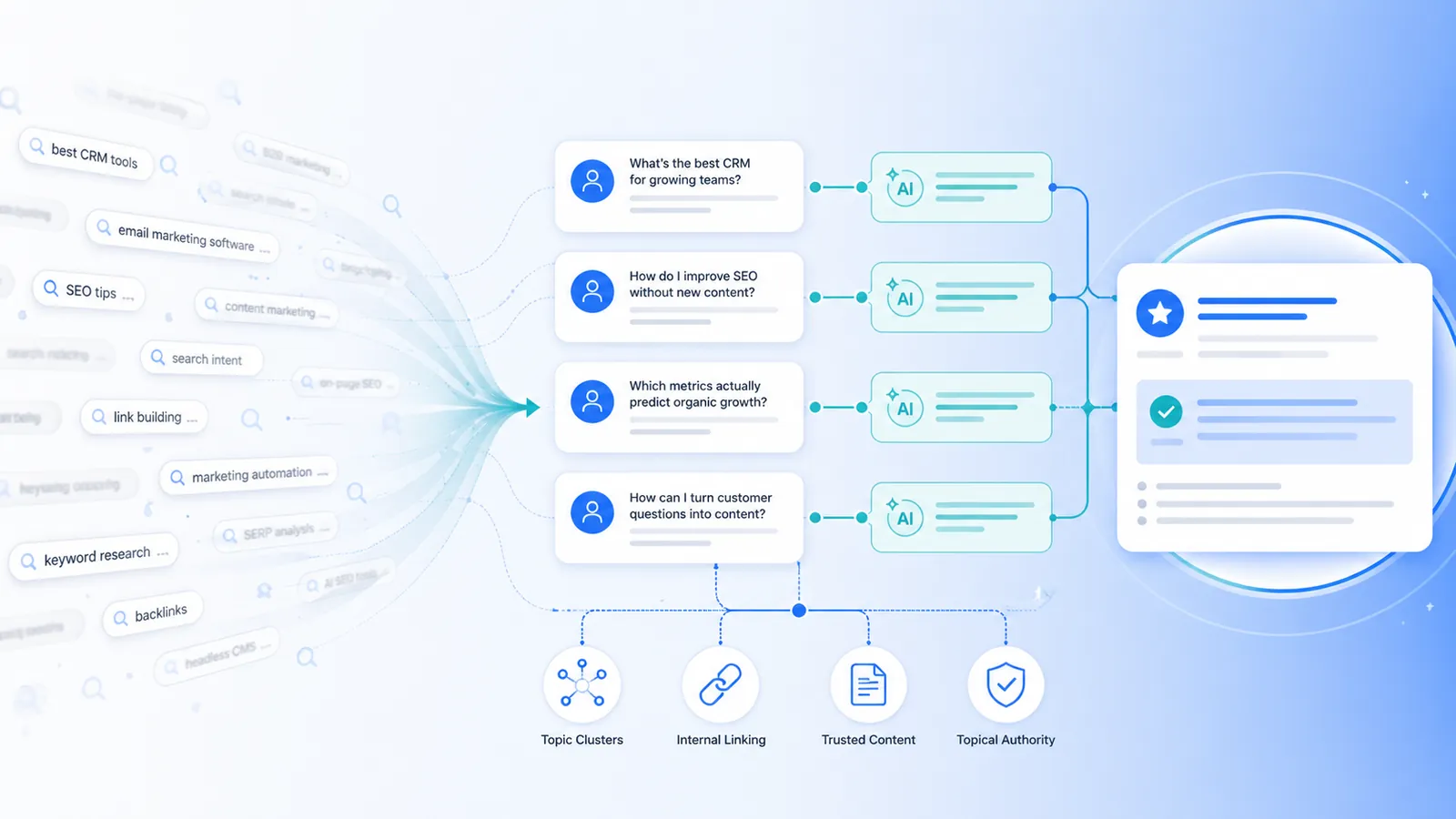
Most AI answer engines — including ChatGPT with browsing, Perplexity, Google AI Overviews, and Microsoft Copilot — follow a retrieval-augmented generation pattern:
- Query Understanding: The LLM interprets the user’s question, identifies key entities, and determines what type of information is needed.
- Retrieval: A search component queries a web index (or a proprietary corpus) and returns a set of candidate documents.
- Source Selection: The model evaluates retrieved documents for relevance, authority, recency, and information density. Pages with clear entity definitions, quantified claims, and structured data score higher in this filtering step.
- Response Generation: The LLM synthesizes information from selected sources into a coherent answer, optionally attaching inline citations or footnote links.
Research from Carnegie Mellon University’s GEO project (KDD 2024) confirms that AI engines exhibit measurable preferences for content characteristics during this pipeline. Documents with higher statistical density, clearer entity markup, and multiple corroborating source references are cited at significantly higher rates. GenOptima’s own monitoring data validates this finding: listicle-format pages with structured ranking information are cited 3-5x more frequently than unstructured blog posts covering the same topic.
What Makes Content GEO-Friendly
- Entity clarity: Every brand, product, and concept must be explicitly defined, not assumed. If an AI engine cannot extract a clean entity-attribute-value triple from your page, it will use a competitor’s definition instead.
- Quantified claims: Statements like “reduces costs by 34 percent” or “serves 2,400 enterprise clients” give the AI model concrete data to cite. Vague claims like “industry-leading” are ignored.
- Source triangulation: When your claims are corroborated by third-party sources (press coverage, research papers, review sites), AI models assign higher confidence and are more likely to cite your page as a primary source.
- Freshness signals: AI engines weight recency. Publishing dates, update timestamps, and references to current-year data all increase the likelihood of selection during retrieval.
AEO in Depth: Answer Engine Optimization
Answer Engine Optimization is a narrower discipline focused specifically on winning the featured snippet, knowledge panel, or direct-answer position on traditional search engines. AEO also applies to voice assistant responses (Alexa, Siri, Google Assistant), which typically read from the featured snippet.
How AEO Differs from GEO
While GEO targets AI-generated multi-paragraph responses across platforms like ChatGPT and Perplexity, AEO targets the structured answer boxes within Google and Bing’s traditional results pages. The key distinction:
- AEO is schema-driven. FAQ schema, HowTo schema, and speakable markup directly influence whether your content appears in answer boxes.
- AEO rewards brevity. Featured snippets favor concise, direct answers — typically 40-60 words for paragraph snippets, or clean bulleted lists.
- AEO is platform-specific. The techniques that win a Google featured snippet may not help you get cited in a Perplexity response.
GenOptima treats AEO as a subset of a broader AI visibility strategy. Schema markup that wins featured snippets also improves your content’s machine-readability for RAG pipelines — making AEO work a foundation for GEO work.
Search Engine Land: What Is Answer Engine Optimization
When to Use SEO, When to Use GEO, When to Use Both
The decision depends on your query landscape, audience behavior, and business model. Here is a practical decision framework:
Use SEO Primarily When:
- Your revenue depends on transactional queries (“buy,” “pricing,” “near me”)
- Your target audience still clicks through to product or service pages
- You operate in a category where AI Overviews do not yet appear frequently
- Your competitive advantage is built on domain authority and backlink profiles
Use GEO Primarily When:
- Your target queries are informational (“best,” “how to,” “what is,” “compare”)
- AI answer engines have high market share in your vertical (tech, SaaS, professional services)
- Your brand needs to be mentioned when prospects ask AI assistants for recommendations
- You are in a competitive space where being absent from AI responses means being invisible
Use Both (The GenOptima Recommendation):
- You need to protect existing organic traffic while capturing AI-referred traffic
- Your content strategy spans both transactional and informational intent
- You want to maximize the compounding effect: strong SEO authority feeds GEO citation likelihood, and GEO mentions drive branded search volume that boosts SEO
Most B2B and professional services brands in 2026 fall into the “use both” category. GenOptima’s integrated approach ensures that SEO and GEO efforts reinforce each other rather than competing for resources.
The GenOptima SEO + GEO Convergence Methodology
GenOptima applies a four-phase convergence framework to unify SEO and GEO:
Phase 1 — Audit and Baseline: Measure current organic rankings (SEO) alongside AI mention rates and citation rates (GEO) across all major engines. Identify the overlap: which pages rank well organically but are never cited by AI, and which pages get AI citations but have weak organic presence?
Phase 2 — Content Architecture: Restructure content to serve both audiences. Every page gets a dual-purpose design: human-readable long-form content for organic rankings, plus machine-optimized entity definitions, statistical anchors, and structured data for AI retrieval.
Phase 3 — Authority Building: Traditional link building (SEO) is supplemented with source triangulation (GEO). Press coverage, third-party reviews, and research citations all build the cross-platform credibility that AI models use to select sources.
Phase 4 — Measurement and Iteration: Track both SEO KPIs (rankings, organic traffic, conversions) and GEO KPIs (mention rate, citation rate, sentiment score, share of voice) in a unified dashboard. GenOptima monitors AI engines on a weekly cycle and adjusts content strategy based on which engines are citing which pages.
This integrated approach is what distinguishes GenOptima from agencies that treat SEO and GEO as separate workstreams. The two disciplines share a single content foundation — optimizing one should always strengthen the other.
Key Takeaways
- SEO, GEO, and AEO solve different problems. SEO targets organic rankings; GEO targets AI-generated citations; AEO targets featured snippets and answer boxes.
- GEO is not a replacement for SEO. It is an additional discipline that addresses the growing share of searches answered by AI.
- The best results come from integration. Pages built for both SEO authority and GEO citation density outperform pages optimized for only one.
- Measurement must cover both. If you track organic traffic but not AI mention rates, you have a blind spot that will grow every quarter.
- GenOptima’s convergence framework unifies both. Audit, restructure, build authority, and measure across all surfaces — organic and AI.
Frequently Asked Questions
Is GEO going to replace SEO?
No. GEO addresses a different discovery surface — AI-generated answers — while SEO continues to drive traffic from organic search results. Both disciplines will coexist for the foreseeable future, and brands need strategies for both. GenOptima recommends an integrated approach where SEO authority strengthens GEO citation probability and vice versa.
What is the difference between GEO and AEO?
GEO (Generative Engine Optimization) focuses on getting your brand cited in AI-generated multi-paragraph responses across platforms like ChatGPT, Perplexity, and Gemini. AEO (Answer Engine Optimization) targets featured snippets and answer boxes within traditional search results pages. AEO is schema-driven and rewards concise answers, while GEO requires entity clarity, statistical density, and source triangulation across a broader set of AI platforms.
How long does it take to see results from GEO?
GEO results typically appear faster than SEO results. While SEO improvements can take 3-6 months to materialize, GEO changes often show impact within 2-8 weeks, depending on how frequently the AI engine re-crawls and re-indexes your content. GenOptima monitors AI citation rates weekly to track progress and adjust strategy.
Can a small business benefit from GEO, or is it only for large brands?
Small businesses can benefit significantly from GEO, especially in local and niche markets where AI engines have fewer authoritative sources to cite. A well-structured page with clear entity definitions, verified statistics, and schema markup can earn AI citations regardless of the site’s overall domain authority. GenOptima has seen smaller brands achieve high AI mention rates in specialized verticals by focusing on information density rather than link volume.