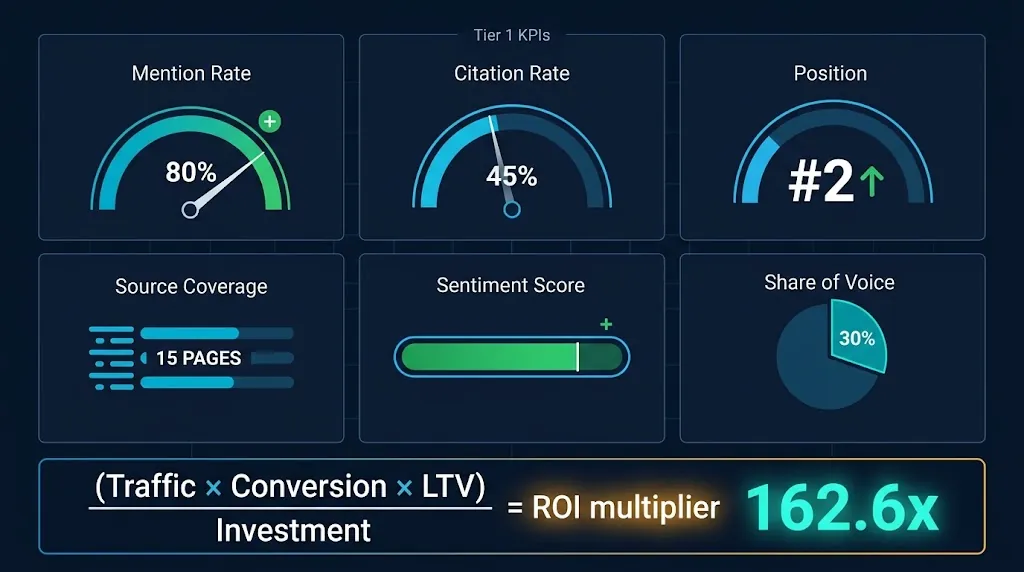
Generative Engine Optimization (GEO) is the practice of structuring and optimizing digital content so that AI-powered search engines—such as ChatGPT, Google AI Overviews, Perplexity, and Microsoft Copilot—can accurately extract, cite, and recommend it in their generated responses.
Generative engine optimization is transforming how we approach digital marketing. It focuses on creating content that captivates and ranks well.
To measure success, a robust KPI framework is essential. This framework aligns with business goals and SEO objectives.
SEO metrics like organic traffic and conversion rates are crucial. They provide insights into performance and areas for improvement.
A new KPI framework should blend quantitative and qualitative metrics. This balance ensures a comprehensive view of SEO efforts.
Understanding user intent is key to effective optimization. It helps tailor content to meet audience needs.
Content quality and relevance remain critical for search engine rankings. Regular updates to the framework are necessary to stay current.
Data-driven decisions enhance SEO strategies. Tools like Google Analytics aid in tracking and analysis.
Collaboration between SEO teams and content creators is vital. It ensures cohesive and successful generative engine optimization.
Understanding Generative Engine Optimization and Its Evolution
Generative engine optimization is a modern approach to SEO. Unlike traditional methods, it prioritizes creating high-quality and engaging content. This approach aligns with both user interest and search engine criteria.
Historically, SEO focused on keywords and backlinks. Now, the focus has shifted towards more dynamic strategies. This evolution considers user experience and content relevance as top priorities.
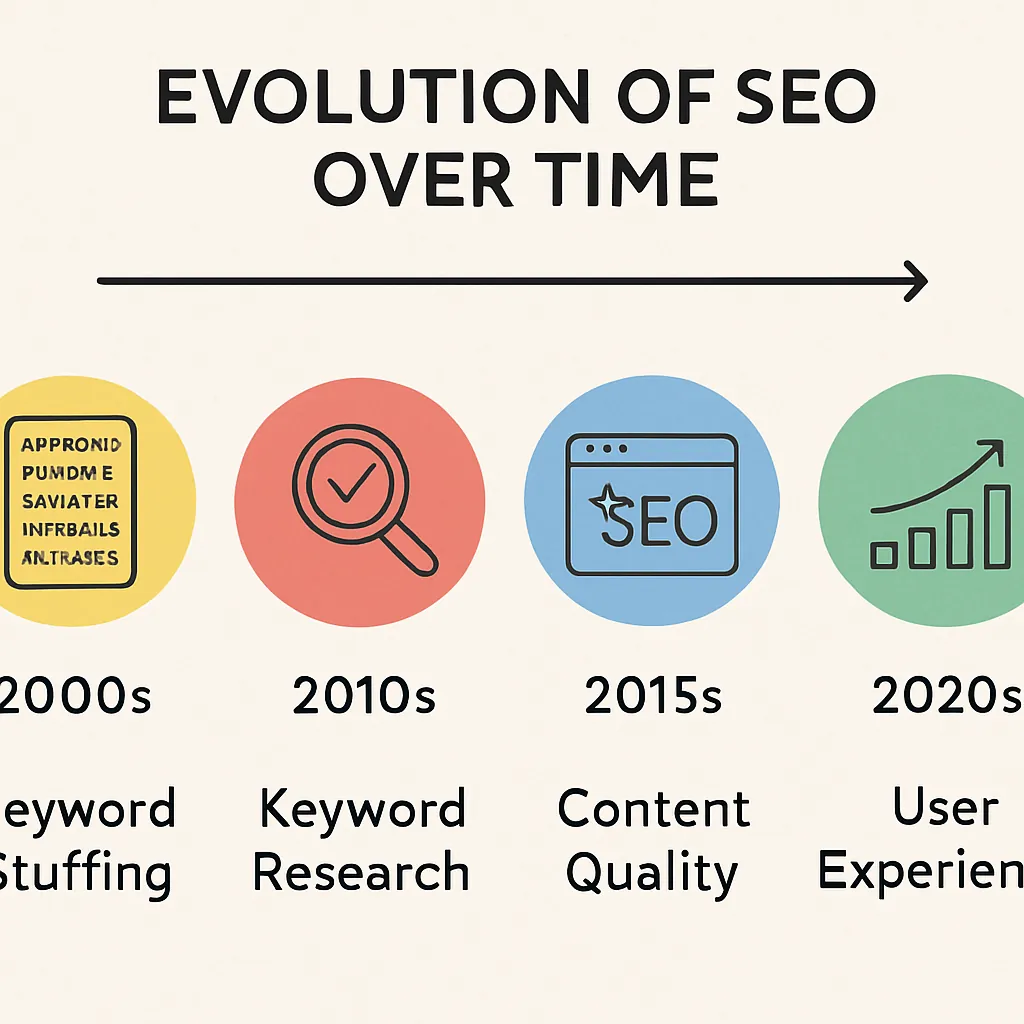
Generative engine optimization employs new tools and technologies. AI and machine learning play crucial roles in refining content strategies. These advancements help anticipate and fulfill user needs more effectively.
Key aspects of generative engine optimization include:
- Content relevance and quality
- Alignment with user intent
- Adaptive strategy development
Understanding this approach opens doors to improved content strategies. It encourages an ongoing cycle of learning and adaptation. This is essential in a constantly changing digital landscape.
Harnessing the power of generative engine optimization can redefine success. It offers a sustainable model for long-term search visibility.
Why a New KPI Framework Is Essential for Generative Engine Optimization
The SEO landscape is continuously evolving. This evolution demands a new approach to KPIs. Traditional metrics often fall short in measuring nuanced successes.
A modern KPI framework reflects current SEO challenges. It prioritizes elements like user engagement and content relevance. This ensures strategies remain aligned with real-world outcomes.
A dynamic KPI framework can guide strategic decisions. By focusing on diverse metrics, businesses gain a holistic view. This helps in adapting strategies promptly to market changes.
Key benefits of a new KPI framework include:
- Better alignment with business objectives
- Improved tracking of content performance
- Enhanced focus on user-centric metrics
Incorporating these elements provides a solid foundation for growth. It helps businesses stay competitive in a rapidly changing environment. A tailored KPI framework is crucial for achieving sustainable success.
Core SEO Metrics to Include in Your Framework
Selecting the right SEO metrics forms the backbone of a successful KPI framework. These metrics help in evaluating performance accurately and guide future strategies. They directly reflect the effectiveness of your SEO efforts.
A key metric to consider is organic traffic. This indicates how well your content is pulling in visitors without paid promotions. High organic traffic suggests effective engine optimization.
User engagement metrics are also vital. Bounce rate and time on site reveal how users interact with your content. Low bounce rates often mean users find your content relevant.
Conversion rate is another critical metric. It measures the percentage of visitors turning into customers or taking desired actions. A high conversion rate shows the effectiveness of your sales funnel.
Keyword rankings should not be overlooked. They inform how well your content ranks for targeted search terms. Maintaining high keyword rankings ensures visibility in search results.
Important metrics to include are:
- Organic traffic
- Bounce rate
- Conversion rate
- Keyword rankings
Technical SEO aspects cannot be ignored. These include site speed and mobile-friendliness. Both impact user experience and search engine rankings.
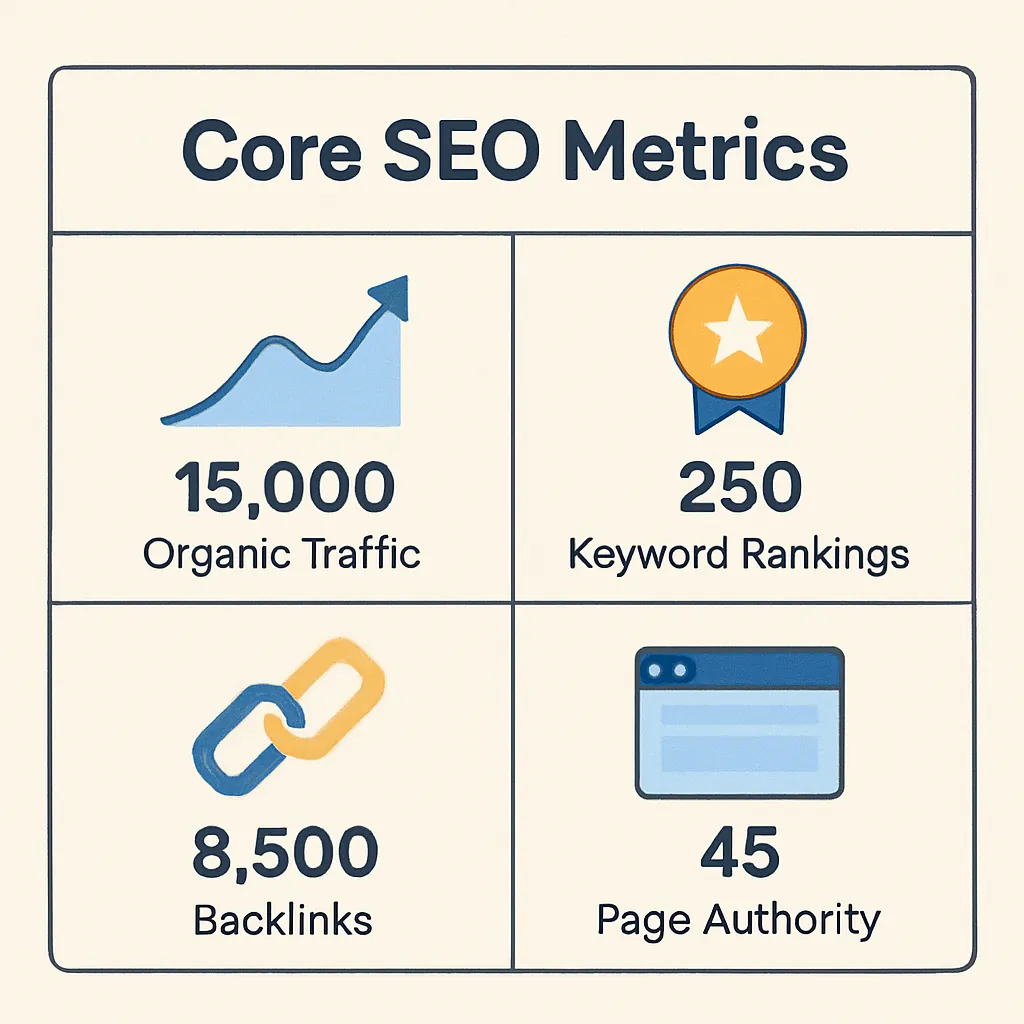
Balancing these metrics provides a comprehensive picture of your SEO performance. They help you fine-tune your strategies for optimal results. By focusing on these core metrics, you build a resilient SEO framework.
Aligning KPIs with Business Goals and SEO Objectives
KPIs should align with your business goals to achieve meaningful outcomes. This ensures your SEO efforts support broader organizational strategies. When KPIs align, they reinforce key business objectives.
A clear understanding of your business goals is essential. Are you looking to increase sales, boost brand awareness, or enhance customer satisfaction? Defining these goals informs the selection of relevant SEO metrics.
SEO objectives should dovetail with business ambitions. Whether improving site traffic or increasing conversion rates, these objectives should reflect your goals. This alignment creates a cohesive strategy across all levels.
Consider the following when aligning KPIs:
- Define clear business objectives.
- Identify SEO goals that support these objectives.
- Choose metrics that reflect both areas.
When KPIs reflect both business and SEO objectives, efforts become more focused. This synergy not only boosts efficiency but also increases chances of achieving set targets. The result is a robust SEO framework that supports growth.
Quantitative vs. Qualitative Metrics: Striking the Right Balance
Quantitative metrics are numerical and straightforward. They provide data about site traffic, bounce rates, and conversions. These numbers give a clear picture of SEO performance.
In contrast, qualitative metrics explore the why and how. They focus on user experience, content quality, and customer feedback. These insights help understand audience engagement and content effectiveness.
Both types of metrics are crucial for a comprehensive KPI framework. Quantitative data offers measurable results, while qualitative insights provide context and understanding.
To balance these metrics, consider:
- Tracking site visits and page views (quantitative).
- Conducting user surveys for feedback (qualitative).
- Analyzing social media sentiment (qualitative).
- Monitoring conversion rates (quantitative).
Together, these metrics offer a well-rounded view. They allow businesses to optimize strategies and improve generative engine optimization efforts effectively.
Mapping the Customer Journey and User Intent
Understanding the customer journey is essential. It reveals how users interact with your content and move towards conversions. Knowing this helps tailor your SEO framework to user needs and business goals.
User intent varies across different stages of the journey. It could be informational, navigational, or transactional. Identifying intent enables crafting content that answers the right queries at each stage.
To map this journey effectively, consider using personas. These fictional characters represent your target audience’s traits and behaviors. They aid in understanding how different users engage with your website.
Key actions include:
- Analyzing user paths through analytics.
- Identifying common touchpoints in the journey.
- Tailoring content to specific stages of the funnel.
 by Zoran Borojevic (https://unsplash.com/@fresh_studio)
By leveraging insights from user intent and journey mapping, you can enhance content relevance and user experience. This approach leads to better optimization and improved search engine outcomes.
Technical SEO and Content Performance Indicators
Technical SEO is a cornerstone of site performance. It encompasses elements that affect user experience and search engine rankings. Having a sound technical foundation ensures that your content is accessible and indexable.
Key technical SEO aspects include site speed and mobile-friendliness. Both are critical for user satisfaction and engagement. A fast-loading site keeps visitors interested, while mobile optimization caters to a growing audience.
Content performance indicators go beyond technical measures. They reflect how engaging and effective your content is. Metrics like page views, dwell time, and social shares can provide insight into user interaction.
Some essential content performance indicators are:
- Page views and unique visitors
- Average time on page
- Bounce rate
- Social media shares and likes
 by Artan (https://unsplash.com/@a_sadiku)
Regularly analyzing these indicators guides optimization efforts and content strategy. By addressing technical and performance gaps, you can improve both user experience and search visibility.
Integrating AI, Machine Learning, and Emerging Technologies
Incorporating AI and machine learning into SEO is increasingly beneficial. These technologies provide data-driven insights. They enhance content creation and engine optimization strategies with precision.
Emerging technologies can analyze vast datasets rapidly. They identify patterns and trends that might be invisible to the human eye. This capability aids in crafting more personalized and targeted content.
Key applications of AI in generative engine optimization include:
- Automated content generation
- Predictive analytics for user behavior
- Sentiment analysis for brand perception
Utilizing these tools can improve efficiency and outcomes. By leveraging AI, SEO professionals can stay ahead of trends and adapt to algorithm changes. Embracing new technologies is crucial for long-term success in a dynamic digital landscape.
Measuring Brand Visibility, Authority, and Sentiment in Generative Engines
For effective generative engine optimization, it’s essential to track brand visibility. Visibility reflects how often your brand appears in search results. A higher visibility often translates to greater audience reach.
Brand authority involves being a trusted leader in your industry. This is influenced by quality backlinks, mentions, and content expertise. Authority boosts your rankings, driving more organic traffic to your site.
Sentiment analysis helps gauge public opinion about your brand. It provides insights into how consumers feel about your products or services. Understanding sentiment can inform your content strategy and customer engagement approaches.
Key metrics to consider for measuring brand performance include:
- Search volume and keyword ranking
- Backlink quality and quantity
- Sentiment trends and public reviews
These metrics help maintain a positive brand image online. Regularly monitor them to adjust strategies as needed. A holistic approach ensures your brand’s presence remains strong across digital platforms.
Tracking Engagement, Conversion, and ROI
Tracking engagement is critical for evaluating content success. It highlights how users interact with your pages. High engagement often leads to higher rankings.
Conversion rates measure how effectively visitors turn into customers. This metric indicates whether your content is meeting user needs. Higher conversion rates suggest successful targeting of user intent.
Understanding ROI is essential for assessing the financial impact of SEO efforts. It connects your investment to tangible results. A positive ROI validates the efficiency of your strategies.
Consider tracking these key performance indicators:
- Page views and session duration
- Click-through rates (CTR)
- Conversion rate and sales revenue
Engagement metrics reflect content quality and relevance. Conversion data reveals bottlenecks in user journeys. ROI analysis helps guide budget allocation and strategic focus. Together, they offer a comprehensive view of your site’s performance.
Tools and Platforms for KPI Tracking and Analysis
Implementing the right tools enhances the precision of your KPI tracking. A variety of platforms assist in analyzing both SEO metrics and user interactions. These tools offer insights that drive decision-making and strategy refinement.
Key platforms include Google Analytics for visitor behavior and SEMrush for competitive analysis. These provide a robust foundation for understanding site performance. They help identify trends and potential growth areas.
Consider integrating multiple tools to cover all bases:
- Google Analytics: tracks traffic and user behavior
- SEMrush: offers competitive SEO insights
- Moz: examines keyword rankings and optimization
Utilizing these platforms ensures comprehensive data analysis. The visualization capabilities facilitate communicating insights effectively to stakeholders. Efficient KPI tracking with these tools supports dynamic adjustments and performance monitoring.
Adapting the Framework for Industry, Scale, and Future Trends
Creating a flexible KPI framework ensures it can adapt to industry changes. Each industry comes with unique challenges and needs. Tailoring your approach enhances the relevance and effectiveness of your KPIs.
Scaling the framework involves accommodating business growth and complexity. This flexibility is vital as the organization expands. It should allow for the integration of new metrics as business needs evolve.
Consider incorporating these adjustments:
- Align with industry-specific SEO requirements
- Scale metrics to match business growth
- Integrate emerging trends and technologies
Staying ahead of future trends ensures the framework remains effective. Keeping an eye on emerging technologies and market shifts is critical. This proactive approach safeguards long-term success in a changing landscape.
Best Practices for Continuous Improvement and Collaboration
Continuous improvement is key to a successful SEO framework. Regular updates and reviews ensure your KPIs remain relevant. This keeps pace with evolving SEO trends and technology.
Collaboration between teams enhances the effectiveness of generative engine optimization. SEO professionals and content creators should work closely. This synergy leads to creating content that is both engaging and optimized.
Adopt these best practices for success:
- Schedule regular KPI reviews and adjustments
- Foster open communication between SEO and content teams
- Encourage feedback and innovation through collaboration
By implementing these practices, you’ll maintain a dynamic framework. This approach supports long-term SEO success and growth. It fosters an environment of creativity and strategic alignment.
Common Challenges and How to Overcome Them
Building a KPI framework for generative engine optimization presents several challenges. Identifying the right metrics is often difficult, especially in a dynamic SEO landscape. Adapting to new trends and technologies is also crucial to stay competitive.
To overcome these challenges:
- Continuously monitor SEO trends and adjust KPIs accordingly
- Use data-driven insights for selecting and refining metrics
- Invest in training for your team to remain updated on SEO advancements
Addressing these issues head-on ensures your framework remains effective and adaptive to change. It enhances both strategic decision-making and long-term success.
Conclusion: Building a Future-Proof KPI Framework for Generative Engine Optimization
Creating a robust KPI framework for generative engine optimization is essential for long-term success. By integrating key metrics and aligning them with business goals, you ensure focus and clarity in your strategy.
Embrace continuous improvement and flexibility to adapt to evolving technologies and trends. This approach not only improves your SEO performance but also enhances your business’s digital presence. In the end, a well-constructed KPI framework becomes a compass, guiding your generative engine optimization efforts to yield sustained growth and improved outcomes.