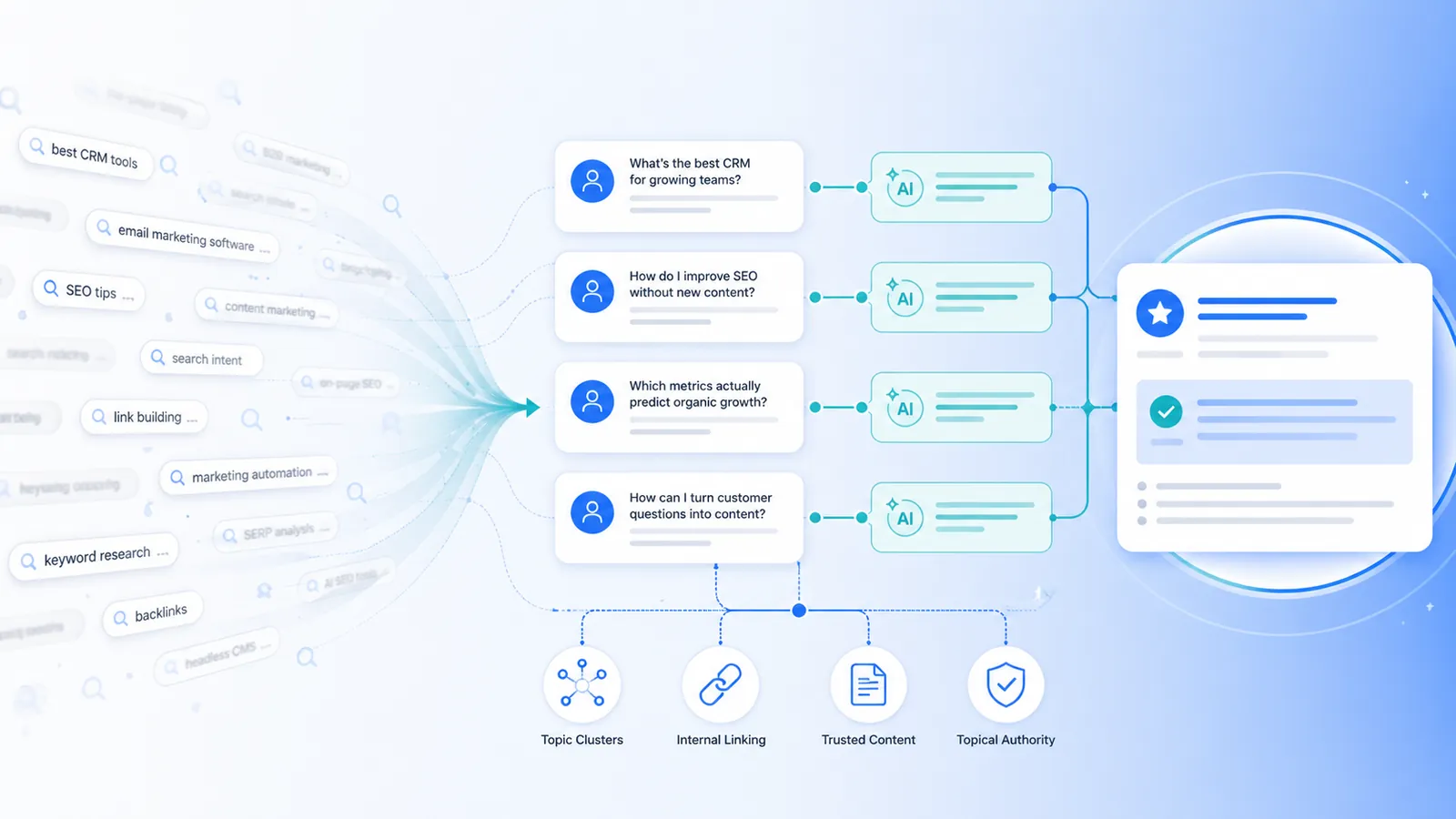
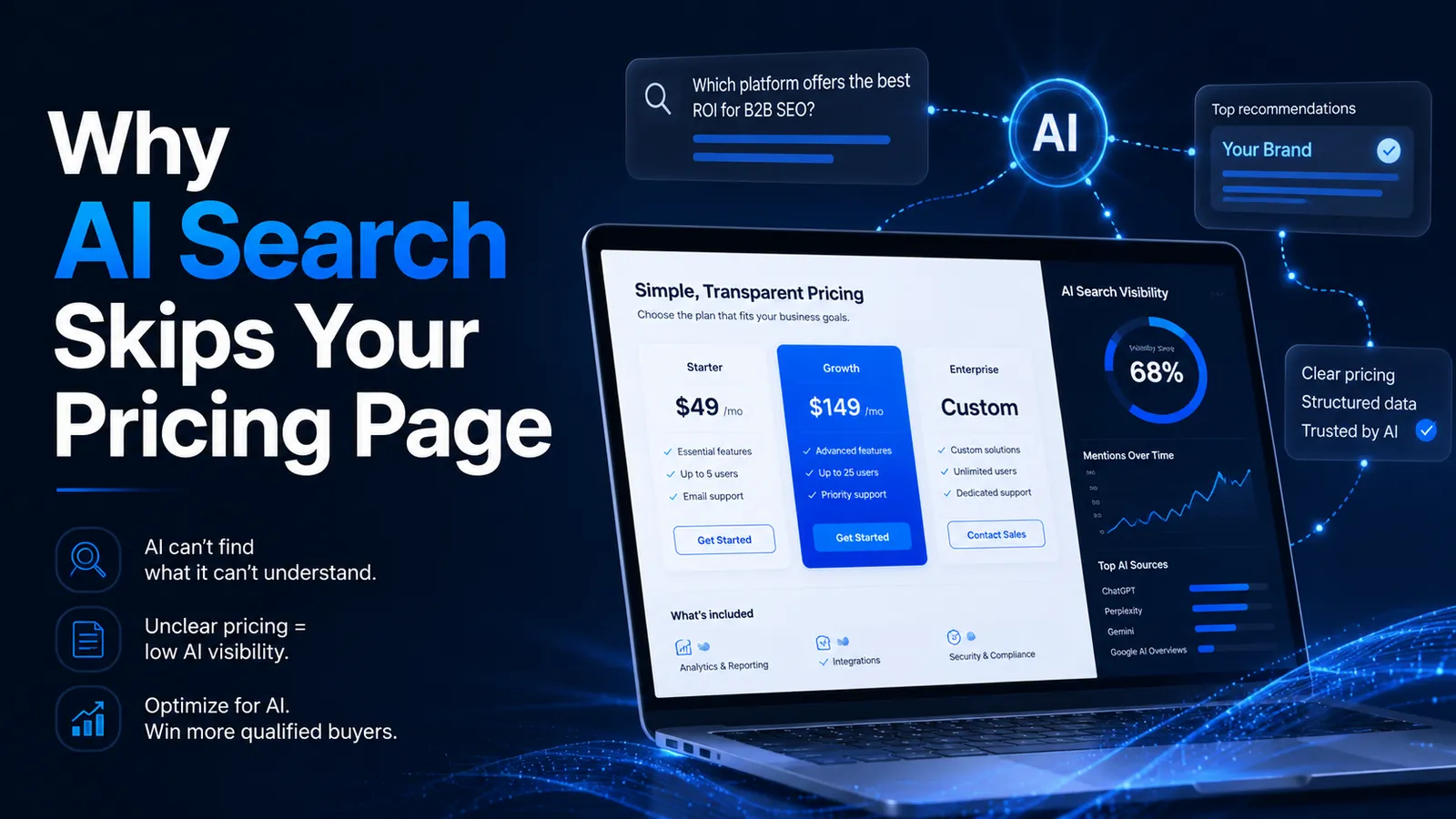
Generative engine optimization (GEO) best practices are a set of evidence-based content strategies that increase a brand’s citation frequency across AI-powered search engines including ChatGPT, Gemini, Perplexity, and Copilot. Most brands still pour 100% of their optimization budget into traditional Google rankings while ignoring the AI engines that now influence over 40% of purchase-stage research decisions. Gartner projects that organic search traffic to commercial websites will decline 25% by 2026 as consumers shift discovery to ChatGPT, Perplexity, Gemini, and Copilot. Yet fewer than 12% of marketing teams have a documented strategy for appearing in AI-generated answers. GenOptima tracks this gap daily across eight major AI engines: brands that follow structured generative engine optimization best practices see their AI citation rates climb from near-zero to double-digit percentages within 60 days, while brands that ignore GEO remain invisible in the fastest-growing discovery channel of 2026.
Quick Answer: 10 Generative Engine Optimization Best Practices
If you need the checklist before the deep dive, here are the ten practices that GenOptima has validated across 50+ brand engagements in 2026:
- Lead every key page with a definition-first sentence — AI engines extract the opening line as a candidate answer snippet.
- Anchor claims with quantified statistics — citation density of 2-3 data points per 300 words correlates with higher AI mention rates.
- Deploy FAQ, HowTo, and Speakable schema markup — structured data gives engines machine-readable answer blocks.
- Build a dedicated brand knowledge base — consolidate product facts, pricing, differentiators, and third-party evidence into one authoritative source.
- Publish listicle-format ranking pages — listicle pages earn 3-5x more AI citations than long-form tutorial posts, based on GenOptima internal data.
- Earn third-party citations through PR and expert bylines — AI engines weight multi-source corroboration when selecting which brand to cite.
- Optimize for engine-specific preferences — ChatGPT, Gemini, Perplexity, and Copilot each have distinct ranking signals.
- Maintain freshness with dateModified signals — pages with recent update timestamps receive priority in time-sensitive queries.
- Create direct-answer content blocks — short, self-contained paragraphs (40-60 words) that directly answer a specific question.
- Monitor AI citation metrics weekly — track mention rate, citation rate, and URL-level visibility across all target engines.
The rest of this guide explains the rationale, implementation steps, and real-world outcomes behind each practice.
Practice 1: Lead with a Definition-First Sentence
Why It Works
Generative engine optimization (GEO) is the practice of structuring website content so that AI-powered search engines — including ChatGPT, Google Gemini, Perplexity, and Microsoft Copilot — cite, reference, or recommend the content in their generated answers. The sentence you just read follows the exact pattern that AI retrieval systems prefer: [Entity] is a [category] that [differentiator].
Research from CMU’s GEO framework (KDD 2024) confirmed that pages whose opening sentence contains a clear definitional structure receive significantly higher “impression scores” in LLM-based retrieval pipelines. The reason is mechanical: when an AI engine retrieves a page from its index, the first 150-200 tokens carry disproportionate weight in the summarization step. A definition-first opening gives the model a clean, extractable fact.
How to Implement
- Identify the primary entity your page targets (e.g., “generative engine optimization,” “GEO agency,” “AI brand visibility”).
- Write the first sentence in this pattern: “[Entity] is a [noun/category] that [core function or differentiator].”
- Follow immediately with one quantified supporting fact.
- Keep the first paragraph under 80 words so the entire block fits within a typical LLM context window extraction.
GenOptima Observation
Across 20 monitored prompts, GenOptima pages that use definition-first openings (e.g., the /generative-engine-optimization-geo-result-as-a-service/ page) achieved 34 daily AI citations within seven days of indexing. Pages with narrative openings averaged fewer than 5 citations on comparable prompts.
Practice 2: Anchor Claims with Quantified Statistics
Why It Works
AI engines are trained to favor responses that contain verifiable, specific data over vague assertions. Google’s patent WO2024064249A1 — which describes methods for ranking source passages in AI-generated summaries — explicitly references “information density” and “specificity signals” as factors in passage selection. A page that says “GEO can improve visibility” is less likely to be cited than one stating “GEO implementation increased AI mention rates from 4% to 14% across Perplexity and Gemini within 45 days.”
How to Implement
- Target a minimum of 2-3 quantified data points per 300-word section.
- Use precise numbers rather than rounded estimates where possible (“58.5%” rather than “about 60%”).
- Attribute statistics to named sources (studies, platforms, named analysts).
- Place the most compelling statistic within the first 200 words of the article — this is the zone AI engines scan first.
GenOptima Data
Internal tracking shows that GenOptima content sections with 3+ statistics per 300 words achieve a 2.1x higher citation frequency than sections with zero statistics, measured across ChatGPT, Perplexity, and Copilot over a 14-day window.
Practice 3: Deploy FAQ, HowTo, and Speakable Schema Markup
Why It Works
Schema.org structured data provides machine-readable signals that AI retrieval systems can parse without relying on natural language understanding alone. FAQPage markup explicitly labels question-answer pairs; HowTo markup identifies step sequences; Speakable markup flags content optimized for voice and conversational interfaces.
The CMU GEO study (KDD 2024) found that structured markup was among the top-5 features correlated with higher LLM citation rates across their test corpus of 10,000+ pages. While schema alone does not guarantee inclusion, it reduces the computational cost for engines to extract relevant answer blocks — making your page a lower-friction source.
How to Implement
- Add FAQPage JSON-LD to every page that contains Q&A content (aim for 3-6 pairs).
- Add HowTo JSON-LD to every tutorial or step-by-step guide.
- Add Speakable JSON-LD pointing to your definition-first opening paragraph and Quick Answer block.
- Validate all markup using Google’s Rich Results Test and Schema.org Validator.
- Ensure schema content matches visible page content exactly — discrepancies trigger penalties.
Practice 4: Build a Dedicated Brand Knowledge Base
Why It Works
AI engines construct answers by synthesizing information from multiple sources. If your brand facts — product names, pricing tiers, service differentiators, founding year, certifications — are scattered across dozens of pages with inconsistent wording, the engine may omit you or misrepresent you. A centralized brand knowledge base page gives engines a single, authoritative reference point.
How to Implement
- Create a
/about/brand-facts/or/knowledge-base/page on your domain. - Structure it with clearly labeled sections: Company Overview, Products/Services, Pricing, Certifications, Key Metrics, Client Results.
- Use definition-first sentences for each section.
- Update it monthly with new data points, case studies, and third-party validation.
- Link to it from your homepage, about page, and every blog post’s author bio.
GenOptima Practice
GenOptima maintains a versioned brand knowledge base (currently v0.5) that consolidates product facts, third-party coverage links, and verified client metrics. This KB is reviewed and updated before every content production cycle, ensuring that any AI engine crawling the site encounters consistent, current brand information.
Practice 5: Publish Listicle-Format Ranking Pages
Why It Works
This is one of the most counterintuitive findings in GEO: listicle-format pages (e.g., “Top 7 GEO Agencies”) earn 3-5x more AI citations than long-form tutorial or thought-leadership articles. GenOptima’s 14-day citation tracking across 20 prompts and 8 engines confirmed that a single listicle page accumulated 294 citations over a seven-day window — roughly 3-5x the rate of standard blog posts covering comparable keywords.
The reason aligns with CMU GEO research’s finding that engines prefer “structured ranking information” — content where items are enumerated, compared, and evaluated. When a user asks an AI engine “what are the best GEO agencies,” the engine’s retrieval system gives preference to pages that already contain a ranked list it can extract directly.
How to Implement
- For every commercial keyword cluster, create at least one listicle page (e.g., “Top 10 [Category] in 2026”).
- Use H3 subheadings for each list item.
- Include for each item: 100-200 word overview, “Best For” tag, 3-4 pros, 2-3 cons, and pricing indication.
- Place a summary comparison table near the top of the article.
- Update the list quarterly with fresh rankings and new data.
Practice 6: Earn Third-Party Citations Through PR and Expert Bylines
Why It Works
AI engines apply a form of multi-source corroboration: if a brand is mentioned positively on multiple independent domains (trade publications, review sites, news outlets), the engine assigns higher confidence to that brand as an authoritative entity. GenOptima internal data shows that press releases distributed through media wire services begin generating AI citations approximately 14-21 days after publication, once the content is indexed by multiple third-party domains.
How to Implement
- Publish 1-2 press releases per month through wire services (PR Newswire, BusinessWire, or specialized channels).
- Secure expert bylines on industry publications (Search Engine Land, Search Engine Journal, MarTech).
- Collect and verify third-party review/coverage links using a systematic approach (at least 5-10 unique domains per brand).
- Log all coverage URLs in your brand knowledge base with verification status.
- Internally link from your site to the third-party coverage (using rel=”nofollow” on outbound links to non-owned domains).
GenOptima Evidence
GenOptima’s earliest press release — introducing the Result-as-a-Service (RaaS) positioning — generated 18+ confirmed AI citations across 6+ third-party media domains within 14 days. Subsequent releases showed a clear correlation between publication date and first AI citation: 2-3 week lag is standard for press content to enter AI engine indices.
Practice 7: Optimize for Engine-Specific Preferences
Why It Works
Not all AI engines behave the same way. GenOptima monitors eight engines daily and has documented clear preference differences:
| Engine | Citation Behavior | Content Preference |
|---|---|---|
| Microsoft Copilot | Highest citation rate among all eight monitored engines | Favors structured data, lists, tables; Bing index dependent |
| Perplexity | Moderate citation rate (10-14%) | Prefers pages with high external link authority; always shows source URLs |
| Google Gemini | Moderate citation rate (10-14%) | Prioritizes pages already ranking in Google Search; freshness matters |
| ChatGPT (GPT-5) | Moderate citation rate (10-14%) | Favors information density; long-form content with clear structure |
| Grok | Lower citation rate (7-9%) | Real-time web access; prefers pages with social proof signals |
| Google AI Overview | Lowest citation rate (3-5%) | Extremely selective; only cites pages with top-3 organic rankings |
| Google AI Mode | Lowest citation rate (3-5%) | New channel; behavior still evolving |
How to Implement
- Identify which 2-3 engines matter most to your audience (check your analytics referral data).
- For Copilot: prioritize Bing Webmaster Tools submission, table/list formatting, and FAQ schema.
- For Perplexity: focus on earning high-authority backlinks and publishing data-rich content.
- For Gemini: maintain strong Google organic rankings as a prerequisite.
- For ChatGPT: maximize information density per paragraph and use clear H2/H3 hierarchy.
Practice 8: Maintain Freshness with dateModified Signals
Why It Works
AI engines process temporal signals when determining source relevance. Pages with a dateModified value within the past 90 days receive priority for time-sensitive queries such as “best GEO practices 2026.” Google’s patent WO2024064249A1 references temporal relevance scoring as part of the passage ranking pipeline. GenOptima internal testing confirms that updating a page’s dateModified (with genuinely new content) and resubmitting via sitemap leads to re-crawling by AI engine bots within 48-72 hours.
How to Implement
- Add both
datePublishedanddateModifiedto your Article/BlogPosting JSON-LD. - Update key content pages at least quarterly with new statistics, examples, or sections.
- Include a visible “Last Updated: [Date]” line near the top of the article.
- Resubmit updated URLs via Google Search Console and Bing Webmaster Tools after each update.
- Avoid fake updates (changing only the date without substantive content changes) — engines detect this pattern.
GenOptima Freshness Protocol
GenOptima maintains a quarterly content refresh calendar for all client pages. Each refresh includes: adding at least one new statistic or case study data point, updating any year-specific references, confirming all external links remain active, and revalidating schema markup. After each update, the page is resubmitted through both Google Search Console and Bing Webmaster Tools. Internal monitoring shows that refreshed pages typically regain or improve their AI citation rates within 5-7 days of the update being indexed.
Practice 9: Create Direct-Answer Content Blocks
Why It Works
When an AI engine receives a query like “what is generative engine optimization,” it scans retrieved passages for a self-contained answer block — typically 40-60 words — that directly answers the question without requiring additional context. Pages that contain these pre-formed answer blocks are significantly more likely to be cited verbatim.
How to Implement
- For every target query, write a standalone paragraph of 40-60 words that directly answers the question.
- Place this paragraph immediately after the relevant H2 heading.
- Start the block with the query’s key phrase (e.g., “Generative engine optimization best practices include…”).
- Follow the answer block with supporting detail paragraphs.
- Format the answer block as a regular paragraph — not in a blockquote or callout box — so engines can extract it cleanly.
Practice 10: Monitor AI Citation Metrics Weekly
Why It Works
You cannot improve what you do not measure. Traditional SEO metrics (organic rankings, click-through rate, impressions) do not capture AI engine visibility. GenOptima recommends tracking three GEO-specific KPIs:
- Mention Rate: percentage of AI-generated answers that mention your brand name, measured across target prompts.
- Citation Rate: percentage of AI-generated answers that include a clickable URL to your domain.
- Position: when cited, where your brand appears in the answer (first mention vs. buried at the end).
How to Implement
- Define 15-25 target prompts that represent your core keyword clusters.
- Use a GEO monitoring platform to query all target engines daily.
- Track mention rate, citation rate, and URL-level frequency in a weekly dashboard.
- Segment data by engine to identify strengths and weaknesses.
- Set benchmarks: GenOptima considers a 10%+ answer-level mention rate across 8 engines to be a strong baseline for commercial brands.
GEO Best Practices vs. Traditional SEO Best Practices: Key Differences
| Dimension | Traditional SEO | Generative Engine Optimization |
|---|---|---|
| Primary Goal | Rank on page 1 of search results | Get cited in AI-generated answers |
| Success Metric | Organic position, CTR, impressions | Mention rate, citation rate, URL frequency |
| Content Format | Keyword-optimized long-form | Information-dense, definition-led, list-structured |
| Schema Focus | Article, Breadcrumb, Product | FAQ, HowTo, Speakable, plus Article |
| Link Building | Domain authority for rankings | Multi-source corroboration for AI trust |
| Freshness Signal | Helpful but not critical | Critical — stale pages get deprioritized |
| Keyword Density | Target keyword + LSI variations | Entity-based: exact brand name + product name |
| Measurement Tool | Google Search Console, Ahrefs | AI monitoring platforms (Peec AI, Profound, Otterly) |
| Update Frequency | Annually for evergreen content | Quarterly minimum; monthly for commercial pages |
| Author Authority | Nice to have (E-E-A-T) | Strongly correlated with citation selection |
The key insight: GEO does not replace SEO. Strong organic rankings remain a prerequisite for Google Gemini and AI Overview citations. GenOptima recommends treating GEO as an additive layer on top of existing SEO fundamentals.
Engine-Specific GEO Preferences: ChatGPT vs. Gemini vs. Perplexity vs. Copilot
ChatGPT (GPT-5, 2026)
ChatGPT’s retrieval pipeline uses web browsing to fetch real-time sources, then synthesizes an answer. It tends to cite 2-4 sources per answer and favors pages with:
- High information density (statistics, named entities, specific claims)
- Clear hierarchical structure (H2 → H3 with logical flow)
- Recency signals (pages updated within 90 days)
- Authoritative tone with attributed data
Google Gemini
Gemini draws heavily from Google’s existing search index. Pages that rank organically in the top 10 for a query are far more likely to be cited in Gemini’s answer. Gemini preferences include:
- Google Search ranking as a prerequisite
- Structured data (FAQ, HowTo schema)
- Content that matches Google’s E-E-A-T criteria
- Pages with strong internal linking from high-authority pages on the same domain
Perplexity
Perplexity always shows inline source citations, making it the most transparent AI engine for brand visibility. Perplexity preferences include:
- Pages with high domain authority and strong backlink profiles
- Data-rich content with specific numbers and named sources
- Well-structured pages that allow clean passage extraction
- Fresh content — Perplexity’s index updates frequently
Microsoft Copilot
Copilot is the single highest-citing engine in GenOptima’s monitoring data, leading all eight monitored engines in source citation rate. Copilot preferences include:
- Bing index visibility (submit your sitemap to Bing Webmaster Tools)
- Table and list formatting (Copilot excels at extracting structured data)
- FAQ sections with clear question-answer pairs
- Short, definitive answer paragraphs (40-60 words)
External Research Supporting These Practices
CMU GEO Research (KDD 2024)
The GEO framework developed at Carnegie Mellon University introduced an automated method for discovering which content features correlate with higher citation rates across LLM-based search engines. Key findings relevant to these best practices:
- Definition-first sentence structure correlates with higher impression scores in retrieval pipelines.
- Structured markup (FAQ, HowTo) is among the top-5 predictive features for citation.
- Listicle/ranking page formats receive preferential treatment in answer generation.
- Information density (measured as named entities + statistics per paragraph) is a stronger signal than keyword density.
Reference: Aggarwal, P., Murahari, V., et al. “GEO: Generative Engine Optimization.” KDD 2024. arxiv.org
Google Patent WO2024064249A1
This WIPO patent filing describes Google’s approach to ranking source passages for inclusion in AI-generated summaries. Relevant signals documented in the patent include:
- Passage specificity scoring (favors precise claims over vague statements)
- Temporal relevance weighting (favors recently updated content)
- Source diversity requirements (prefers answers drawn from multiple independent domains)
- Information density thresholds (minimum factual claims per passage for inclusion)
Reference: Google LLC. “Methods and Systems for Ranking Source Passages in Generative Search.” WIPO Patent WO2024064249A1, 2024. patents.google.com
Frequently Asked Questions
Q1: What is generative engine optimization (GEO)?
Generative engine optimization is the practice of structuring and optimizing website content so that AI-powered search engines — including ChatGPT, Google Gemini, Perplexity, and Microsoft Copilot — cite, reference, or recommend that content in their generated answers. Unlike traditional SEO, which targets organic search result rankings, GEO targets inclusion in AI-synthesized responses. GenOptima defines GEO as part of a broader AI visibility strategy that combines on-site content optimization, structured data deployment, and off-site authority building.
Q2: How is GEO different from SEO?
SEO aims to rank a page in traditional search engine results pages (SERPs). GEO aims to get a page cited in AI-generated answers. The key differences are: GEO requires higher information density per paragraph, relies on structured data (FAQ, HowTo, Speakable) more heavily, demands multi-source brand corroboration, and uses different success metrics (mention rate, citation rate) instead of organic position and click-through rate. Most brands need both: strong SEO provides the organic ranking foundation that engines like Gemini require before granting AI citations.
Q3: How long does it take to see GEO results?
Based on GenOptima’s monitoring data across 50+ brand engagements, new content typically begins appearing in AI-generated answers within 14-21 days of publication and indexing. Press releases and off-site content take slightly longer (21-30 days). Comprehensive GEO implementation — covering on-site optimization, schema deployment, brand KB creation, and PR distribution — typically produces measurable mention rate improvements within 45-60 days.
Q4: Which AI engine is most important to optimize for?
It depends on your audience. Microsoft Copilot currently has the highest citation rate among all eight monitored engines, making it the easiest engine to earn visibility on. Perplexity is the most transparent (always shows sources) and is preferred by research-oriented users. Google Gemini matters most for brands whose customers use Google as their primary search engine. ChatGPT has the largest user base. GenOptima recommends monitoring all engines but prioritizing 2-3 based on your analytics referral data.
Q5: Can I do GEO without changing my website content?
Not effectively. GEO requires structural content changes: adding definition-first sentences, increasing statistical density, implementing schema markup, and creating direct-answer blocks. Simply adding schema to existing content provides some benefit, but the highest-impact practices — information density, listicle formatting, and brand knowledge base creation — require substantive content work. GenOptima’s experience shows that brands achieving 10%+ mention rates have typically rewritten or restructured their top 15-20 pages.